Locations:





Cleveland Clinic & Boston Children’s join forces in New York Oct. 4-5
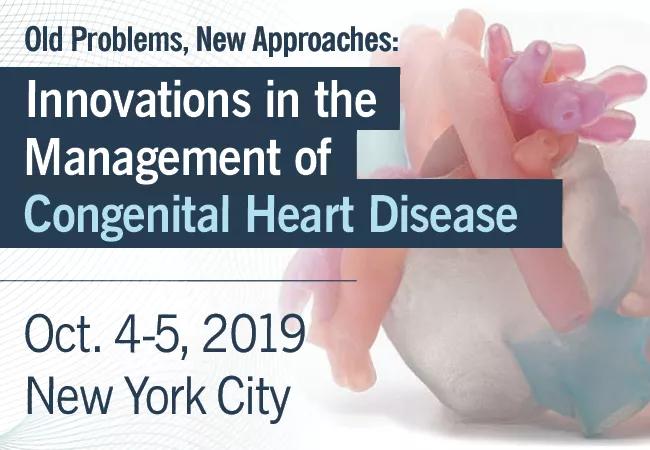
Image content: This image is available to view online.
View image online (https://assets.clevelandclinic.org/transform/2ca2d63f-e9a7-4bed-9ae3-41a9ee48c0cd/19-HRT-260-Congenital-CME-NYC-1_650x450_jpg)
19-HRT-260-Congenital-CME-NYC-1_650x450
Given that congenital heart disease is one of the most complex and least-studied realms of cardiovascular practice, why not come at it with the strengths of two powerhouse heart programs instead of just one?
Advertisement
Cleveland Clinic is a non-profit academic medical center. Advertising on our site helps support our mission. We do not endorse non-Cleveland Clinic products or services. Policy
That’s the thinking behind Old Problems, New Approaches: Innovations in the Management of Congenital Heart Disease, a distinctive CME course offered by Cleveland Clinic and Boston Children’s Hospital at the JW Marriott Essex House in New York on Friday, Oct. 4, to Saturday, Oct. 5, 2019.
The day-and-a-half program aims to extend the knowledge and experience of 25 expert clinician faculty from Cleveland Clinic and Boston Children’s to adult and pediatric providers in cardiology, cardiac surgery, pediatrics, internal medicine and beyond.
“The outcomes of both pediatric and adult patients with congenital heart disorders have improved substantially, thanks to innovations in imaging technology, research studies and surgical techniques,” says course co-director Lars Svensson, MD, PhD, Chair of Cleveland Clinic’s Miller Family Heart & Vascular Institute. “Yet these advances have been so numerous and rapid that it can be challenging for clinicians to keep up, particularly in view of the pathophysiologic complexity of congenital heart disease.”
“These challenges have informed the design of this course, which aims to improve attendees’ competence and skills in diagnosing congenital heart disorders and choosing appropriate treatment strategies,” adds course co-director Pedro del Nido, MD, Chair of the Department of Cardiovascular Surgery at Boston Children’s. One of his Boston Children’s cardiovascular surgery colleagues, John Mayer, Jr., MD, is a third co-director of the course.
The course relies on a mix of formats — short lectures, case studies, moderated discussions and more — to address its six sessions’ broad topical range in a highly tailored way:
Advertisement
“The program was conceived to be highly multidisciplinary,” Dr. del Nido observes. “Sessions are structured so that most topics are addressed from a multiplicity of perspectives, including surgical, medical, imaging, interventional, perioperative, outcomes and more.”
“Planning this course has been a delight,” adds Dr. Svensson, “as it allows us to combine the expertise of Cleveland Clinic and Boston Children’s in highly complementary ways to address congenital heart disease in both adult and pediatric populations. Attendees will benefit from the synergy that results.”
Registration information and full course details are at ccfcme.org/congenitalheart19. Early-bird registration pricing ends Aug. 4.
This activity has been approved for AMA PRA Category 1 Credit™.
Advertisement
Advertisement
A sampling of outcome and volume data from our Heart & Vascular Institute
Concomitant AF ablation and LAA occlusion strongly endorsed during elective heart surgery
Large retrospective study supports its addition to BAV repair toolbox at expert centers
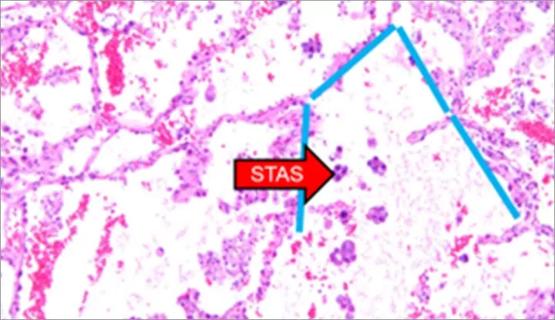
Young age, solid tumor, high uptake on PET and KRAS mutation signal risk, suggest need for lobectomy
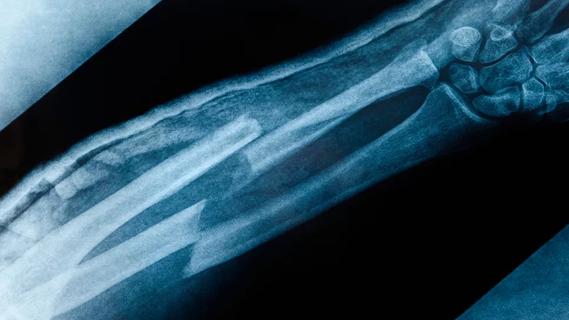
Surprise findings argue for caution about testosterone use in men at risk for fracture
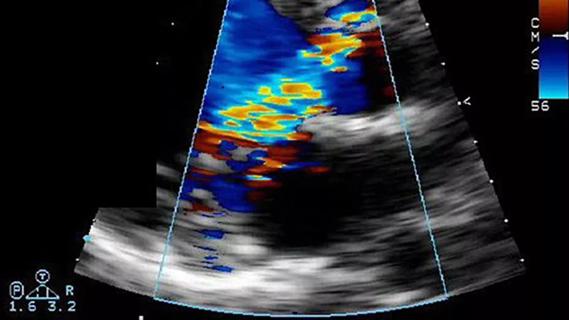
Residual AR related to severe preoperative AR increases risk of progression, need for reoperation

Findings support emphasis on markers of frailty related to, but not dependent on, age
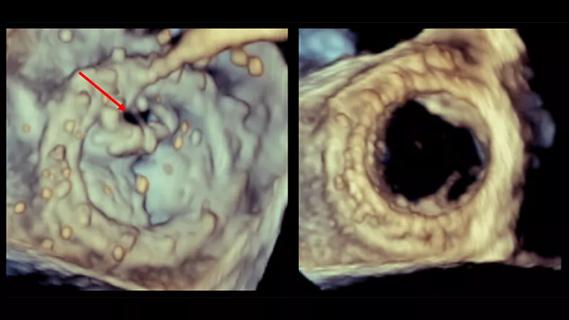
Provides option for patients previously deemed anatomically unsuitable
 Search