Locations:





CME favorite in New York to cover care of tricuspid valve disease too
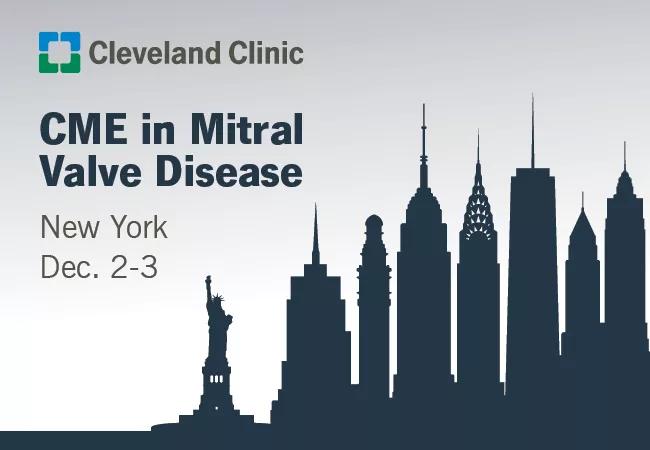
Image content: This image is available to view online.
View image online (https://assets.clevelandclinic.org/transform/e135d246-e0f7-421a-bb1e-1fd24bcddcc5/22-HVI-3006017-CQD-650x450-1_jpg)
22-HVI-3006017 CQD 650×450
Case-based instruction has been central to Cleveland Clinic’s popular end-of-the-year CME courses on mastering the mitral valve and aortic valve in New York City since they were introduced in 2017. This year’s offering doubles down on that case focus, with virtually all sessions featuring a case considered from multiple subspecialty perspectives — clinical cardiology, interventional cardiology, cardiac surgery, cardiovascular imaging — to provide a maximally comprehensive take on managing mitral valve disease.
Advertisement
Cleveland Clinic is a non-profit academic medical center. Advertising on our site helps support our mission. We do not endorse non-Cleveland Clinic products or services. Policy
The course, “A Case-Based Approach to Mastering the Mitral Valve: Imaging, Innovation and Intervention,” is being held Dec. 2-3, 2022, at JW Essex House in New York City, adjacent to Central Park.
“With a case-based approach to every facet of mitral valve disease, expert faculty will inform decision-making that has become increasingly challenging as new options emerge,” says course co-director Marc Gillinov, MD, Chair of Thoracic and Cardiovascular Surgery at Cleveland Clinic.
Those expert faculty include 18 cardiology subspecialists and cardiac surgeons from Cleveland Clinic and other leading U.S. institutions. They will address all major areas of contemporary mitral valve care in 12 focused sessions spread across a full Friday and the following Saturday morning. Sessions consist of several 10- or 15-minute presentations by multidisciplinary experts followed by an interactive panel discussion and Q&A.
After a primer on the latest in mitral regurgitation (MR) imaging and management in the first session, subsequent Friday sessions offer case-based deep dives into various specific clinical scenarios — ventricular arrhythmias and MR, atrial arrhythmias and MR, ischemic MR, mitral annular calcification, and hypertrophic obstructive cardiomyopathy — before concluding with multidisciplinary perspectives on complex scenarios.
Saturday’s agenda starts with looks backward and forward in mitral and tricuspid valve disease from three subspecialty perspectives: clinical cardiology, interventional cardiology and cardiac surgery. First is a review of takeaways from the most important papers in mitral and tricuspid valve disease over the past two years, which is followed by a “crystal ball” session projecting what’s likely to emerge in clinical, interventional and surgical care of these conditions in the next few years.
Advertisement
Much of the rest of Saturday morning is focused on tricuspid valve disease, with individual case-based sessions devoted to various subspecialty takes on tricuspid regurgitation (TR) and torrential TR. Saturday’s agenda concludes with a session on managing post-intervention issues in both mitral and tricuspid valve disease.
The course’s practical, case-based orientation is reflected by a sampling of presentation titles:
“This will be a great course encompassing not only treatment of mitral valve disease but also state-of-the-art imaging now being used for decision-making in these patients,” notes course co-director Brian Griffin, MD, Section Head of Cardiovascular Imaging at Cleveland Clinic.
And beyond the merits of the course itself, adjournment shortly after noon on Saturday leaves the rest of the weekend for exploration of holiday-season New York City. “This course will be made more special by the fact that the Big Apple is at its most delightful this time of year,” Dr. Griffin adds.
For more details and registration, visit ccfcme.org/mitralvalve22. Early-bird discount pricing is offered through Oct. 3.
Advertisement
Advertisement
A sampling of outcome and volume data from our Heart & Vascular Institute
Concomitant AF ablation and LAA occlusion strongly endorsed during elective heart surgery
Large retrospective study supports its addition to BAV repair toolbox at expert centers
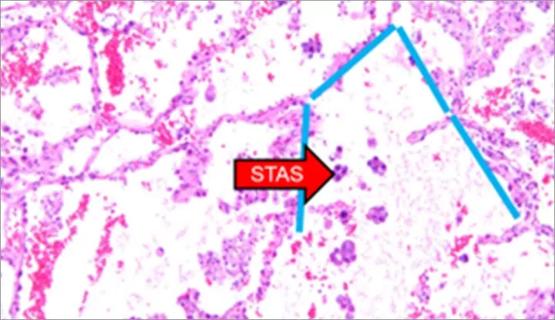
Young age, solid tumor, high uptake on PET and KRAS mutation signal risk, suggest need for lobectomy
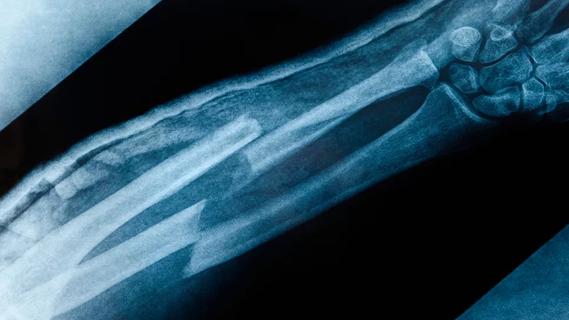
Surprise findings argue for caution about testosterone use in men at risk for fracture
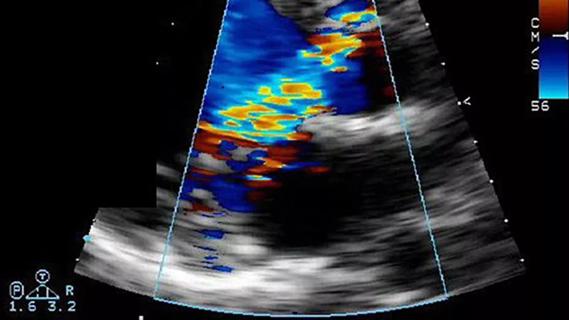
Residual AR related to severe preoperative AR increases risk of progression, need for reoperation

Findings support emphasis on markers of frailty related to, but not dependent on, age
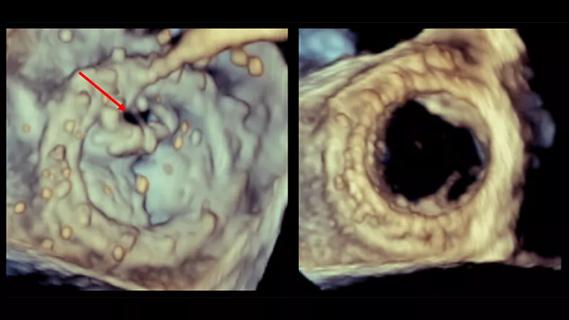
Provides option for patients previously deemed anatomically unsuitable
 Search