Locations:





A new single-port system well-suited for oropharyngeal cancer treatment
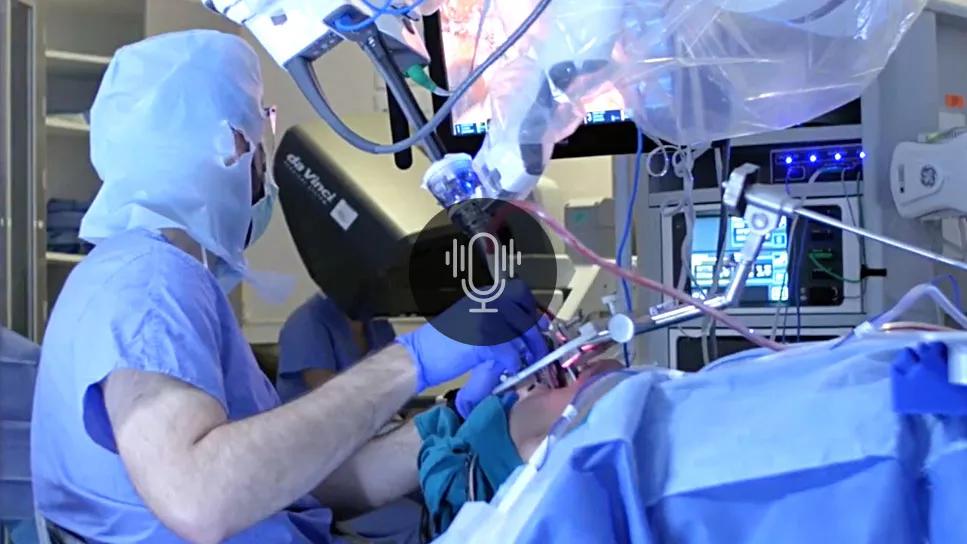
Image content: This image is available to view online.
View image online (https://assets.clevelandclinic.org/transform/39b830c8-7b4f-482f-b33f-8f7727fd102e/23-HNI-4397553-TransoralRoboticSurgery-PodcastFlip-Ku-CQD_967x544_jpg)
Surgeons operating robotically
Podcast content: This podcast is available to listen to online.
Listen to podcast online (https://www.buzzsprout.com/2241209/13504205)
Human papillomavirus-related cancer of the oral pharynx is the only head and neck cancer still on the rise in the United States. Fortunately, because patients with HPV-related cancer tend to be younger, healthier non-smokers, they have a better prognosis and longer survivorship than patients with HPV-unrelated cancers. That makes transoral robotic surgery an excellent treatment option.
Advertisement
Cleveland Clinic is a non-profit academic medical center. Advertising on our site helps support our mission. We do not endorse non-Cleveland Clinic products or services. Policy
“Transoral robotic surgery has become the standard for oropharyngeal cancer over the past decade and has helped de-intensify or reduce the cancer treatment in proper patients,” says Jamie Ku, MD, an otolaryngology head and neck surgeon at Cleveland Clinic specializing in complex cancers.
In a recent episode of Cleveland Clinic’s Head and Neck Innovations podcast, Dr. Ku discusses transoral robotic surgery and other innovations in the field of oropharyngeal cancer. She shares insight on:
Click the podcast player above to listen to the episode now, or read on for a short edited excerpt. Check out more Head and Neck Innovations episodes at clevelandclinic.org/podcasts/head-and-neck-innovations or wherever you get your podcasts.
Podcast host Paul Bryson, MD, MBA: Which patients seem to be better candidates for transoral robotic surgery?
Dr. Ku: In order to maximize the benefit of utilizing such a technology like the single port system for transoral robotic surgery, really proper patient selection is the most important factor. In general, the way we view the role of transoral robotic surgery in HPV-related favorable disease patients is really to de-intensify or reduce treatment that is necessary to treat and cure the cancer, but also minimize the side effects.
Advertisement
And so, patients who may benefit from this surgery are those with early-stage smaller tumors with limited lymph node involvement in the neck. And even in patients who do smoke or have HPV-unrelated disease, there's a role for this kind of technology and surgery. Really, the goal is to again, either avoid radiation or chemotherapy or minimize radiation and chemotherapy.
I say usually about 20% to 30% of patients with these oropharyngeal cancers are ideal candidates for this. And, it really takes a multidisciplinary team of head and neck cancer experts to best determine their personalized treatment plan and whether or not transoral robotic surgery will be part of their care plan package.
Advertisement
Advertisement

With a wide scope of skills, comprehensive otolaryngologists care for patients of all ages in the community

Research on children with UHL explores the quality-of-life benefits and outcomes of cochlear implants

A look at how custom-fitted oral appliances work and when they’re a good fit for patients
Subtle information gleaned from clinical examinations prompted concern
Challenging case requires outside-the-box approach
Collaborative and multidisciplinary approach necessary for treatment

The tri-vector gracilis procedure uses a thin muscle from the thigh to help create a natural mimetic smile
Injections and surgical procedures are among the therapies for patients with early and late vocal cord paralysis
 Search