Locations:





The tri-vector gracilis procedure uses a thin muscle from the thigh to help create a natural mimetic smile

Image content: This image is available to view online.
View image online (https://assets.clevelandclinic.org/transform/1f20b9aa-9db3-4c62-9f0f-0d7976ab3627/23-HNI-4397551-NovelFreeTissueTransfer-4469710-101_967x544_jpg)
patrick byrne, md
Podcast content: This podcast is available to listen to online.
Listen to podcast online (https://www.buzzsprout.com/2241209/13504209)
When people smile spontaneously, not only do the corners of their mouths and cheeks lift. The smile reaches the eyes, causing the corners to wrinkle up with crow’s feet. This smile – called the Duchenne smile – is now possible for people with facial paralysis thanks to a surgical innovation, the tri-vector gracilis flap procedure.
Advertisement
Cleveland Clinic is a non-profit academic medical center. Advertising on our site helps support our mission. We do not endorse non-Cleveland Clinic products or services. Policy
In a recent episode of Cleveland Clinic’s Head and Neck Innovationspodcast, Patrick Byrne, MD, MBA, chair of Cleveland Clinic’s Otolaryngology-Head & Neck Surgery, discusses the procedure and other advancements that offer promise for treating facial paralysis conditions.
“All over the country, there are patients with facial paralysis of a variety of severities who are being told there’s nothing that can be done,” says Dr. Byrne. “That’s almost never the case. There’s almost always something that can be done that can help you improve at least some – and usually a meaningful amount.”
During the podcast, Dr. Byrne talks about:
Click the podcast player above to listen to the episode now, or read on for a short edited excerpt. Check out more Head and Neck Innovations episodes at clevelandclinic.org/podcasts/head-and-neck-innovations or wherever you get your podcasts.
Podcast host Paul Bryson, MD, MBA: What makes the gracilis so special? How did you settle on that muscle?
Dr. Byrne: That’s a good question. There’s a lot of muscle options in the body, and several have been tried. There are actually some strap muscles, for example, in the neck that have a higher percentage of fast twitch fibers and so in some ways are much more replicative of the facial mimetic muscles. And so, the sternohyoid and omohyoid have been used.
Advertisement
The challenge there is the donor site would require you to make a pretty substantial neck incision. So, I think the attributes that we’re looking for are minimal donor site morbidity in terms of function but also cosmesis, and then optionality in terms of effective force transmission to the structures that we’re trying to move – the corner of the mouth, the upper lip, the eyelids. And so, the gracilis turns out it works out.
I don’t know that it’s perfect. It’s definitely not perfect, but it’s a great option. And rather than seek new muscles, which is something in parallel we’re also doing, we’ve focused on what more can we get out of this muscle? And it turns out it’s got a pretty rich network of neurovascular supply, and we’re able to push the envelope more than we realized a few years ago.
Advertisement
Advertisement

With a wide scope of skills, comprehensive otolaryngologists care for patients of all ages in the community
Research on children with UHL explores the quality-of-life benefits and outcomes of cochlear implants
A look at how custom-fitted oral appliances work and when they’re a good fit for patients
Subtle information gleaned from clinical examinations prompted concern
A new single-port system well-suited for oropharyngeal cancer treatment
Challenging case requires outside-the-box approach
Collaborative and multidisciplinary approach necessary for treatment
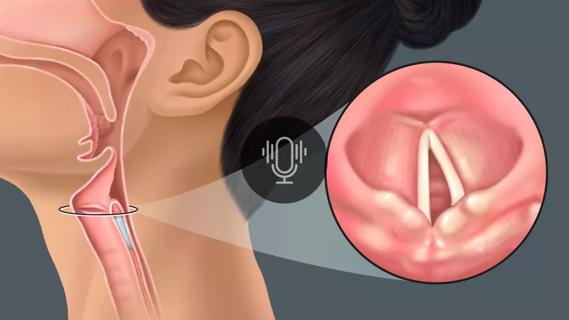
Injections and surgical procedures are among the therapies for patients with early and late vocal cord paralysis
 Search