Locations:





Prompt treatment especially important for stage I melanoma
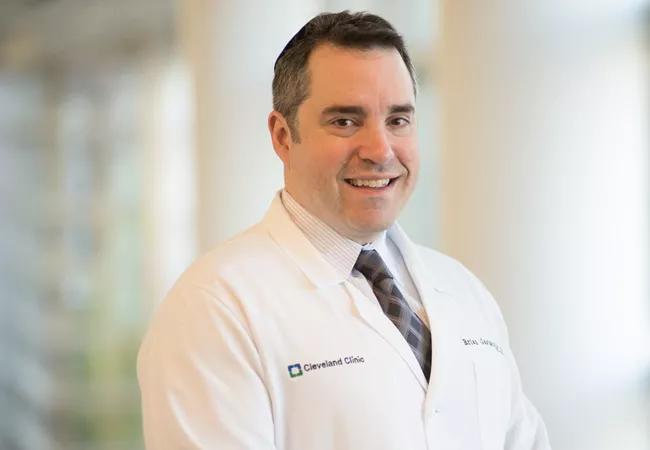
Image content: This image is available to view online.
View image online (https://assets.clevelandclinic.org/transform/881cf204-62dc-4090-82a1-ab5e81a883b9/Dr_Gastman_650x450_jpg)
Dr.Gastman_650x450
A new Cleveland Clinic study underscores the importance of early detection and treatment of melanoma, the deadliest form of skin cancer. The research, published in the Journal of the American Academy of Dermatology, indicates that the sooner patients were treated, the better their survival, particularly for stage I melanoma.
Advertisement
Cleveland Clinic is a non-profit academic medical center. Advertising on our site helps support our mission. We do not endorse non-Cleveland Clinic products or services. Policy
Using the National Cancer Database, researchers from Cleveland Clinic’s Cancer Center and its Dermatology & Plastic Surgery Institute studied 153,218 adult patients diagnosed with stage I-III melanoma from 2004 to 2012. The investigators found that overall survival (OS) decreased in patients waiting longer than 90 days for surgical treatment, regardless of stage. In addition, the delay of surgery beyond the first 29 days negatively impacted overall survival for stage I melanoma, though not for stage II or III.
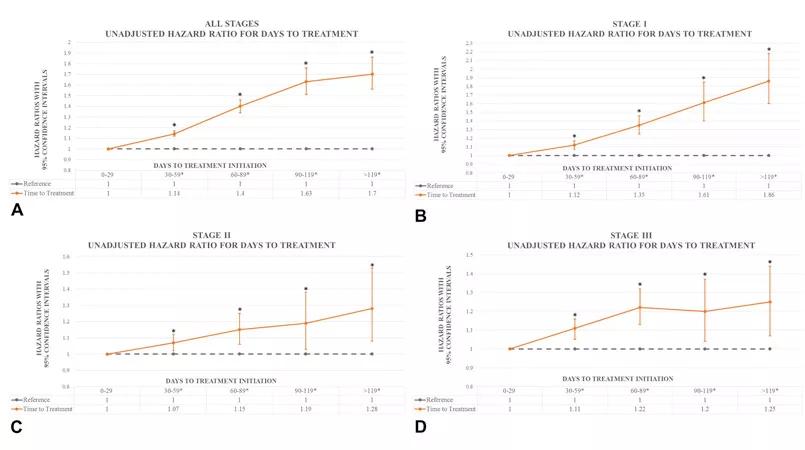
Image content: This image is available to view online.
View image online (https://assets.clevelandclinic.org/transform/a6f6abc6-c9df-4c2f-ad02-7d4949a3aae2/gastman-1_805x450_jpg)
Graphic representation of adjusted and unadjusted hazard ratios by time to treatment initiation. Point estimates represent hazard ratios. Bars represent 95% confidence intervals. A, Unadjusted hazard ratios by time to treatment initiation. B, Unadjusted hazard ratio for days to treatment in stage I. C, Unadjusted hazard ratio for days to treatment in stage II. D, Unadjusted hazard ratio for days to treatment in stage III. Asterisks denote statistical significance.
Compared to patients who were treated within 30 days, patients with stage I melanoma were:
Patients with a longer time to treatment initiation tended to be older and male, and have more comorbidities.
Advertisement
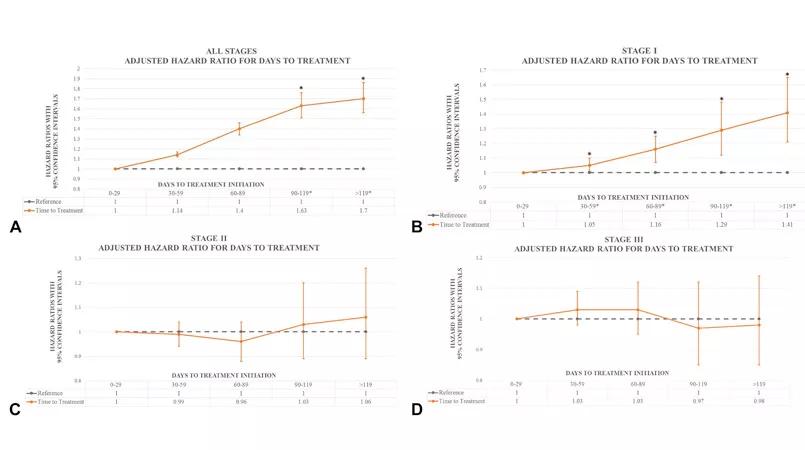
Image content: This image is available to view online.
View image online (https://assets.clevelandclinic.org/transform/a83e858b-caaa-4db1-89a9-f497783138a4/gastman-2_805x450_jpg)
Graphic representation of adjusted hazard ratios by time to treatment initiation. Point estimates represent hazard ratios. Bars represent 95% confidence intervals. A, Adjusted hazard ratios by time to treatment initiation. B, Adjusted hazard ratio for days to treatment in stage I. C, Adjusted hazard ratio for days to treatment in stage II. D, Adjusted hazard ratio for days to treatment in stage III. Asterisks denote statistical significance.
According to the authors, it is likely that more advanced cases represent delays in diagnosis, and these delays overwhelm the impact of a speedier treatment. However, in early stage cases, early diagnosis allows for the opportunity to improve the chances of survival with a prompt surgery. Although many physicians treat melanoma surgically three to four weeks after diagnosis, there is no official recommendation on time to treatment.
“The ideal timing for melanoma treatment, predominantly surgery, had yet to be determined – until now,” said Brian Gastman, MD, medical and surgical director of melanoma and high-risk skin cancer program at Cleveland Clinic, and lead author on the study. “Patients and referring physicians are not only concerned with how a melanoma is removed, but also when it’s removed. We saw significantly worse prognoses and outcomes for those surgically treated after 30 days of stage 1 melanoma diagnosis. Knowing for certain that a more expedient time to surgery to remove an early melanoma improves the chances of survival is a game-changer in treating this life-threatening skin cancer.”
Advertisement
Advertisement

First-of-its-kind research investigates the viability of standard screening to reduce the burden of late-stage cancer diagnoses

Global R&D efforts expanding first-line and relapse therapy options for patients
Study demonstrates ability to reduce patients’ reliance on phlebotomies to stabilize hematocrit levels

A case study on the value of access to novel therapies through clinical trials

Findings highlight an association between obesity and an increased incidence of moderate-severe disease

Cleveland Clinic Cancer Institute takes multi-faceted approach to increasing clinical trial access 23456
Key learnings from DESTINY trials

Overall survival in patients treated since 2008 is nearly 20% higher than in earlier patients
 Search