Locations:





A case study on the value of access to novel therapies through clinical trials
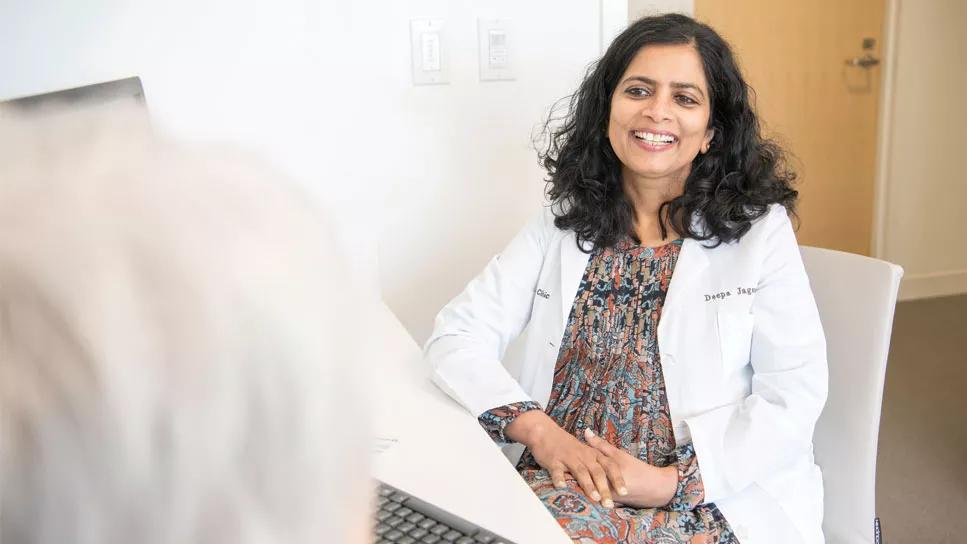
Image content: This image is available to view online.
View image online (https://assets.clevelandclinic.org/transform/06ef9204-dc39-486e-bb04-5ec3c71b5397/Dr-Jagadeesh-patient-GVHD_jpg)
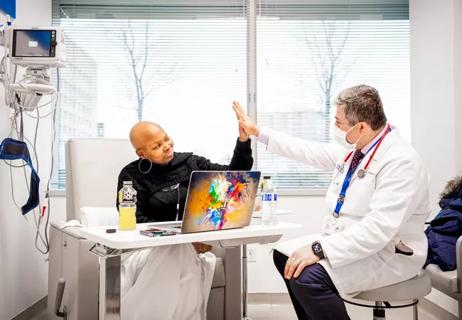
Dr. Jagadeesh at Cleveland Clinic
In 2018, an active man in his mid-40s was diagnosed with systemic T-cell lymphoma, a rare and aggressive disease for which there are limited treatment options. During the course of treatment, he has participated in two clinical trials, which provided access to novel agents.
Advertisement
Cleveland Clinic is a non-profit academic medical center. Advertising on our site helps support our mission. We do not endorse non-Cleveland Clinic products or services. Policy
After the initial diagnosis, the patient was referred to Cleveland Clinic main campus for a second opinion. During her initial consultation, Cleveland Clinic Cancer Institute hematologist Deepa Jagadeesh, MD recommended chemotherapy followed by an autologous stem cell transplant. The patient received chemotherapy at his local community hospital. He opted not to pursue a transplant after he was in complete remission following chemotherapy.
However, two years later, the disease returned, and he was referred back to Cleveland Clinic main campus for another consultation.
During the patient’s second visit, Dr. Jagadeesh discussed his treatment options. “I spoke with him about doing an allogeneic stem cell transplant since this is the only current curative option for relapsed T-cell lymphoma,” says Dr. Jagadeesh. “Through the donor registry, we were able to find a matched, unrelated donor for the transplant, and also had the opportunity to enroll him in a clinical trial with a novel drug combination.”
The trial studied the use of an already approved drug (romidepsin) in combination with a novel therapy (the PI3 kinase inhibitor tenalisib) in relapsed and refractory T-cell lymphoma. The patient decided to enroll in the clinical trial. The patient underwent an allogeneic bone marrow transplant with cells from a matched unrelated donor in December of 2020. His immediate post-transplant course was mostly uncomplicated and he continued to be in remission.
Graft versus host disease (GVHD) is a common complication of an allogeneic stem cell transplant. The patient developed both acute and chronic GVHD of the gastrointestinal (GI) tract that responded to systemic and topical GI steroids. However, he developed acute GVHD of the stomach, and was admitted to the hospital. The treatment course was complicated by infection with BK virus. He was treated with steroids for the GVHD and responded well.
Advertisement
In September 2021, he had a bronchoscopy performed to investigate shortness of breath, but after the procedure his oxygen level remained low and he was admitted to the medical ICU (MCIU). He remained intubated in the MICU, and underwent thoracentesis to remove fluid around the lungs.
The biopsy of the lung revealed chronic lung GVHD, which is very difficult to treat and can be lethal. Chronic GvHD is a leading cause of mortality after an allogenic hematopoietic cell transplant.
Initially, the patient received high-dose steroids and improved enough to be extubated. After being hospitalized for two weeks, he was discharged home with supportive oxygen and steroids.
The illness and lengthy hospitalization left him too weak to walk independently. His determination and hard work helped with recovery. Over time, with physical therapy he was able to walk on his own. However, follow-up CT scan findings were concerning for progression of lung GvHD.
His medical team sought out alternative treatments, and identified a clinical trial studying the JAK2 inhibitor ruxolitinib for patients with steroid-refractory lung GVHD. The patient was enrolled in the trial in April 2022. With treatment, his lung function tests improved, he was weaned off oxygen and he can now jog short distances. His medical team monitors him closely with regular pulmonary function tests. “His lung function continues to improve with each check,” says Dr. Jagadeesh.
Specialized care is needed for rare diseases. Allogenic stem cell transplants can be highly complicated and require a specialized multidisciplinary team. The recovery process can be arduous, and patients need to be monitored closely by a team experienced in understanding the side effects that can arise immediately following and well after the transplant occurs.
Advertisement
A multidisciplinary approach benefits patients. “When we see patients with rare conditions like GvHD, we can collaborate with different teams like rheumatology, pulmonology and cardiovascular care,” says Dr. Jagadeesh. In this case, the hematology team worked closely with a pulmonologist and respiratory therapist who focus on treating rare conditions like lung GVHD.
Clinical trials offer access to the latest treatments. This case study illustrates the point that receiving treatment at an academic research center opens up opportunities for patients with cancer, especially rare cancers, to receive potentially life-altering treatment that isn’t available as standard of care. The Blood and Marrow Transplant Program at Cleveland Clinic Cancer Institute works closely with the BMT Clinical Trials Network to identify clinical trials that may improve survival for patients undergoing hematopoietic cell transplantation.
To refer a patient to Cleveland Clinic Cancer Institute, visit clevelandclinic.org/cancerpatientreferrals. You will receive a confirmation once the appointment is scheduled.
Advertisement
Advertisement
First-of-its-kind research investigates the viability of standard screening to reduce the burden of late-stage cancer diagnoses

Global R&D efforts expanding first-line and relapse therapy options for patients
Study demonstrates ability to reduce patients’ reliance on phlebotomies to stabilize hematocrit levels

Findings highlight an association between obesity and an increased incidence of moderate-severe disease
Cleveland Clinic Cancer Institute takes multi-faceted approach to increasing clinical trial access 23456
Key learnings from DESTINY trials

Overall survival in patients treated since 2008 is nearly 20% higher than in earlier patients
Two-year event-free survival comparable to matched sibling donor myeloablative transplant
 Search