Locations:





First-of-its-kind research investigates the viability of standard screening to reduce the burden of late-stage cancer diagnoses

Image content: This image is available to view online.
View image online (https://assets.clevelandclinic.org/transform/6f2a152e-a628-47bd-bd39-e5709c7e555d/dr-valent-and-team)
Doctors working on MGUS screening study
Multiple myeloma is twice as common in Black patients than in white. Black Americans also face worse prognosis than their counterparts, in part due to late diagnoses.
Advertisement
Cleveland Clinic is a non-profit academic medical center. Advertising on our site helps support our mission. We do not endorse non-Cleveland Clinic products or services. Policy
There is currently no formal recommendation for multiple myeloma screening like there is for breast or colon cancer, despite there being readily available blood tests that can identify precursors to the disease like monoclonal gammopathy of undetermined significance (MGUS) with 99% accuracy. Often multiple myeloma isn’t uncovered until late in the disease stage. It’s common for patients to present with advanced bone disease, spinal cord compression or renal failure.
To address this issue, a team at Cleveland Clinic has undertaken a pilot project to offer Black residents who are 50 and older the opportunity to receive blood test screening for MGUS. This asymptomatic condition involves the presence of an atypical monoclonal protein in the blood. Although only a small portion of MGUS cases will turn into full-blown disease, monitoring those patients may result in earlier disease detection. Swift diagnosis and treatment can stave off more debilitating disease symptoms such as renal failure and spinal fractures.
A study of this nature has never been done before. “Our initial goal is to identify what percentage of older Black adults have MGUS, since they are the population most at risk of multiple myeloma. From there, we’re looking to validate that screening is viable to do,” says lead investigator Jason Valent, MD. “If all goes well, our vision is to offer screenings to Black patients at centers across the U.S.”
As part of the current study, the Community Outreach team offers monoclonal protein analysis blood tests during regular breast and colon cancer screening events in the community. If a patient’s blood tests reveal the monoclonal protein, Cleveland Clinic has an established care path to follow their progress. For most patients, this would mean repeating lab tests the following year, along with an assessment of their blood counts and kidney function.
Advertisement
The research team is careful to explain to potential study participants what it means if they have a precursor condition like MGUS. Although only about 20 percent of MGUS cases will progress to active myeloma, monitoring patients is an important step for better understanding the condition and identifying progression earlier. “We teach people about what it means to have MGUS and its potential to turn into cancer,” says Dr. Valent. “As clinicians, it’s important to recognize that there is a psychological burden to consider for patients who have been identified, and we need to be sensitive to that.”
Through community outreach, researchers are also gauging residents’ receptiveness to screening, and are documenting reasons they agree or decline to participate. “We’re finding that many people willing to participate in the study want to get screened because they have a family member who was diagnosed late with multiple myeloma or another type of cancer, so this resonates with them,” says Diana Basali, MD, a resident fellow working on the study.
Funded by a Catalyst grant, the study also looks at the outcomes of the community education work. Clinicians and the outreach team members teach residents about multiple myeloma risk factors and symptoms. They then follow up later to determine the effectiveness of outreach on knowledge retention.
Researchers hope to enroll roughly 200 patients in the current study, and to share initial study results by the summer.
To refer a patient to Cleveland Clinic Cancer Institute, visit clevelandclinic.org/cancerpatientreferrals. You will receive confirmation once the appointment is scheduled.
Advertisement
Advertisement
Advertisement

Global R&D efforts expanding first-line and relapse therapy options for patients

Study demonstrates ability to reduce patients’ reliance on phlebotomies to stabilize hematocrit levels

A case study on the value of access to novel therapies through clinical trials

Findings highlight an association between obesity and an increased incidence of moderate-severe disease

Cleveland Clinic Cancer Institute takes multi-faceted approach to increasing clinical trial access 23456
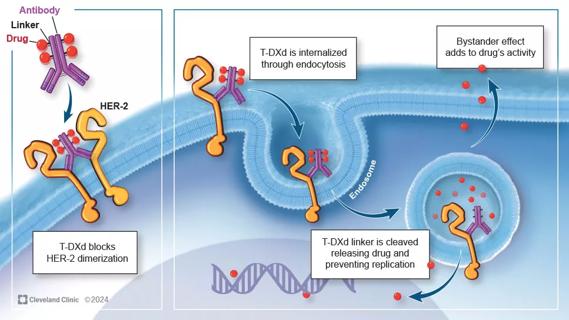
Key learnings from DESTINY trials

Overall survival in patients treated since 2008 is nearly 20% higher than in earlier patients
Two-year event-free survival comparable to matched sibling donor myeloablative transplant
 Search