Locations:





An expert sheds light on emerging knowledge

Image content: This image is available to view online.
View image online (https://assets.clevelandclinic.org/transform/425cff8a-6201-4b20-8008-b3741527c7fb/counseling_650x450_jpg)
counseling_650x450
Pauline Funchain, MD, associate staff in Cleveland Clinic Cancer Center, specializes in the medical oncology of melanoma, head and neck cancer, thyroid cancer and cancer genetics. Her primary research interest is in the genetics and genomics of melanoma. She applies practical translation of genomic data to clinical precision oncology, melanoma survivorship and predictors of clinical outcomes and adverse events related to immunotherapy. She is the lead investigator of the Gross Family Melanoma Registry, an actively accruing study of familial melanoma. We asked Dr. Funchain a few questions about the genomics of melanoma.
Advertisement
Cleveland Clinic is a non-profit academic medical center. Advertising on our site helps support our mission. We do not endorse non-Cleveland Clinic products or services. Policy
Tell us about melanoma genetics, both somatic and germline. Are there germline risk factors for melanoma?
The major player in somatic melanoma genetics is the BRAF V600 mutation. About half of melanomas have this somatic mutation. The presence of this mutation confers susceptibility to targeted therapy in the form of combination BRAF/MEK inhibitor therapy. Melanomas have a very high response rate to such therapy, and dramatic shrinkage is common.
However, acquired resistance to this therapy is common in the stage IV setting. In a patient with BRAF-mutated melanoma, the ability to use both immunotherapy and targeted therapy can make an immense difference in survival as neither therapy is a guaranteed success.
For about 24 years, we have known about germline CDKN2A mutations in familial melanoma. These families had a melanoma-predominant phenotype, and for decades clinicians thought there was no reason to test melanoma families as it did not change treatment or surveillance, and generally, such families were rare. However, in the last decade, multiple new genetic mutations have been identified that increase the risk of developing melanoma. In total, 12 genes have been linked so far to familial melanoma.
Here in Cleveland, we started the Gross Family Melanoma Registry to assess the true prevalence of inherited melanoma. We reported the first data from this registry at the 2018 American Society of Clinical Oncology Annual Meeting. We found that 18.5 percent of people diagnosed with melanomas, who had other melanomas or other cancers themselves or in their family, carried a germline mutation in a known cancer predisposition gene. Interestingly, almost half of these mutations were in genes known to be associated with cancer but not specifically with melanoma. So there is a lot more work to be done in terms of inherited melanoma.
Advertisement
How can we use genomic sequencing to improve management in melanoma?
Genomic sequencing can identify targetable mutations in melanoma. While BRAF V600E mutations are the most common and can be quickly assessed with immunohistochemistry, other BRAF V600 mutations, which are equally responsive to BRAF/MEK inhibition, can only be identified with sequencing.
Other targetable mutations in melanoma include CKIT and NRAS. Rare but targetable fusions in melanoma include RET and NTRK fusions. I don’t think we have yet hit the ceiling on the potential for genomics in cancer treatment; we still have a lot to learn about targeting driver mutations, let alone pharmacogenomics, immunogenomics, the place of tumor mutational burden and resistance mutations to therapy.
On the other hand, the more we learn about germline drivers of melanomagenesis, the more we can refine and develop prevention.
What considerations go into designing a treatment plan for patients so that they can have the best outcome?
The best treatment plan considers the whole patient — who they are, what they value, their greatest hopes and worst fears, their physical shape, the histologic and molecular characteristics of their tumor. All these things play an equal part in shaping the treatment plan.
Advertisement
Advertisement
First-of-its-kind research investigates the viability of standard screening to reduce the burden of late-stage cancer diagnoses

Global R&D efforts expanding first-line and relapse therapy options for patients
Study demonstrates ability to reduce patients’ reliance on phlebotomies to stabilize hematocrit levels
A case study on the value of access to novel therapies through clinical trials

Findings highlight an association between obesity and an increased incidence of moderate-severe disease

Cleveland Clinic Cancer Institute takes multi-faceted approach to increasing clinical trial access 23456
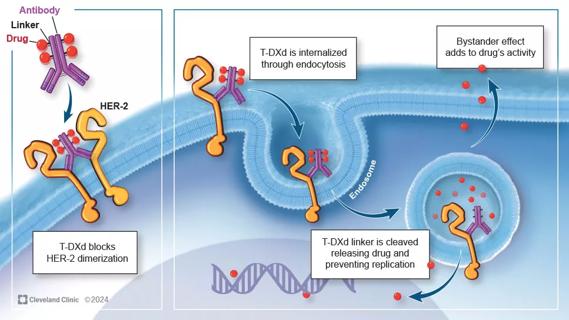
Key learnings from DESTINY trials

Overall survival in patients treated since 2008 is nearly 20% higher than in earlier patients
 Search