Locations:





Majority of 1,000 patients seen in 2022 discharged home
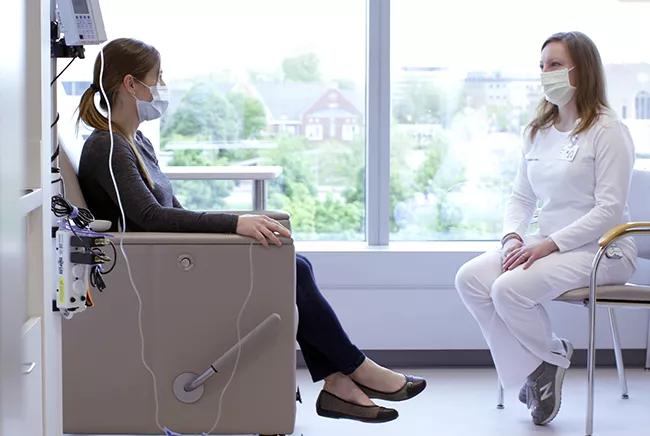
Image content: This image is available to view online.
View image online (https://assets.clevelandclinic.org/transform/d25ee761-7642-4992-affd-d1b3c637a520/23-CNR-3526908-CQD-Hero-650x450-TRAC-clinic_jpg)
TRAC clinic
It’s common for patients with cancer to need immediate intervention when pain, nausea, vomiting, fever or other issues occur, often leading them no choice but to go to the emergency room (ER). A National Hospital Ambulatory Medical Care Survey estimated that across the U.S., ER visits among patients with cancer increased from 3,734,101 in 2012 to 6,240,650 in 2019, and that more than one half of the visits were potentially preventable. Due to the complexity of the disease itself, it’s often difficult for patients or family members to discern whether symptoms require emergency intervention.
Advertisement
Cleveland Clinic is a non-profit academic medical center. Advertising on our site helps support our mission. We do not endorse non-Cleveland Clinic products or services. Policy
The Taussig Rapid Access Clinic (TRAC) is working to support patients and providers facing this situation. If symptoms emerge and it’s not clear what to do, patients can contact their oncologist, who may refer them to TRAC to be triaged by phone, televisit or in person. In many cases, patients can then be seen at TRAC for immediate care instead of going to the emergency room.
Staffed by advanced practice providers, the TRAC clinic staff provide supportive care, including IV fluids, anti-nausea medication as well as antibiotics. “We have a phone call, a virtual visit or an in-person visit to assess the patient, and often they can come right to the clinic for symptom management and then discharge them home if possible,” explains Taussig Cancer Institute Nurse Practitioner and Outpatient APRN/PA Manager Mailey L. Wilks, DNP, APRN, NP-C.
Reducing ER visits
This approach provides a safety net for patients so they can get seen and evaluated swiftly. In 2022 alone, TRAC cared for more than 1,000 patients, the majority of those received intervention in clinic and were able to be discharged home instead of being admitted to the hospital.
Depending on the patient’s situation, the provider may run blood work or imaging, and ask the patient to return to clinic the following day to ensure that they’re stable and continuing to recover well. The TRAC team works collaboratively with the patient’s primary oncology team, keeping them informed about clinic evaluations and any follow-up care and tests needed.
Advertisement
Virtual triage takes the burden off patients to make the long drive to the clinic or wait in the emergency room. “When patients don’t feel well, they’re reluctant to drive an hour or two to be seen,” says Wilks. “If we can talk to them, often we can handle the situation over the phone or virtually, and if not, we direct them to our clinic or to the ER.”
Starting COVID-19 therapies
This approach has also proved beneficial for supporting patients during the pandemic. If a patient is COVID-19 positive, the TRAC staff can see them virtually to assess their symptoms. In some cases, they will start oral antiviral or monoclonal antibody so the patient can avoid driving a long way to come to the clinic in person. This offers convenience for the patient and minimizes the risk of COVID exposure for other patients.
Using an online scorecard, the TRAC team monitors clinic usage by disease groups within oncology to assess future needs. “Patients with GI and GU cancers historically have very complex needs, and we’re seeing significant growth in referrals from both of these areas,” says Wilks. “This is a positive sign that providers see value in sending their patients to TRAC.”
Currently staffed during normal business hours, the TRAC clinic is hoping to expand its hours to further support patients in need of urgent care. The clinic also recently hired a coordinator to oversee clinic operation. With this leadership role in place, the clinic has plans to enhance its operations by streamlining the referral process and introducing new quality initiatives.
Advertisement
Advertisement
First-of-its-kind research investigates the viability of standard screening to reduce the burden of late-stage cancer diagnoses

Global R&D efforts expanding first-line and relapse therapy options for patients
Study demonstrates ability to reduce patients’ reliance on phlebotomies to stabilize hematocrit levels
A case study on the value of access to novel therapies through clinical trials

Findings highlight an association between obesity and an increased incidence of moderate-severe disease

Cleveland Clinic Cancer Institute takes multi-faceted approach to increasing clinical trial access 23456
Key learnings from DESTINY trials

Overall survival in patients treated since 2008 is nearly 20% higher than in earlier patients
 Search