Locations:





An oncologist weighs in

Image content: This image is available to view online.
View image online (https://assets.clevelandclinic.org/transform/dd29f607-3656-4763-acd4-edc20310e912/social-media_650x450_jpg)
social-media_650x450
Advertisement
Cleveland Clinic is a non-profit academic medical center. Advertising on our site helps support our mission. We do not endorse non-Cleveland Clinic products or services. Policy
The Cotton Club, The Breakfast Club and journal club. Like other legendary clubs, journal club has centered around an in-person gathering to facilitate the exchange of commentary and ideas on a given topic. The critical evaluation of recent articles conducted in journal clubs serves as a building block for medical education, evidence-based guidelines and quality improvement initiatives. From residency training, I have very vivid — dare I say fond? — memories of journal club at Hines VA Hospital getting into the nitty gritty of numbers needed to treat with then Chairman Brian Schmitt, MD, MPH. For the past 180 years, from Sir James Paget to Gordon Guyatt, MD, MSc, journal clubs have been steadfast with a very gradual evolution, but the technology revolution is shaking things up.
Social media, including Twitter, has changed the way we communicate. In addition to focused composition and the introduction of emoji, it has also eliminated distance and time. Discussions including thousands can be had instantly across the globe. It has been argued that social media has dumbed down discourse, reducing it to a series of likes or retweets. Despite its limitations, it can be a powerful tool in the appraisal of the medical literature.
With most manuscripts posted on publishers’ websites well in advance of print, the peer review process can occur almost instantaneously. Social media also enables the readership to interact directly with the authors.
With such a large volume of users, critiques presented and validated are essentially crowdsourced, and conversely, individuals can provide insight on how local context may affect the application of results in their own practice. Social media invites its users to come off the bench and get into the game, identifying quality and refuting misinterpretation by a simple post for many, with others taking the next step into content creation. One key element yet to be clarified as things move forward is how these contributions will be measured and how faculty will get academic credit for participating in online forums.
Advertisement
While time will tell if Twitter and social media are the ultimate peer review, it is clear that they can be a powerful tool in conducting academic medicine. I wonder if William Osler would share his critiques in 280 characters or less.
Dr. Gerds is a staff physician in the Department of Hematology and Medical Oncology and publishes in medical literature about social media use. Follow him on Twitter @AaronGerds.
Advertisement
Advertisement

First-of-its-kind research investigates the viability of standard screening to reduce the burden of late-stage cancer diagnoses
Global R&D efforts expanding first-line and relapse therapy options for patients
Study demonstrates ability to reduce patients’ reliance on phlebotomies to stabilize hematocrit levels
A case study on the value of access to novel therapies through clinical trials
Findings highlight an association between obesity and an increased incidence of moderate-severe disease
Cleveland Clinic Cancer Institute takes multi-faceted approach to increasing clinical trial access 23456
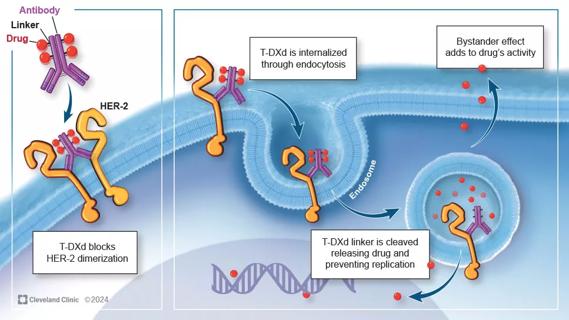
Key learnings from DESTINY trials

Overall survival in patients treated since 2008 is nearly 20% higher than in earlier patients
 Search