Locations:





How aggressive should cancer screening efforts be?
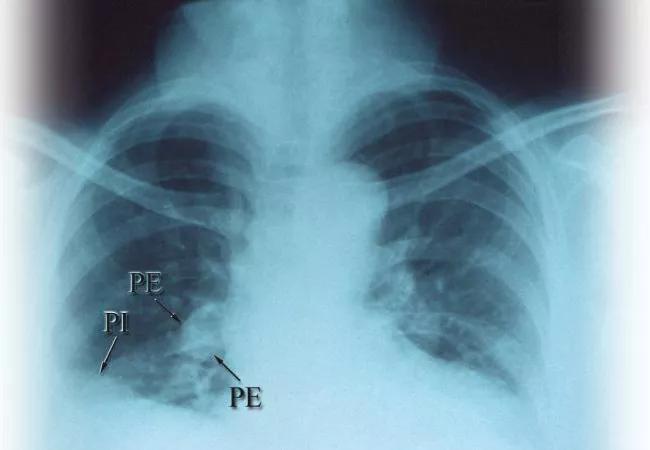
Image content: This image is available to view online.
View image online (https://assets.clevelandclinic.org/transform/f1e0afde-f254-4054-b409-b3cb007640da/16-CNR-543-650x450_jpg)
16-CNR-543-650×450
Advertisement
Cleveland Clinic is a non-profit academic medical center. Advertising on our site helps support our mission. We do not endorse non-Cleveland Clinic products or services. Policy
A fairly common patient presentation is of so-called unprovoked venous thromboembolism (VTE): development of a deep vein thrombosis or a pulmonary embolism without a clear provocation, such as major surgery or trauma.
Surprisingly, despite considerable advances in our understanding of the etiology of VTE, such unprovoked episodes can account for as much as 40 percent of all VTE cases, thereby representing tens of thousands of events annually in the United States.
The linkage between cancer and VTE is well-known. Cancer cases account for at least one-fifth of all VTE cases, and cancer is an important and established provoking factor for VTE. Therefore, it is reasonable for a case of unprovoked VTE to raise concerns about undiagnosed cancer as an underlying factor.
But if a cancer diagnosis is not immediately apparent — say, cough and hemoptysis identified on review of systems — how thoroughly (and expensively) should physicians search for occult underlying malignancy? And does a thorough search truly impact patient outcomes?
These are questions addressed in a large randomized Canadian study recently reported in the New England Journal of Medicine, about which I was privileged to provide a commentary.
Carrier and colleagues assigned more than 800 patients to undergo either limited occult-cancer screening (basic blood testing, chest radiography and age-appropriate screening for breast, cervical and prostate cancer) or limited occult-cancer screening in combination with an enhanced computed tomography (CT) abdominal scan that included a virtual colonoscopy and high-resolution pancreas imaging.
Advertisement
Among the randomized patients, 3.2 percent in the limited-screening group and 4.5 percent in the group receiving limited screening with enhanced abdominal CT were found to have occult cancer within a 12-month follow-up period.
In primary outcome analysis, four occult cancers (29 percent) were missed by limited screening, whereas five (26 percent) were missed using enhanced screening. Neither of these differences was statistically significant. There were also no significant differences in time to a cancer diagnosis (approximately four months in both arms) or in cancer-related mortality (about 1 percent in both arms).
Encouragingly for patients, the risk of subsequent cancer was therefore quite low. The authors concluded that adding enhanced CT of the abdomen and pelvis to routine age-appropriate screening did not provide significant benefit.
One weakness of the study is the mean age of its cohort (53 years), because cancer is much more likely to occur at older ages. An open question therefore is whether an older population would have led to different results.
However, it is not uncommon for study participants to skew younger than general populations — certainly the study population did not limit accrual by age, and this still represents the best randomized data in this setting thus far.
For clinicians, the bottom line is that “doing more” does not appear to identify more cancers in patients with unprovoked VTE and certainly does not affect cancer outcomes. Doing more can also increase radiation exposure, lead to unnecessary interventions to follow up on false-positive results and engender patient anxiety.
Advertisement
Value is an important proposition in the care of patients in the current healthcare environment. In this particular setting, less is more. Limiting workup for occult cancer in unprovoked VTE to age-appropriate screening is the right thing to do for our patients.
Dr. Khorana is the Director of Cleveland Clinic’s Gastrointestinal Cancer Program and a staff member of the Department of Hematology and Medical Oncology. He developed the Khorana score, a protocol that helps predict a cancer patient’s risk of VTE.
Advertisement
Advertisement

First-of-its-kind research investigates the viability of standard screening to reduce the burden of late-stage cancer diagnoses

Global R&D efforts expanding first-line and relapse therapy options for patients

Study demonstrates ability to reduce patients’ reliance on phlebotomies to stabilize hematocrit levels

A case study on the value of access to novel therapies through clinical trials

Findings highlight an association between obesity and an increased incidence of moderate-severe disease

Cleveland Clinic Cancer Institute takes multi-faceted approach to increasing clinical trial access 23456
Key learnings from DESTINY trials

Overall survival in patients treated since 2008 is nearly 20% higher than in earlier patients
 Search