Locations:





Multidisciplinary team to examine radiation therapy combined with immunotherapy
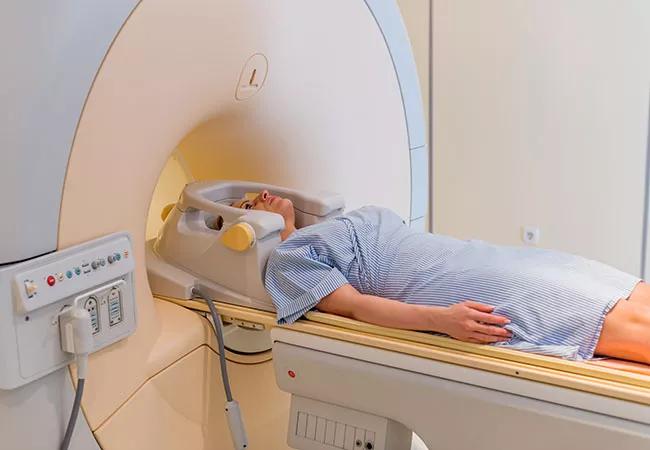
Image content: This image is available to view online.
View image online (https://assets.clevelandclinic.org/transform/9129a4a7-8936-4bb3-8e20-aff0c19b48ce/22-CNR-3291408-CQD-Hero-650x450-radiation-therapy_jpg)
radiation therapy
Roughly two out of every three patients with cancer receive radiation therapy. Yet despite its widespread use, the molecular mechanisms and biology of response to radiation remains poor. The Radiation Oncology-Biology Integration Network (ROBIN) at Cleveland Clinic seeks to develop more effective radiation and immunotherapy combinations and to better understand how these approaches work for cancers of the bladder and head and neck.
Advertisement
Cleveland Clinic is a non-profit academic medical center. Advertising on our site helps support our mission. We do not endorse non-Cleveland Clinic products or services. Policy
In collaboration with Emory University, Cleveland Clinic researchers and clinicians will lead the studies, with the goal of developing new cancer treatment approaches by improving understanding of the drivers of efficacy. Specifically, the team will study radiotherapy in combination with antibody-drug conjugates and immune checkpoint inhibitors.
The ROBIN center will draw upon Cleveland Clinic’s high patient volumes to generate comprehensive molecular data that will provide key information to enable physicians to select the best treatment for each patient. A multidisciplinary team from the fields of radiation oncology, radiation biology and radiation physics research will bring findings in patient care back to the research lab for further examination. In addition, the creation of a cross-training workforce development program is underway to build a pipeline of scientists in radiation biology, radiation physics and clinical radiation oncology.
“The ROBIN trial will create the data needed to ultimately drive precision cancer medicine that, in the end, provides the best outcomes for each patient and helps improve quality of life,” says
Timothy Chan, MD, PhD, Chair of the Cleveland Clinic Center for Immunotherapy and Precision Immuno-Oncology.
Omar Mian, MD, PhD, radiation oncologist at Cleveland Clinic’s Taussig Cancer Institute and researcher at the Lerner Research Institute, and Shilpa Gupta, MD, Director of the Genitourinary Medical Oncology at Taussig Cancer Institute and Co-Leader of the Genitourinary Oncology Program, will lead one of the molecular characterization trials focusing on the combination of a targeted therapy, sacituzumab, plus radiation, for the treatment of bladder cancer. A cohort of this study also will take place at Cleveland Clinic’s Florida Research and Innovation Center, under the leadership of Anatoly Nikolaev, MD, PhD.
Advertisement
A second clinical trial examining the effectiveness of treating recurrent head and neck cancer with radiation therapy and nivolumab, is being led by Shlomo Koyfman, MD, a radiation oncologist at the Taussig Cancer Institute.
Dr. Chan’s lab will analyze de-identified patient samples from both those receiving current standard of care and those in clinical trials, to generate data using multiple genetic analyses. The breadth and depth of data generated will reveal comprehensive insights into radiation-based cancer treatment strategies. In another of the funded projects in the ROBIN, Jacob Scott, MD, DPhil, radiation oncologist and head of the Theory Division in Lerner Research Institute’s Department of Translational Hematology and Oncology Research, will use artificial intelligence to decipher the temporal dynamics of all the complex changes that occur as a result of treatment.
Hear our podcast with Dr. Chan about the Radiation Oncology-Biology Integration Network.
Advertisement
Advertisement
First-of-its-kind research investigates the viability of standard screening to reduce the burden of late-stage cancer diagnoses

Global R&D efforts expanding first-line and relapse therapy options for patients
Study demonstrates ability to reduce patients’ reliance on phlebotomies to stabilize hematocrit levels
A case study on the value of access to novel therapies through clinical trials

Findings highlight an association between obesity and an increased incidence of moderate-severe disease

Cleveland Clinic Cancer Institute takes multi-faceted approach to increasing clinical trial access 23456
Key learnings from DESTINY trials

Overall survival in patients treated since 2008 is nearly 20% higher than in earlier patients
 Search