Locations:





Prospective study shows improved outcomes
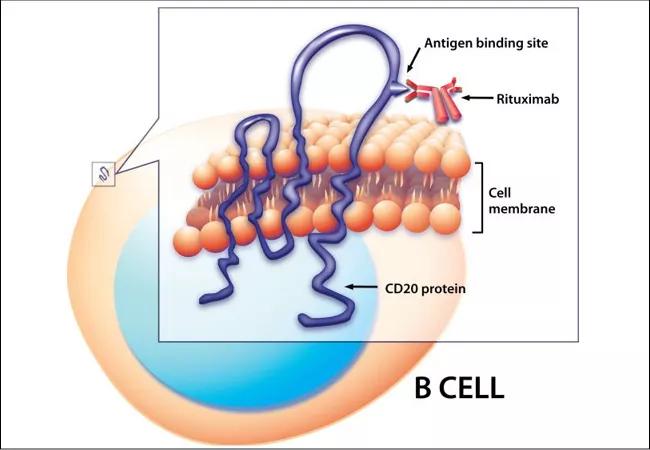
Image content: This image is available to view online.
View image online (https://assets.clevelandclinic.org/transform/49e539a7-0158-4df0-83db-c5728b418764/18-CNR-6413_650x450_jpg)
18-CNR-6413_650x450
A multicenter study demonstrates the efficacy of dose-adjusted R-EPOCH (rituximab, cyclophosphamide, doxorubicin, etoposide, vincristine and prednisone) in treating two rare forms of diffuse large B-cell lymphoma (DLBCL), MYC-translocated DLBCL and double hit DLBCL.
Advertisement
Cleveland Clinic is a non-profit academic medical center. Advertising on our site helps support our mission. We do not endorse non-Cleveland Clinic products or services. Policy
MYC gene rearrangement in DLBCL is rare and occurs in only 10 percent of DLBCL cases. Double hit DLBCL is a subset of MYC-translocated DLBCL that also has either BCL2 or BCL6 gene translocations.
Unlike most DLBCL types, patients with MYC-rearranged DLBCL do not respond well to upfront R-CHOP (rituximab, cyclophosphamide, doxorubicin, vincristine and prednisone) treatment and have higher relapse rates following initial treatment and increased probability of central nervous system (CNS) involvement.
To improve outcomes, researchers are conducting clinical trials evaluating the efficacy of aggressive chemotherapy regimens or incorporating novel agents with upfront chemotherapy in this subset of DLBCL. Recently, investigators performed a phase 2, nonrandomized study with dose-adjusted R-EPOCH.
“Prospective clinical trial data are lacking to guide us about the optimal treatment strategy and regimen to use in this aggressive type of DLBCL,” says Deepa Jagadeesh, MD, Hematology and Medical Oncology, Cleveland Clinic, who was involved in the multicenter study, the results of which were published in The Lancet Haematology. “One thought is to use a more aggressive regimen to see if we could achieve better outcomes.”
The single-arm, multicenter study enrolled 53 patients with DLBCL from 12 centers. The median age was 61 years. The majority were male (75 percent) and had advanced stage (III-IV) disease (81 percent). Forty-nine percent had high-intermediate or high international prognostic index (IPI scores). All patients had MYC rearrangement, while BCL2 or BCL6 rearrangement was seen in 42 percent and 16 percent respectively.
Advertisement
The patients received DA-EPOCH-R administered with CNS prophylaxis for six cycles. Primary endpoints included event-free (EFS) and overall survival (OS).
The overall response rate was 87 percent, and 74 percent achieved a complete response. The 48-month EFS and OS were 71 percent and 77 percent respectively. The median follow-up was 56 months. Grade 4 neutropenia and thrombocytopenia were observed during 53 percent and 13 percent of total cycles respectively. The occurrence of any grade neutropenic fever was seen in 19 percent of total cycles. There were three treatment-related deaths, all attributed to infections.
“The study showed better overall response rate in these high-risk DLBCL patients,” says Dr. Jagadeesh, “and we do have decent follow-up. The event-free survival of 71 percent at median follow up of 56 months is encouraging in this patient population. Hospitalization for neutropenic fever and infections were noted in patients treated at our institution. But the toxicity profile was acceptable, and the regimen was tolerated even by older patients in the study.”
The study’s biggest limitation is its small sample size of 53 patients. “It is a small number,” says Dr. Jagadeesh. “But it’s difficult to do a large study with this subgroup because they are such a small subset of DLBCL.”
The other concern is that the study was single arm and did not compare patients treated with DA-EPOCH-R to R-CHOP, but a randomized study would be difficult given the rarity of MYC rearrangement and double hit DLBCL.
Advertisement
Nonetheless, results suggest that the aggressive therapy is an option for these rare forms of DLBCL.
Image: Computer-generated illustration of rituximab binding to CD20 protein on B cell. Credit: NIAID. Licensed. No changes were made.
Advertisement
Advertisement

First-of-its-kind research investigates the viability of standard screening to reduce the burden of late-stage cancer diagnoses

Global R&D efforts expanding first-line and relapse therapy options for patients

Study demonstrates ability to reduce patients’ reliance on phlebotomies to stabilize hematocrit levels

A case study on the value of access to novel therapies through clinical trials

Findings highlight an association between obesity and an increased incidence of moderate-severe disease

Cleveland Clinic Cancer Institute takes multi-faceted approach to increasing clinical trial access 23456
Key learnings from DESTINY trials

Overall survival in patients treated since 2008 is nearly 20% higher than in earlier patients
 Search