Locations:





Research advances, better treatment protocols improve outcomes
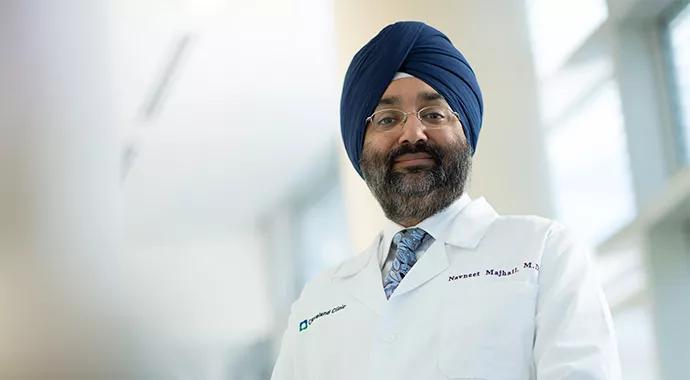
Image content: This image is available to view online.
View image online (https://assets.clevelandclinic.org/transform/4e807275-7415-4c20-b441-1c231eb20ced/majhail-690x380_jpg)
majhail-690×380
With its recently updated name, Cleveland Clinic’s Blood & Marrow Transplant Program (formerly the Bone Marrow Transplant Program) is conveying the medical progress underway and the development of advanced therapies for pediatric and adult blood disorders.
Advertisement
Cleveland Clinic is a non-profit academic medical center. Advertising on our site helps support our mission. We do not endorse non-Cleveland Clinic products or services. Policy
The name change “is reflective of the advances that have been made and where the field is going,” explains Navneet Majhail, MD, MS, a respected hematology/oncology clinician and researcher who was named Director of the Blood & Marrow Transplant (BMT) Program in 2013.
Those advances, Dr. Majhail says, include better infection, rejection and bleeding prevention and treatment; safer pre-transplantation radiation and chemotherapy protocols; and the identification of new sources for hematopoietic stem cells, such as from half-matched haploidentical donors.
“All these have come together to help outcomes in transplantation,” says Dr. Majhail, who previously was Medical Director of Health Services Research at the National Marrow Donor Program, and an adjunct associate professor with the University of Minnesota’s Division of Hematology, Oncology and Transplantation. “It’s a combination of better understanding of basic science, of the immunology of transplant, of better protocols and better supportive care, all coming together through clinical research trials and studies.”
Ideally, patients in need of a hematopoietic stem cell transplants (HSCT) can be matched with a sibling who has the same human leukocyte antigen (HLA) tissue type. These transplants have the greatest chance for success. However, only about one-third of candidates for allogeneic HSCT have HLA-matched brothers or sisters.
Improvements in HLA typing have enabled the use of HLA-matched unrelated donors, assuming one can be found. The chance of identifying such a match varies significantly depending on the recipient’s racial and ethnic background. Almost a third of minority patients are not able find a suitable unrelated donor.
Advertisement
Without an HLA-matched sibling or unrelated HLA-matched donor, a patient’s remaining transplant options until recently were limited to hematopoietic stem cells derived from umbilical cord blood, or from a partially HLA-mismatched unrelated donor. Both procedures carry a high risk of transplant-related mortality.
Cleveland Clinic is one of a handful of institutions that have begun offering patients another alternative: HLA-haploidentical HSCT. Also known as a “half-matched” transplant, the procedure involves a donor who shares identity with the recipient for one HLA haplotype on chromosome 6, and is variably mismatched for HLA genes on the unshared haplotype.
Since each person inherits one HLA haplotype from each biological parent, and passes along one haplotype to each biological child, any patient with a living parent or child has a potential HLA-haploidentical donor for HSCT.
The major advantage of haploidentical HSCT is that it significantly broadens the donor pool and gives nearly all patients the chance to benefit from a transplant. It’s a step closer to the concept of a universal donor, says Rabi Hanna, MD, Director of Cleveland Clinic’s Pediatric Blood & Marrow Transplant Program.
Moreover, haploidentical donors generally can be identified quickly, are highly motivated to donate for a family member, and can donate lymphocytes for infusion or other cellular therapies in case the recipient experiences post-transplant relapse.
In the past, haploidentical HSCT was considered too dangerous for all but the sickest patients because of a high incidence of severe graft-vs.-host disease (GVHD). But improvements in reduced-intensity conditioning regimens and GVHD prophylaxis with high-dose post-transplant cyclophosphamide have made haploidentical HSCT a feasible option for patients with high-risk malignancies, and even those with life-threatening nonmalignant disorders, Dr. Hanna says.
Advertisement
Other efforts are underway at Cleveland Clinic to improve the HSCT process. They include:
Advertisement
Advertisement
First-of-its-kind research investigates the viability of standard screening to reduce the burden of late-stage cancer diagnoses

Global R&D efforts expanding first-line and relapse therapy options for patients

Study demonstrates ability to reduce patients’ reliance on phlebotomies to stabilize hematocrit levels
A case study on the value of access to novel therapies through clinical trials

Findings highlight an association between obesity and an increased incidence of moderate-severe disease

Cleveland Clinic Cancer Institute takes multi-faceted approach to increasing clinical trial access 23456
Key learnings from DESTINY trials

Overall survival in patients treated since 2008 is nearly 20% higher than in earlier patients
 Search