Locations:





ASCO panels provide evidence-based recommendations

Image content: This image is available to view online.
View image online (https://assets.clevelandclinic.org/transform/7c6df57d-205d-458c-ab3f-efe6d36c9381/khorana-680x390_jpg)
khorana-680×390
Pancreatic cancer is increasingly affecting cancer-related mortality in the United States and is slated to become one of the leading causes of cancer deaths by the end of this decade.
Advertisement
Cleveland Clinic is a non-profit academic medical center. Advertising on our site helps support our mission. We do not endorse non-Cleveland Clinic products or services. Policy
There are no screening programs for early detection. Overall five-year survival is 7.2 percent. Although recent insights into the biology of pancreatic cancer have led to novel therapeutics, and combination regimens have produced incremental improvement in median survival, key clinical issues remain, including:
To help address these knowledge gaps, the American Society of Clinical Oncology’s (ASCO) Clinical Practice Guidelines Committee Working Group commissioned expert panels to produce three new pancreatic cancer guideline documents: for potentially curable (likely resectable), locally advanced and metastatic clinical presentations.
“The three published papers represent ASCO and the oncology community’s effort to standardize care of patients with pancreatic cancer in the three most common types of presentation,” says oncologist Alok A. Khorana, MD, Director of Cleveland Clinic Cancer Center’s Gastrointestinal Cancer Program and the co-chair of the panel that prepared the guidelines for potentially curable pancreatic cancer. Oncologist Davendra Sohal, MD, MPH, Director of Cleveland Clinic Cancer Center’s Clinical Genomics Program, co-chaired the panel that produced the metastatic pancreatic cancer guidelines.
“These guidelines have been formulated with consensus from a variety of providers across multiple disciplines and including patient advocates,” Dr. Khorana says. “The manuscripts focus on providing appropriate care across the continuum of care for this illness, with an emphasis on early involvement of palliative care and patient-centered approaches that include treatment decision-making in the context of medical comorbidities. The guidelines also identify the existence of major knowledge gaps and call for additional federal and philanthropic funding to help increase the options available for this difficult illness.”
Advertisement
To read Dr. Khorana’s ASCO Daily News article about the new guidelines, click here.
Advertisement
Advertisement

First-of-its-kind research investigates the viability of standard screening to reduce the burden of late-stage cancer diagnoses

Global R&D efforts expanding first-line and relapse therapy options for patients

Study demonstrates ability to reduce patients’ reliance on phlebotomies to stabilize hematocrit levels

A case study on the value of access to novel therapies through clinical trials

Findings highlight an association between obesity and an increased incidence of moderate-severe disease

Cleveland Clinic Cancer Institute takes multi-faceted approach to increasing clinical trial access 23456
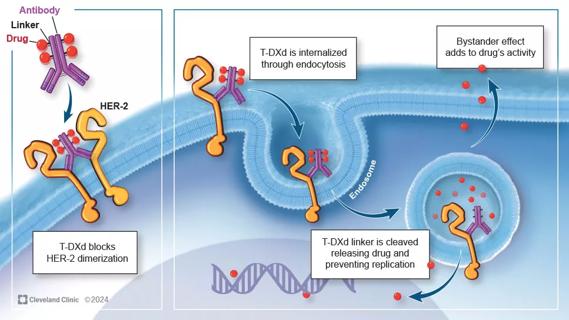
Key learnings from DESTINY trials

Overall survival in patients treated since 2008 is nearly 20% higher than in earlier patients
 Search