Locations:





Data may lead to better treatment
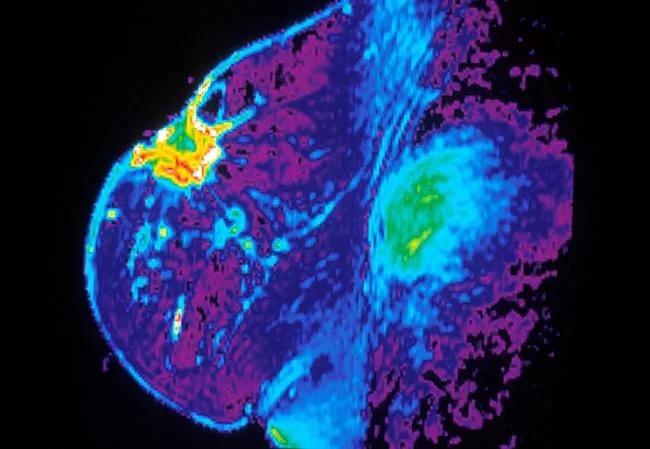
Image content: This image is available to view online.
View image online (https://assets.clevelandclinic.org/transform/8bcf0740-a16a-47be-8c1f-8b210dd05d6d/nci-vol-2706_650x450_jpg)
nci-vol-2706_650x450
Lobular breast cancer is the second most common type of breast cancer from a histological perspective, but it only represents about 10 to 15 percent of breast cancer cases. Because of its rareness, oncologists have tended to view it and treat it in the same way as the more common ductal breast cancer.
Advertisement
Cleveland Clinic is a non-profit academic medical center. Advertising on our site helps support our mission. We do not endorse non-Cleveland Clinic products or services. Policy
But as more research is performed on lobular cancers, investigators are starting to recognize that it has some distinct features apart from ductal cancer, especially with respect to how it metastasizes and its decreased sensitivity to chemotherapy.
With this in mind, scientists from Cleveland Clinic, University of Pittsburgh Medical Center, Ohio State University and University Hospitals Cleveland Medical Center are creating a lobular breast cancer registry that will include cases from 1990 to the present.
“Many of us in the community feel like these cancers need some special attention,” says Megan Kruse, MD, Hematology and Medical Oncology, Cleveland Clinic. “That maybe it’s not best that we treat lobular breast cancer the same as ductal breast cancer. But the challenge in doing so is that lobular breast cancer cases are pretty rare, and so in order to really get a comprehensive look at its characteristics and treatment patterns, you really have to do it across multiple institutions.”
In addition to the new registry, Dr. Kruse says she also plans to soon start a genomics project around CDK4/6 inhibitors, a relatively new breast cancer drug, to see how the medication affects the DNA of both metastatic lobular breast cancer and metastatic ductal breast cancer.
“There is not that much information out there about what types of patients have the best response to these medications,” she says, “and how treatment with CDK4/6 inhibitors may alter genetic expressions in the cancer after treatment.
Advertisement
“So we’ll be looking to answer several questions: Can we identify any genomic predictors of which patients will respond best to therapy? How do we characterize the genomic changes we see after treatment? And will that give us an idea of how the cancers become resistant to treatment?”
Dr. Kruse said she and other researchers at Cleveland Clinic area already gathering data on their lobular cancer patients for the registry — which she expects to contain data on 4,000 to 5,000 patients once it’s finished.
She hopes they have enough preliminary data to share some of it at the upcoming Great Lakes Breast Cancer Research Symposium. The group also plans to share information about the new registry at the San Antonio Breast Cancer Symposium next December.
“The registry will allow us to look in the aggregate at the characteristics of lobular breast cancer like size and hormone sensitivity,” she says. “It will also look at the type of treatments patients received: who got chemotherapy, who didn’t and how they responded. Finally we’ll also look at the genomics of these breast cancer cases to see if there’s a difference between what we expected and what we find.”
Image: MRI of breast. Source: NCI Visuals Online.
Advertisement
Advertisement

First-of-its-kind research investigates the viability of standard screening to reduce the burden of late-stage cancer diagnoses

Global R&D efforts expanding first-line and relapse therapy options for patients

Study demonstrates ability to reduce patients’ reliance on phlebotomies to stabilize hematocrit levels

A case study on the value of access to novel therapies through clinical trials

Findings highlight an association between obesity and an increased incidence of moderate-severe disease

Cleveland Clinic Cancer Institute takes multi-faceted approach to increasing clinical trial access 23456
Key learnings from DESTINY trials

Overall survival in patients treated since 2008 is nearly 20% higher than in earlier patients
 Search