Locations:





Dr. Chirag Shah led development of consensus statement
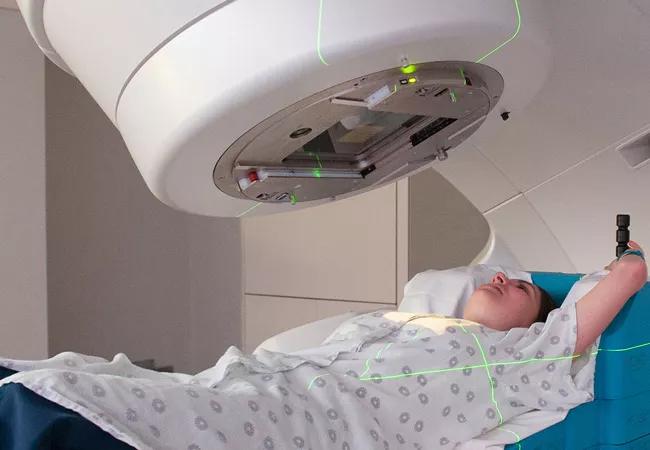
Image content: This image is available to view online.
View image online (https://assets.clevelandclinic.org/transform/c60aa410-5734-4302-a73a-93bc0cae1dec/rad-guidelines_650x450_jpg)
rad-guidelines_650x450
Cleveland Clinic researcher and radiation oncologist Chirag Shah, MD, led the development of recently updated guidelines for the appropriate and safe use of accelerated partial-breast irradiation (APBI). The guidelines are published online in the journal Brachytherapy.
Advertisement
Cleveland Clinic is a non-profit academic medical center. Advertising on our site helps support our mission. We do not endorse non-Cleveland Clinic products or services. Policy
APBI is a breast radiation therapy technique in which targeted radiation is delivered, either via brachytherapy (applicator devices or multiple catheters) or through external beam radiation, specifically to the part of the breast where the tumor was removed with a margin without treating the whole breast.
For patients with ductal carcinoma in situ (DCIS) and early-stage invasive breast cancer, APBI has been shown to be an alternative to standard whole-breast irradiation, allowing for a reduction in the duration of radiation therapy. The technique, by reducing the amount of normal healthy breast tissue treated with radiation, may also reduce side effects of treatment and improve cosmetic outcomes.
Dr. Shah led a group of physicians appointed by the American Brachytherapy Society to develop a consensus statement of updated guidelines. The new guidelines recommend the technique for a broader group of patients by allowing younger patients to be eligible as well as all patients with DCIS who meet the other criteria. The authors’ consensus is that the appropriate candidates for APBI include:
“The updated guidelines support clinicians by offering them the ability to appropriately select patients for APBI, and additionally by providing them with data that supports and assesses the strength of the various APBI techniques,” says Dr. Shah. “These guidelines allow for the selection of patients who can finish radiation treatment in one week or less, compared to the traditional period of three to six weeks, and potentially a reduction in side effects depending on the APBI technique.”
Advertisement
The previous APBI guidelines, also led by Dr. Shah, were developed in 2013. Since then, results from newly published randomized trials, including RAPID, IMPORT LOW, University of Florence, ELIOT and TARGIT-A, have necessitated an update to the guidelines.
“As the trials have been published, we’ve updated our thinking about APBI and definitions of standards of care,” says Dr. Shah. “The consensus statement further validates the clinical choices we’ve made for our patients, and I am happy to see this modality available to a broader range of patients.”
Advertisement
Advertisement

First-of-its-kind research investigates the viability of standard screening to reduce the burden of late-stage cancer diagnoses

Global R&D efforts expanding first-line and relapse therapy options for patients

Study demonstrates ability to reduce patients’ reliance on phlebotomies to stabilize hematocrit levels

A case study on the value of access to novel therapies through clinical trials

Findings highlight an association between obesity and an increased incidence of moderate-severe disease

Cleveland Clinic Cancer Institute takes multi-faceted approach to increasing clinical trial access 23456
Key learnings from DESTINY trials

Overall survival in patients treated since 2008 is nearly 20% higher than in earlier patients
 Search