Locations:





Response rates as good as or better than other therapies
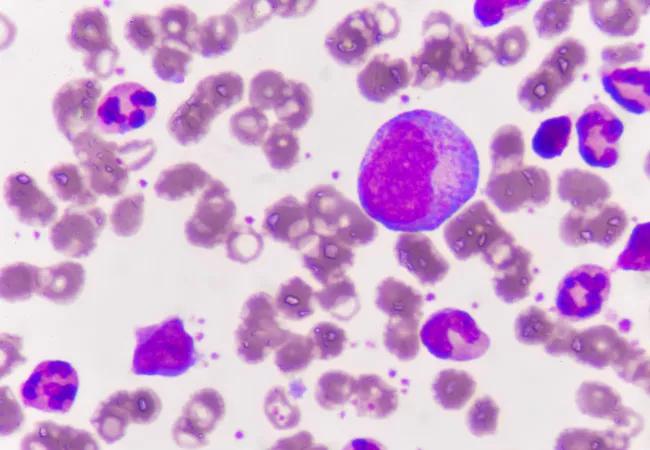
Image content: This image is available to view online.
View image online (https://assets.clevelandclinic.org/transform/8a31751c-15b9-48d5-898a-5bc4639f12e1/leukemia_650x450_jpg)
leukemia_650x450
FDA-approved treatment options are few and far between for patients with acute myeloid leukemia (AML), a disease characterized by genomic abnormalities.
Advertisement
Cleveland Clinic is a non-profit academic medical center. Advertising on our site helps support our mission. We do not endorse non-Cleveland Clinic products or services. Policy
Recently, however, researchers conducted a study that led to agency approval to treat a subset of AML patients — those with the genetic mutation IDH1 — with the drug ivosidenib.
“There are a paucity of treatment options that are FDA-approved for patients with AML,” says Mikkael Sekeres, MD, MS, Director of the Leukemia Program at Cleveland Clinic Cancer Center. “So this is welcome news for patients who have the IDH1 mutation.”
Dr. Sekeres was one of a number of physician researchers involved in the clinical trial, which included a cohort of patients with AML. About 5 to 10 percent of patients with AML have the IDH1 mutation.
The investigators enrolled 258 patients in the trial; 179 had relapsed or refractory AML. The median age was 68 years, and 137 patients were male. The patients received 500 mg of ivosidenib daily with at least six months of follow-up.
Almost 75 percent of the patient population had received intensive standard chemotherapy in the past. About 33 percent had received another investigational therapy in the past.
“We saw complete remission with or without full hematologic recovery in 30 percent of the patients,” says Dr. Sekeres. “More importantly, the median duration of remission was almost nine months.”
Dr. Sekeres says the drug caused about 10 percent of patients to have differentiation syndrome, a constellation of side effects including fever, fluid retention, weight gain and respiratory compromises along with a rise in white blood cell count. Differentiation syndrome can be managed with steroids and diuretics, he says.
Advertisement
“Overall, the drug caused elimination of minimal residual disease in a small percentage of patients, and I think, more importantly, it led to response rates and response durations that are as good as or better than other therapies we have available,” says Dr. Sekeres.
The next step will be to assess how well ivosidenib works in combination with standard chemotherapy, particularly in newly diagnosed AML patients with the IDH1 mutation.
“We do testing for genetic mutations in all patients who are diagnosed with leukemia or related cancers and, therefore, can identify approaches that are specific to an individual patient,” he says.
Advertisement
Advertisement

First-of-its-kind research investigates the viability of standard screening to reduce the burden of late-stage cancer diagnoses

Global R&D efforts expanding first-line and relapse therapy options for patients

Study demonstrates ability to reduce patients’ reliance on phlebotomies to stabilize hematocrit levels

A case study on the value of access to novel therapies through clinical trials

Findings highlight an association between obesity and an increased incidence of moderate-severe disease

Cleveland Clinic Cancer Institute takes multi-faceted approach to increasing clinical trial access 23456
Key learnings from DESTINY trials

Overall survival in patients treated since 2008 is nearly 20% higher than in earlier patients
 Search