Locations:





Preliminary results from a national registry
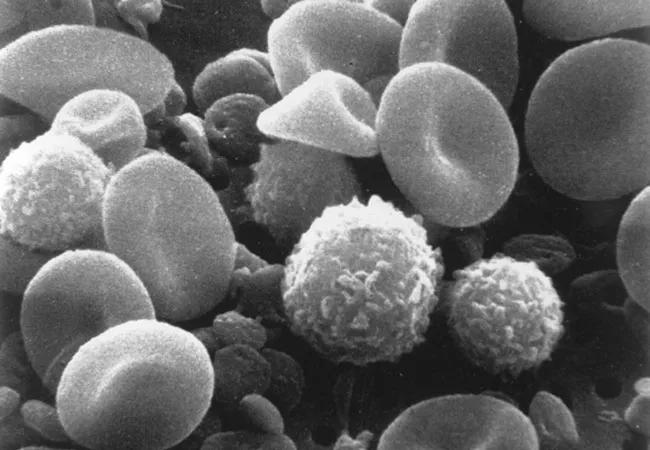
Image content: This image is available to view online.
View image online (https://assets.clevelandclinic.org/transform/ab0f0370-62b0-408c-88e6-de52e6365e91/nci-vol-2129_650x450_jpg)
nci-vol-2129_650x450
Preliminary data from a national registry shows that as many as 40 percent of patients diagnosed with myelodysplastic syndromes (MDS) don’t actually have the disorder. This high percentage reflects a national problem with the interpretation of the epidemiology of MDS, according to Mikkael Sekeres, MD, MS, principal investigator of the study.
Advertisement
Cleveland Clinic is a non-profit academic medical center. Advertising on our site helps support our mission. We do not endorse non-Cleveland Clinic products or services. Policy
Investigators started The National MDS Study in 2017 to establish a cohort of 2,000 adults recently diagnosed with MDS and 500 adults with idiopathic cytopenia of undetermined significance (ICUS). The patients will donate bone marrow, blood and other biological samples and data about such things as their symptoms, treatments and perceived quality of life.
“The mission of the study is to make available for years to come a clinical database and a biobanking samples repository from which research can be conducted to try and ascertain the causes, natural history, and hopefully treatment options for patients with MDS,” says Dr. Sekeres, Director of the Leukemia Program and Vice Chair for Clinical Research at Cleveland Clinic Cancer Center.
Dr. Sekeres and colleagues compiled their preliminary analysis on the first 375 patients enrolled in the study, all of which had cytopenias and clinically suspected MDS and were identified between June 2016 and June 2018 from 84 participating centers.
Physicians participating in the study make their diagnoses based on patients’ bone marrow biopsies. They then send bone marrow samples, along with clinical information and quality of life information, to a central laboratory with two pathologists who have expertise in diagnosing MDS and who are blind to the original site’s diagnosis.
Dr. Sekeres and his co-investigators found disagreements between the original diagnoses and that of the central lab in 40 percent of the 375 cases, and later analyses showed that those disagreements were clinically meaningful in 26 percent of patients. “It’s a huge number of patients,” says Dr. Sekeres. “Almost 100 patients out of 375 had a clinically meaningful change in their diagnosis.”
Advertisement
For example, he says, physicians at enrolling sites may have found low blood counts but made no specific diagnoses, but after pathologists at the central lab looked at the samples and data, 22 of those patients were actually given an MDS diagnosis and two were given an acute leukemia diagnosis. In other cases, he says, patients were given a diagnosis of acute leukemia when, in fact, they didn’t have a malignancy at all.
“I think this study shows that, first of all, MDS is a tricky diagnosis to make and probably warrants review by some center with expertise in making the diagnosis,” says Dr. Sekeres. “It also has implications for how the National Cancer Institute and Centers for Disease Control, through their Surveillance, Epidemiology, and End Results (SEER) Program, classify MDS, which is similarly based on an individual treatment site’s determination. Those determinations may be wrong 40 percent of the time. In other words, we have a problem with our national interpretation of the epidemiology of MDS.”
Dr. Sekeres says this initial report does not include genomic data, but the study investigators are starting to run next-generation sequencing on all patients’ samples and that may help refine patients diagnoses.
“For example,” he says, “if a patient has abnormal blood counts but doesn’t quite reach the definition of MDS in the bone marrow, the detection of genetic mutations might help in correctly classifying the person as having MDS, which would influence treatment decisions.”
Advertisement
At Cleveland Clinic, Dr. Sekeres and his colleagues have established a clinic for patients who have those mutations but don’t yet have MDS. “We will follow them over time and help advise them on their risk.”
Feature image source: National Cancer Institute, created by Bruce Wetzel and Harry Schaefer
Advertisement
Advertisement

First-of-its-kind research investigates the viability of standard screening to reduce the burden of late-stage cancer diagnoses

Global R&D efforts expanding first-line and relapse therapy options for patients

Study demonstrates ability to reduce patients’ reliance on phlebotomies to stabilize hematocrit levels

A case study on the value of access to novel therapies through clinical trials

Findings highlight an association between obesity and an increased incidence of moderate-severe disease

Cleveland Clinic Cancer Institute takes multi-faceted approach to increasing clinical trial access 23456
Key learnings from DESTINY trials

Overall survival in patients treated since 2008 is nearly 20% higher than in earlier patients
 Search