Locations:





Oncologists seek elusive balance between honesty and hope

Image content: This image is available to view online.
View image online (https://assets.clevelandclinic.org/transform/5d158dab-4479-4aaf-a890-0321bb2dfb70/650x450-Cleveland-Clinic-Cancer_jpg)
650×450-Cleveland-Clinic-Cancer
By Mikkael Sekeres, MD, MS, and Timothy Gilligan, MD
Advertisement
Cleveland Clinic is a non-profit academic medical center. Advertising on our site helps support our mission. We do not endorse non-Cleveland Clinic products or services. Policy
We’re meeting you for the first time, soon after your primary care doctor or surgeon has sat down with you, or called, to tell you some terrible news: You have cancer.
We are the oncologists, and we want to help. We want to discuss your diagnosis, what it means and what the options are for treatment. We’d like to give you a clear map of what your life might look like over the next few months as we fight along with you to minimize the amount of this awfulness, even if temporarily, from your body.
But one of the biggest problems we face is that we often can’t figure out what our patients would like to know about their prognosis. Even when we ask.
Read the full New York Times column by Dr. Sekeres, Director of Cleveland Clinic Cancer Center’s Leukemia Program, and Dr. Gilligan, Taussig Cancer Institute’s Vice-Chair for Education and Director of Coaching at the Center for Excellence in Healthcare Communication.
Photo Credit ©Russell Lee
Advertisement
Advertisement
First-of-its-kind research investigates the viability of standard screening to reduce the burden of late-stage cancer diagnoses

Global R&D efforts expanding first-line and relapse therapy options for patients

Study demonstrates ability to reduce patients’ reliance on phlebotomies to stabilize hematocrit levels
A case study on the value of access to novel therapies through clinical trials

Findings highlight an association between obesity and an increased incidence of moderate-severe disease
Cleveland Clinic Cancer Institute takes multi-faceted approach to increasing clinical trial access 23456
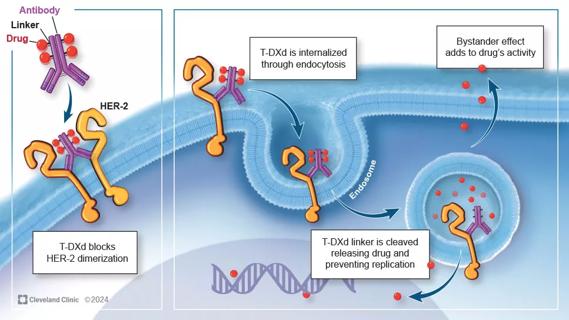
Key learnings from DESTINY trials

Overall survival in patients treated since 2008 is nearly 20% higher than in earlier patients
 Search