Locations:





Otolaryngologist and comic book collector
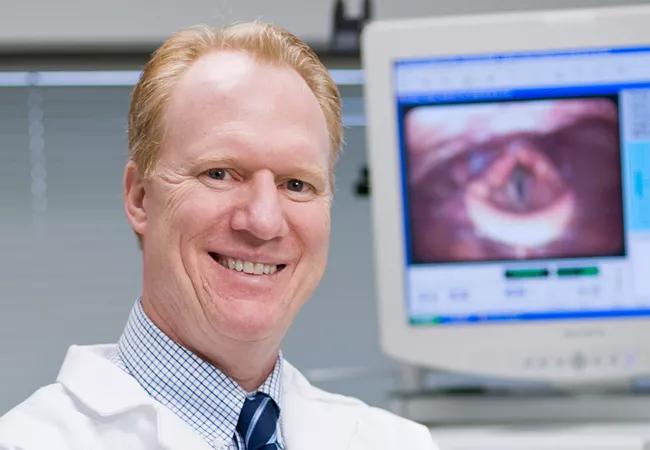
Image content: This image is available to view online.
View image online (https://assets.clevelandclinic.org/transform/82db26a0-1819-451e-9f8d-f646064e0448/17-ENT-4213-Benninger-Hero-Image-650x450pxl_jpg)
17-ENT-4213-Benninger-Hero-Image-650x450pxl
Michael Benninger, MD, planned to be a marine biologist but after graduation there were no such jobs to be found. He spent some time at his alma mater — Harvard — working as a varsity football assistant coach and announcing games on the university’s radio station.
Advertisement
Cleveland Clinic is a non-profit academic medical center. Advertising on our site helps support our mission. We do not endorse non-Cleveland Clinic products or services. Policy
“I soon realized that wasn’t what I was going to do long-term. My roommate was in med school and he suggested I apply,” says Dr. Benninger. “Of all of my areas of study, biology and anatomy were the most interesting, and medicine seemed such a natural extension of those interests.”
Today, the otolaryngologist is chairman of Cleveland Clinic’s Head & Neck Institute and a professor of surgery at the Cleveland Clinic Lerner College of Medicine of Case Western Reserve University.
What sparked your interest in your field?
The breadth of the specialty. You deal with everything from removing wax from someone’s ears to major head and neck cancer cases. Then I became interested in voice and voice disorders and that’s a small specialty of ENT. I go to national and international meetings and we all know each other.
Why do you choose to practice at Cleveland Clinic?
I really think we do magical things here at Cleveland Clinic. In particular with my patients, 20 percent are flying or driving more than five hours to get here. Many of them see us as their last hope. We give them a sense of optimism when they may feel that they have exhausted every possibility.
There are moderate cases right next to people with complex issues and we can provide care at every level; there is consistency to all of our specialties. I know that I can send any patient to any specialty here and they will receive the same level of care as they would with me and my team.
How do you keep the joy in medicine?
In large part, it’s being in an organization with a tripartite mission [provide better care of the sick, investigation into their problems, and further education of those who serve]. Being in a place like this, where you can participate in all three parts of our medical mission – that keeps you going.
Advertisement
Also, being in the OR for me is like a mental health day. It’s a combination of being a doctor, mechanic and a carpenter all at the same time. I don’t know that I would be as happy if I was not a surgeon.
Advice you would give to your 20-year-old self?
Listen a little bit more, particularly before you speak. The times I can remember where I kicked myself after were when I responded too quickly. I do things a lot differently now. When I have a complex email or call to make, I let it sit there for a little while. And before I respond I may ask someone else, “Does this sound right?”
In addition, medicine cannot be the only thing in your life. There has to be a balance between work, outside activities and family.
Something your colleagues may be surprised to learn about you?
I collect comic books. I haven’t purchased them for a long time but I’m starting to go back through my collection and I’ve got my nephew interested. I have about 13,000 and I have probably read 98 percent of those. I’m putting them into better bags and I have sent off about 45 to be graded.
Advertisement
Advertisement

With a wide scope of skills, comprehensive otolaryngologists care for patients of all ages in the community
Research on children with UHL explores the quality-of-life benefits and outcomes of cochlear implants
A look at how custom-fitted oral appliances work and when they’re a good fit for patients
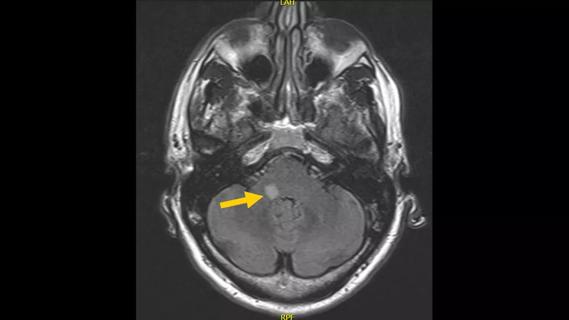
Subtle information gleaned from clinical examinations prompted concern
A new single-port system well-suited for oropharyngeal cancer treatment
Challenging case requires outside-the-box approach
Collaborative and multidisciplinary approach necessary for treatment

The tri-vector gracilis procedure uses a thin muscle from the thigh to help create a natural mimetic smile
 Search