Locations:





Patience, compassion and an action plan are important

Image content: This image is available to view online.
View image online (https://assets.clevelandclinic.org/transform/5d158dab-4479-4aaf-a890-0321bb2dfb70/650x450-Cleveland-Clinic-Cancer_jpg)
650×450-Cleveland-Clinic-Cancer
By Mikkael Sekeres, MD, MS
Advertisement
Cleveland Clinic is a non-profit academic medical center. Advertising on our site helps support our mission. We do not endorse non-Cleveland Clinic products or services. Policy
I carried the knowledge like a millstone chained around my neck, my back aching from the emotional weight of bad news not yet imparted.
Earlier in the morning, before a clinic packed with waiting patients, I scanned the electronic medical record for laboratory results of the people I was about to see. It is rare that any of these return without the telltale asterisk indicating a value that is out of the normal range.
These conversations are never easy, as we try to communicate a flood of information about the cancer itself, and the risks and benefits of chemotherapy, often within hours of a patient’s arrival in the hospital …
Read the full New York Times column by Dr. Sekeres, Director of Cleveland Clinic Cancer Center’s Leukemia Program.
Advertisement
Advertisement

First-of-its-kind research investigates the viability of standard screening to reduce the burden of late-stage cancer diagnoses

Global R&D efforts expanding first-line and relapse therapy options for patients

Study demonstrates ability to reduce patients’ reliance on phlebotomies to stabilize hematocrit levels

A case study on the value of access to novel therapies through clinical trials

Findings highlight an association between obesity and an increased incidence of moderate-severe disease

Cleveland Clinic Cancer Institute takes multi-faceted approach to increasing clinical trial access 23456
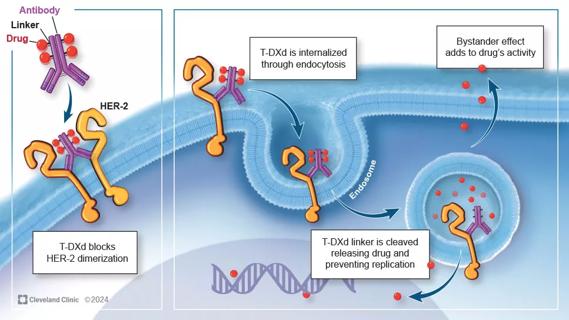
Key learnings from DESTINY trials

Overall survival in patients treated since 2008 is nearly 20% higher than in earlier patients
 Search