Locations:





A Cleveland Clinic expert weighs in

Image content: This image is available to view online.
View image online (https://assets.clevelandclinic.org/transform/75476f1b-5a73-4a5f-84f7-0e540037cd30/19-ENT-4285-carePathVertigo-650x450_jpg)
19-ENT-4285-carePathVertigo-650×450
Advertisement
Cleveland Clinic is a non-profit academic medical center. Advertising on our site helps support our mission. We do not endorse non-Cleveland Clinic products or services. Policy
Dizziness brings approximately 10 million Americans to a primary care provider each year for treatment. While dizziness can be a co-occurring symptom of another diagnosis and is commonly a side effect of medication, an undiagnosed etiology may also be responsible. Cleveland Clinic’s Section of Vestibular & Balance Disorders in the Head & Neck Institute provides a comprehensive approach to diagnosing and treating patients with vestibular dysfunction.
Benign paroxysmal positional vertigo (BPPV) is the most common cause of vertigo. A review of patient history and physical examination, followed by an in-office Dix-Hallpike position test, are key clinical tools to effectively diagnose BPPV. If a patient tests positive for BPPV and symptoms of dizziness/imbalance/vertigo are provoked with changes in position (such as rolling over in bed or getting out of bed), we recommend referral to vestibular rehabilitation. However, if symptoms are inconsistent with BPPV and/or Dix-Hallpike testing is negative, we recommend that a patient receive a vestibular test battery (formal vestibular and balance testing) for an accurate diagnosis to guide subsequent management of care. Vestibular rehabilitation may be recommended as well. Interestingly, research shows that a head CT scan is of limited value in evaluating dizziness. In fact, less than 1% of head CT scans ordered for dizziness/vertigo have resulted in information that led to improved clinical outcomes. As such, we advise against this as a diagnostic tool.
Advertisement

Image content: This image is available to view online.
View image online (https://assets.clevelandclinic.org/transform/b9e41868-f407-43b3-9a03-dd6ea75a3987/Capture_jpg)
Dizziness/Vertigo care path guide
Shared medical appointments (SMA) are another option for patients experiencing dizziness or imbalance with an unconfirmed diagnosis. This model has become increasingly popular in recent years as it fosters small-group discussion with providers and patients, in addition to developing a comprehensive care plan. This appointment type is often a faster route to care than one-on-one visits with a provider. The SMA offers the following:
Our vestibular program is also designed to treat children with dizziness and balance dysfunction. Studies show that children with sensorineural hearing loss and bilateral vestibular loss may have significantly worse visual acuity during head movements, which can negatively impact school performance. Like our adult patient population, vestibular testing is essential to confirm diagnosis of suspected disorder and improve clinical management. We use several advanced testing techniques to provide assessments for children of all ages, including infants:
Advertisement
Dr. Honaker is the Director of the Vestibular and Balance Disorders Program within the Head and Neck Institute. She is an audiologist specializing in state-of-the-art assessment and management planning for all patients with dizziness, imbalance and falling risk concerns.
Advertisement
Advertisement

With a wide scope of skills, comprehensive otolaryngologists care for patients of all ages in the community
Research on children with UHL explores the quality-of-life benefits and outcomes of cochlear implants
A look at how custom-fitted oral appliances work and when they’re a good fit for patients
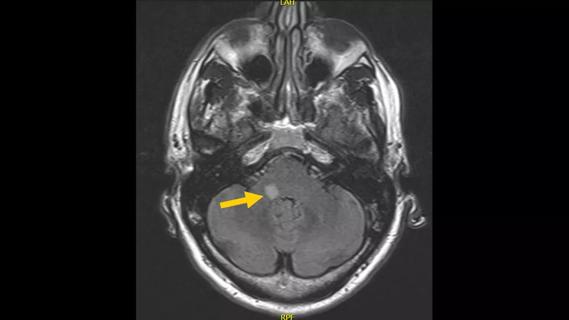
Subtle information gleaned from clinical examinations prompted concern
A new single-port system well-suited for oropharyngeal cancer treatment
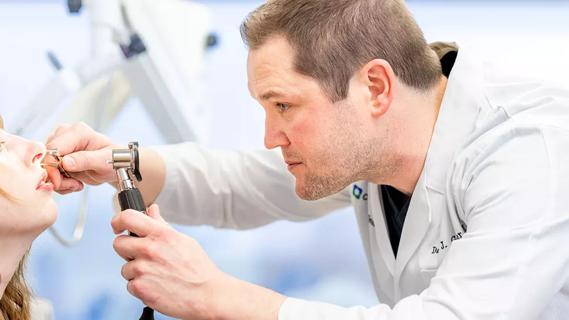
Challenging case requires outside-the-box approach
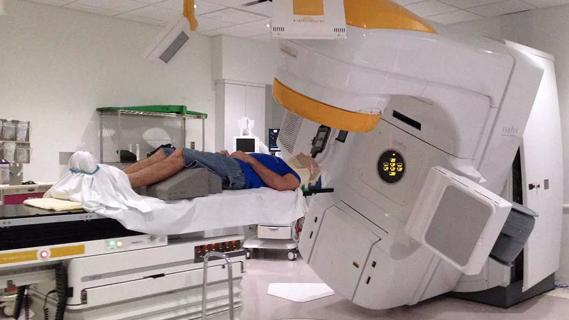
Collaborative and multidisciplinary approach necessary for treatment

The tri-vector gracilis procedure uses a thin muscle from the thigh to help create a natural mimetic smile
 Search