Locations:





Study compares hearing aids and combination devices

Image content: This image is available to view online.
View image online (https://assets.clevelandclinic.org/transform/83cdbe57-9521-4bf3-b0c8-e0bb2ea3fbce/14-ENT-2033-Kaltenbach-Hero-Image-690x380pxl_jpg)
14-ENT-2033-Kaltenbach-Hero-Image-690x380pxl
By Craig W. Newman, PhD, and Sharon A. Sandridge, PhD
Advertisement
Cleveland Clinic is a non-profit academic medical center. Advertising on our site helps support our mission. We do not endorse non-Cleveland Clinic products or services. Policy
Evaluating the clinical effectiveness of sound therapy in the management of patients with bothersome tinnitus has been one line of investigation in our Audiology Research Laboratory. We are currently focused on the application of hearing aids or combination devices (hearing aids and sound generators housed in the same unit) as a management tool to provide relief for patients with both hearing loss and distressing tinnitus.
The goals of sound therapy — whether using hearing aids alone or combination devices — are to alter tinnitus perception and reduce the negative emotional reactions associated with tinnitus. The underlying rationales for device application are to promote tinnitus masking or habituation. Either way, clinical benefit is derived when a patient’s quality of life is improved by reducing the psychosocial consequences of tinnitus, which include frustration, anxiety, irritation, depression, loss of control, and sleep disturbance.
Until recently, clinically available ear-level sound generators only incorporated a broadband white noise, which many patients found unacceptable. Several manufacturers now offer combination devices that generate a variety of different sound stimuli. However, controlled clinical studies evaluating the clinical benefit received from hearing aids in comparison to combination devices remain limited.
We undertook an investigation to explore whether the sound generator feature of a combination device afforded significant relief over and above what a hearing aid alone provided in a group of patients with hearing loss and distressing tinnitus. Thirty-seven adults completed a 6-month study that tracked benefits derived from contemporary hearing aids and combination devices offered by the same manufacturer (Oticon). Judgments in clinical benefit over time were based on responses to the Tinnitus Functional Index (TFI),1 a “gold-standard” quality-of-life outcome questionnaire.
Advertisement
The sound generator circuitry of the combination devices used included stationary filtered broadband sounds as well as three ocean (nature) sound options. Figure 1 displays the magnitude transfer functions of the filters used for the white, pink and red broadband sound options. Figure 2 illustrates an example of an ocean sound, based on proprietary variations of modulation patterns that mimic rhythms of the ocean.
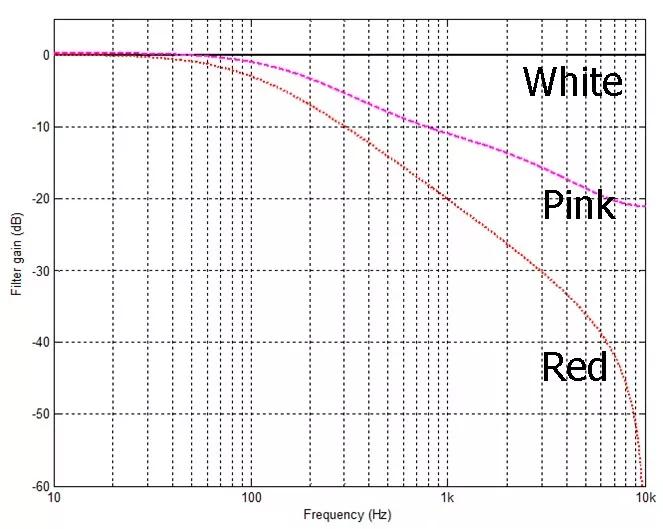
Image content: This image is available to view online.
View image online (https://assets.clevelandclinic.org/transform/37407132-a9fd-463c-b804-6deb60194607/Figure-1-rev_jpg)
Figure 1
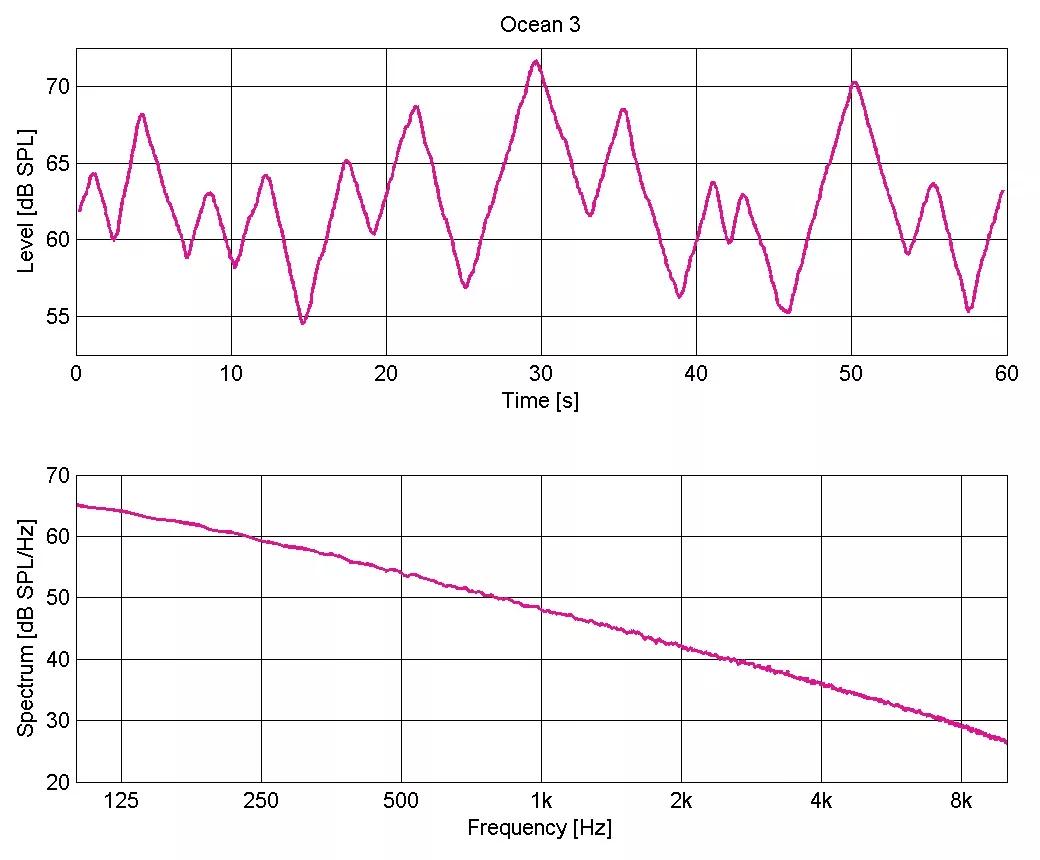
Image content: This image is available to view online.
View image online (https://assets.clevelandclinic.org/transform/44b06365-9659-4494-8a6a-2c253493881a/Figure-2_jpg)
Figure 2
The TFI scores at each visit over the 6-month interval for the hearing aid only (n = 20) and combination device groups (n = 17) are summarized in Figure 3. For both groups, there was a clinically significant reduction (> 13 point TFI difference) in perceived tinnitus distress between baseline and each post-fitting visit. Further, there were no statistically significant differences between treatment groups, suggesting that both forms of sound therapy are effective in reducing activity limitation and participation restriction for patents with hearing loss and bothersome tinnitus.
Our findings are consistent with the recommendations of the AAO-HNS clinical practice guidelines for tinnitus, which support the use of hearing aids and sound generators in the management of patients with persistent, bothersome tinnitus.2 The integration of ongoing counseling, however, remains a critical component of the treatment plan regardless of the specific form of sound therapy used; in fact, this may serve as the mediating factor in overall patient success.
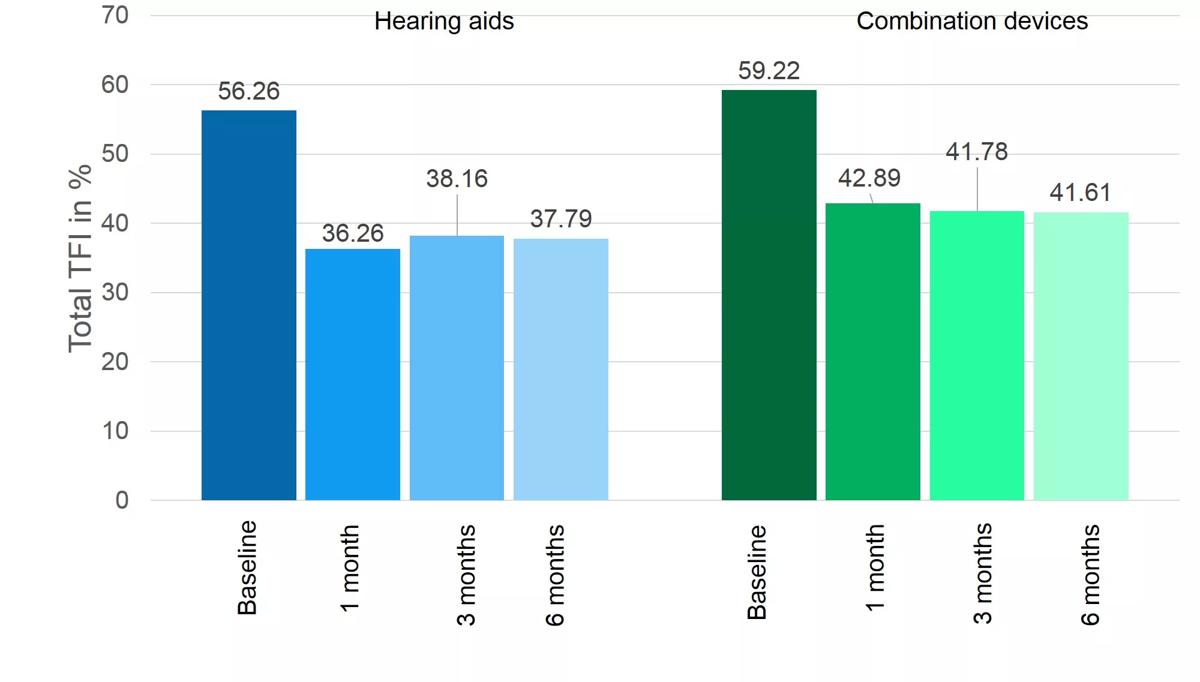
Image content: This image is available to view online.
View image online (https://assets.clevelandclinic.org/transform/a1909fe8-e5f0-49d5-999c-05c0a3f9020e/Picture1_jpg)
Figure 3
Figures 1 and 2 courtesy of Oticon A/S.
Advertisement
Dr. Newman is Vice Chair and Section Head of Allied Hearing, Speech and Balance Services in the Head and Neck Institute. Dr. Sandridge is the Director of Clinical Audiology Services in the Head and Neck Institute. They serve as Co-Directors of the Audiology Research Laboratory and Tinnitus Management Clinic.
Advertisement
Advertisement

With a wide scope of skills, comprehensive otolaryngologists care for patients of all ages in the community
Research on children with UHL explores the quality-of-life benefits and outcomes of cochlear implants
A look at how custom-fitted oral appliances work and when they’re a good fit for patients
Subtle information gleaned from clinical examinations prompted concern
A new single-port system well-suited for oropharyngeal cancer treatment

Challenging case requires outside-the-box approach
Collaborative and multidisciplinary approach necessary for treatment

The tri-vector gracilis procedure uses a thin muscle from the thigh to help create a natural mimetic smile
 Search