Locations:





The physician scientist discusses her vision for the program
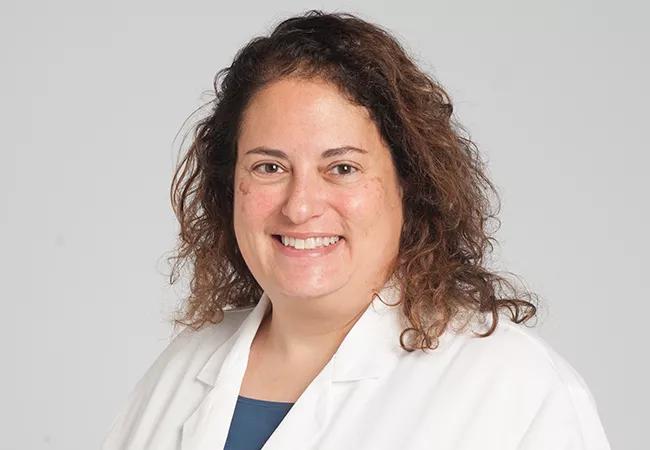
Image content: This image is available to view online.
View image online (https://assets.clevelandclinic.org/transform/364cff00-581d-488c-9bb3-5d7efcdf3280/Lang-650x450-1_jpg)
Lang 650×450
Julie Lang, MD, has been named Chief of Breast Surgery at Cleveland Clinic Cancer Center. She will codirect the Comprehensive Breast Cancer Program with Halle Moore, MD. Dr. Lang joined Cleveland Clinic from the University of Southern California Norris Cancer Center, where she directed the Breast Cancer Research Program and served as principal investigator of the Breast Surgical Oncology Translational Research Laboratory.
Advertisement
Cleveland Clinic is a non-profit academic medical center. Advertising on our site helps support our mission. We do not endorse non-Cleveland Clinic products or services. Policy
“I am thrilled to join Dr. Moore in directing breast cancer services at a world-class institution, which just happens to be in my hometown,” says Dr. Lang. “This is a unique opportunity to lead in an environment that embraces robust collaboration between multidisciplinary teams.”
Dr. Lang is a physician scientist specializing in clinical translational research in breast cancer. She notes that the depth of collaboration between different surgical specialties is unique to Cleveland Clinic and has a history of spurring innovation.
“Cleveland Clinic breast and plastic surgeons have been leaders in developing an innovative procedure called lymphovenous bypass to prevent and treat lymphedema after breast cancer surgery. This procedure is not considered standard of care yet elsewhere but early research shows a significant benefit in reducing lymphedema for breast cancer patients,” she says. “I am excited to bring my research experience to begin a prospective, randomized trial to study lymphovenous bypass in node-positive patients in order to establish if this should be standard of care, as well as to explore translational correlative science identifying biomarkers of lymphedema.”
Dr. Lang trained with nationally known breast surgeon and researcher Laura Esserman, MD, MBA, at the University of California San Francisco. She gained translational lab experience in biomarker research and clinical trial experience collaborating with Dr. Esserman on the I-SPY trials. She then completed fellowship at MD Anderson Cancer Center and went on to faculty and leadership positions at University of Arizona Cancer Center and University of Southern California Norris Comprehensive Cancer Center.
Advertisement
“I’ve had the privilege to train and practice at several comprehensive cancer centers in diverse locations,” says Dr. Lang. “They all have different ways of solving problems, and I’ve seen things work extremely well and things that could have worked better. I’m looking forward to bringing that perspective to the multidisciplinary care teams and innovative programs created here.”
Dr. Lang will codirect the Comprehensive Breast Cancer Program with Dr. Moore, Director of Breast Medical Oncology in the Department of Hematology and Oncology at Cleveland Clinic Cancer Center. Dr. Moore led the practice-changing POEMS study and is cochair of the SWOG Cancer Research Network’s Survivorship Committee.
“I am fortunate to have Dr. Lang as a partner in coleading Cleveland Clinic’s Comprehensive Breast Cancer Program,” says Dr. Moore. “As a translational scientist, she brings a wealth of expertise and experience that will help us accelerate our efforts to bring innovative research into clinical practice for our patients.”
Dr. Lang will also collaborate with Ruth Keri, PhD, Associate Director for Basic Research, Cleveland Clinic Lerner Research Institute Department of Cancer Biology. “Drs. Moore and Keri and I are working together to recruit physician and basic scientists to the program,” says Dr. Lang. “We want to recruit physicians who are eager to conduct clinical translational research at the highest level of quality. We meet weekly to plan research programs and clinical trials and are seeking to grow the program in several directions.”
Advertisement
For Dr. Lang, the most exciting opportunities on the horizon in breast cancer care stem from using novel molecular tools to advance cancer treatment and diagnosis. Her area of focus is liquid biopsy, and she is designing a study, funded in part by VeloSano, to use blood from patients with an abnormal mammogram who are undergoing core needle biopsy to improve breast cancer diagnosis. “Right now, 80% of women who are referred for core needle biopsy don’t have cancer. If we could use this study to develop an assay that can risk stratify patients or identify benign cases, we can save thousands of women major cost, discomfort and anxiety each year,” says Dr. Lang.
The study will use next generation sequencing to detect circulating tumor DNA in the blood samples, and to try to improve upon an existing assay based on biomarkers that may be secreted by different types of tumors, benign and malignant.
But the greatest challenge that breast cancer patients will face cannot be solved in a genetics lab or operating room, says Dr. Lang. This challenge is something that Cleveland Clinic Cancer Center has actively addressed and leads in nationally. “The most important challenge we can tackle is access. Lack of access to quality multidisciplinary care contributes to healthcare disparities,” she says, “so if we can have qualified teams present in community settings, as Cleveland Clinic has managed to do in its health system, we can provide a high level of care to every breast cancer patient. This is a solvable problem, and I’m delighted to be in an institution that’s leading the way.”
Advertisement
Advertisement
First-of-its-kind research investigates the viability of standard screening to reduce the burden of late-stage cancer diagnoses

Global R&D efforts expanding first-line and relapse therapy options for patients
Study demonstrates ability to reduce patients’ reliance on phlebotomies to stabilize hematocrit levels
A case study on the value of access to novel therapies through clinical trials

Findings highlight an association between obesity and an increased incidence of moderate-severe disease

Cleveland Clinic Cancer Institute takes multi-faceted approach to increasing clinical trial access 23456
Key learnings from DESTINY trials

Overall survival in patients treated since 2008 is nearly 20% higher than in earlier patients
 Search