Locations:





New mRCC medication regimen effective and well tolerated
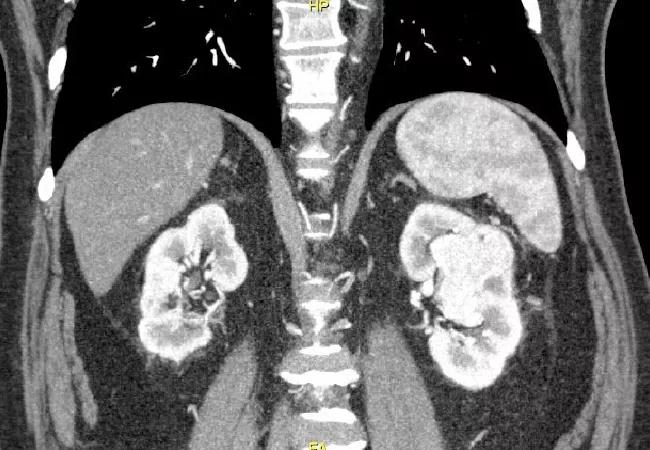
Image content: This image is available to view online.
View image online (https://assets.clevelandclinic.org/transform/53f14ad7-63a6-4c37-b873-bd0ec328e75d/650x450-Renal-Cell-Carcinoma_jpg)
650×450-Renal-Cell-Carcinoma
IMmotion151, a phase 3 clinical trial of a new therapy for metastatic renal cell carcinoma (RCC), showed promising results, which were presented at the 2018 American Society of Clinical Oncology (ASCO) Annual Meeting in Chicago. It is one of many recent trials of new treatment regimens that are improving prospects for this once intractable disease.
Advertisement
Cleveland Clinic is a non-profit academic medical center. Advertising on our site helps support our mission. We do not endorse non-Cleveland Clinic products or services. Policy
Since 2005, the RCC treatment landscape has undergone a major evolution: moving from cytokine-based immunotherapy, which achieved little clinical benefit, to targeted therapy against vascular endothelial growth factor (VEGF) and today to novel immunotherapy agents. As a cancer with immunogenic properties, RCC has responded well to immunotherapy. “We are in the midst of another transition in RCC treatment with the advances in immunologic drugs,” says Brian Rini, MD, Professor of Medicine at Cleveland Clinic Lerner College of Medicine, and Leader, Genitourinary Program, Cleveland Clinic Cancer Center.
The standard of care for metastatic RCC (mRCC) has been treatment with the anti-VEGF drugs pazopanib and sunitinib, which also inhibit PDGF and other kinases. While outcomes have improved with the use of multiple targeted therapies, durable and complete responses are uncommon, as most patients eventually become resistant to targeted therapies and develop disease progression or metastatic disease.
In recent studies, single-agent treatments with monoclonal antibodies that block the interaction between the programmed cell death protein PD-1 and its ligand PD-L1 have shown anti-tumor activity in heavily pretreated patients with advanced RCC.
Current trials are focusing on combination therapies of antibodies against PD-1 or PD-L1 and VEGF tyrosine-kinase inhibitors which have shown improved activity over single-agent therapy.
IMmotion151 compared therapy with atezolizumab, a monoclonal antibody of IgG1 isotype against PD-L1, and bevacizumab, an anti-VEGF monoclonal antibody approved to treat many cancer types, with sunitinib.
Advertisement
Trial participants were 461 patients with PD-L1 positive mRCC who had not received adjuvant therapy. They were treated for four weeks with two weeks off. Participants completed symptom questionnaires on days one and 22 of each six-week cycle, at the end of treatment and during survival follow-up.
Progression-free survival (PFS) in the atezolizumab-bevacizumab group was 11.2 months compared with 7.7 months in the sunitinib group. The time to deterioration (TTD) in interference was delayed: 11.3 months in the combination therapy group compared with 4.3 months for sunitinib. Encouraging efficacy was also observed in the intent-to-treat (ITT) population: PFS was 11.2 months compared with 8.4 months.
The most striking outcome was the difference between the two groups in health-related quality of life: more patients receiving atezolizumab-bevacizumab reported little or no difficulty from treatment side effects than patients taking sunitinib. They were able to maintain day-to-day functioning with minimal symptom interference. “The results are certainly clinically significant,” reports Dr. Rini, study lead investigator. “It’s exciting to have more options to treat patients who may not be able to tolerate other therapies.”
Advertisement
Advertisement

First-of-its-kind research investigates the viability of standard screening to reduce the burden of late-stage cancer diagnoses

Global R&D efforts expanding first-line and relapse therapy options for patients

Study demonstrates ability to reduce patients’ reliance on phlebotomies to stabilize hematocrit levels

A case study on the value of access to novel therapies through clinical trials

Findings highlight an association between obesity and an increased incidence of moderate-severe disease

Cleveland Clinic Cancer Institute takes multi-faceted approach to increasing clinical trial access 23456
Key learnings from DESTINY trials

Overall survival in patients treated since 2008 is nearly 20% higher than in earlier patients
 Search