Locations:





A potential cancer therapeutic target
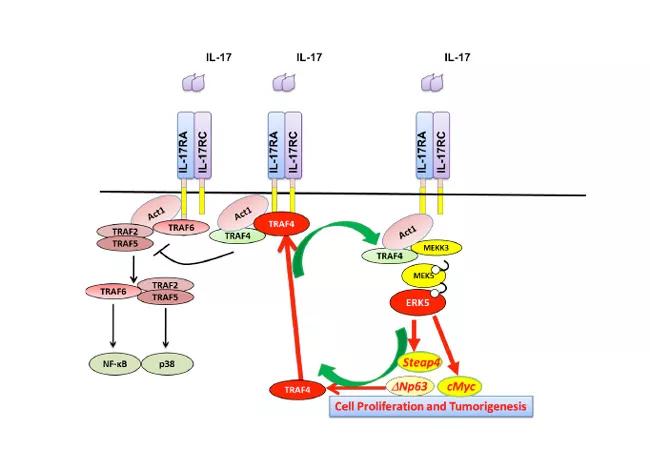
Image content: This image is available to view online.
View image online (https://assets.clevelandclinic.org/transform/53a2fef7-a9bd-4f91-bb5f-b346fe889236/novel-signal__650x450_jpg)
novel-signal._650x450
A multi-center study led by Cleveland Clinic researchers discovered a novel signaling pathway that directly impacts keratinocyte proliferation and tumor formation in skin cancer.
Advertisement
Cleveland Clinic is a non-profit academic medical center. Advertising on our site helps support our mission. We do not endorse non-Cleveland Clinic products or services. Policy
IL-17 is emerging as an important cell signaling protein in cancer promotion and progression. It plays an essential role in host defense against bacterial and fungal infections. Chronic overproduction of IL-17 contributes to inflammatory conditions like psoriasis, multiple sclerosis, rheumatoid arthritis and inflammatory bowel disease. This is important because chronic inflammation is known to pose a potential risk for cancer development.
The study provided a novel mechanism for IL-17-dependent tumorigenesis via a direct IL-17-TRAF4-ERK5 axis in stimulating cell proliferation and tumor formation, according to lead author Xiaoxia Li, PhD, The Paul L. Fox, PhD, Endowed Chair in Molecular Medicine at Cleveland Clinic Lerner Research Institute. The IL-17-TRAF4-ERK5 axis and its regulated genes form a positive feedback loop for keratinocytes proliferation and tumor formation.
While IL-17 is emerging as an important cytokine in cancer promotion and progression, the underlying molecular mechanism was not fully understood. In this study, Dr. Li says, researchers found the direct impact of IL-17-TRAF4-ERK5 axis on keratinocytes proliferation and tumorigenesis.
“Given the TRAF4 overexpression in a wide range of human malignancies, this study suggests that TRAF4 might be an important feature of the tumor cells, and the IL-17 signaling cascade might be an important therapeutic target for cancers with high TRAF4 expression,” says Dr. Li.
Researchers are now looking into whether blocking this IL-17 signaling cascade in different cancers with high levels of TRAF4 will lead to reduced tumor growth, thus confirming the clinical relevance of this pathway in other types of cancer.
Advertisement
“We are also developing peptides and screening small molecules that could block this novel cascade,” says Dr. Li. “This might further lead to new cancer therapeutics.”
Advertisement
Advertisement

First-of-its-kind research investigates the viability of standard screening to reduce the burden of late-stage cancer diagnoses

Global R&D efforts expanding first-line and relapse therapy options for patients

Study demonstrates ability to reduce patients’ reliance on phlebotomies to stabilize hematocrit levels

A case study on the value of access to novel therapies through clinical trials

Findings highlight an association between obesity and an increased incidence of moderate-severe disease

Cleveland Clinic Cancer Institute takes multi-faceted approach to increasing clinical trial access 23456
Key learnings from DESTINY trials

Overall survival in patients treated since 2008 is nearly 20% higher than in earlier patients
 Search