Locations:





Heating tumor sensitizes cancer stem cells to radiation effects
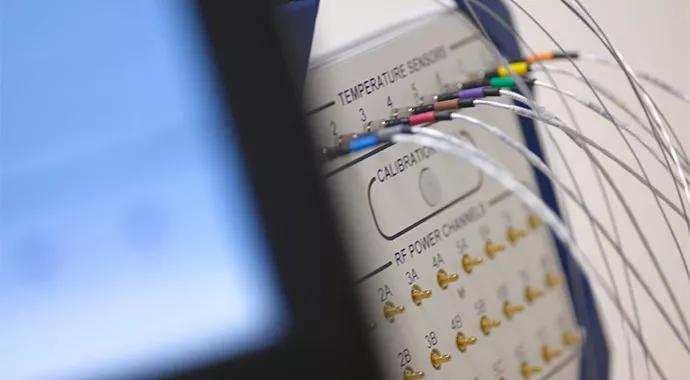
Image content: This image is available to view online.
View image online (https://assets.clevelandclinic.org/transform/5a1d2ecc-5cc6-4a75-bdb5-7be4ce3c2da4/hyperthermia-690x380_jpg)
hyperthermia-690×380
A large number of clinical studies show that treatment with hyperthermia in combination with radiation leads to a better response than radiation alone in a variety of cancers, particularly for superficial cancers. Well controlled studies show that the combination treatment can increase complete response rates in patients with recurrent breast cancer compared with radiation alone, particularly for those patients who have had prior radiation.
Advertisement
Cleveland Clinic is a non-profit academic medical center. Advertising on our site helps support our mission. We do not endorse non-Cleveland Clinic products or services. Policy
Yet despite these benefits, the treatment is not widely available. Cleveland Clinic’s Taussig Cancer Institute is the only cancer program in Ohio and one of the few in the United States to offer hyperthermia.
Sensitizing cancer stem cells
Hyperthermia is a noninvasive method of increasing tumor temperature, which makes it more sensitive to radiation effects. “Our group has shown that the addition of hyperthermia to radiation can sensitize cancer stem cells — which are fairly resistant to radiation and to chemotherapy alone — to subsequent radiation treatment,” says Jennifer Yu, MD, PhD, radiation oncologist at Taussig Cancer Institute, and a cancer researcher in Stem Cell Biology and Regenerative Medicine at Lerner Research Institute.
“Hyperthermia makes radiation much more efficacious,” Dr. Yu says.” The combination of hyperthermia and radiation in particular is a great treatment for patients who have failed prior chemotherapy and failed prior radiation therapy.”
Taussig Cancer Institute houses a hyperthermia unit that is primarily used for treating superficial cancers. Within the past 2 years, more than 25 patients have received this treatment. Most patients seen have recurrent breast cancers, and some patients have unresectable melanoma and recurrent vulvar cancers that previously had been irradiated. “We have the capacity to treat deeper tumors as well, such as advanced cervical cancer,” Dr. Yu says.
Hyperthermia helps address the limitations of repeat radiation for many patients by effectively increasing the radiation dose without substantially increasing side effects. “With the addition of hyperthermia, we are able to use lower radiation doses and yet have comparable results that are seen with higher doses,” says Dr. Yu. She explains that hyperthermia effectively increases the amount of radiation a patient receives by about 50 percent.
Advertisement
Proven protocols
Hyperthermia is done prior to each radiation treatment. For recurrent breast cancer, treatment requires about 60 minutes of hyperthermia, followed by radiation. During the treatment, a heated water bolus is placed on the tumor plus a small area around it. A microwave unit on top heats the treatment area to 109 to 110 degrees Fahrenheit.
Physicians use thermistors to measure temperature in real time, to ensure the tumor is receiving adequate heating, not over- or under heating. “The hyperthermia we use involves mild but effective temperatures,” says Dr. Yu. “It is not so high that the tumor is destroyed, such as with thermal ablation.”
After the procedure, some patients may feel mild to moderate pain; others just feel warm. Most patients do not require pain medication. Many patients are sufficiently relaxed that they fall asleep during the hyperthermia treatment.
Well-tolerated procedure
Patients typically receive hyperthermia/radiation treatment twice a week, but it may vary due to the radiation protocol prescribed. Each hyperthermia session must be accompanied by radiation or, in some cases, chemotherapy. Hyperthermia is generally well-tolerated. A minority of patients develop skin blistering or ulceration that typically heals with conservative measures.
Most patients referred to Taussig Cancer Institute’s hyperthermia unit are sent by medical oncologists who have tried multiple types of chemotherapy, or radiation oncologists who are aware of the benefits of hyperthermia and radiation.
Advertisement
Advertisement

First-of-its-kind research investigates the viability of standard screening to reduce the burden of late-stage cancer diagnoses

Global R&D efforts expanding first-line and relapse therapy options for patients
Study demonstrates ability to reduce patients’ reliance on phlebotomies to stabilize hematocrit levels
A case study on the value of access to novel therapies through clinical trials

Findings highlight an association between obesity and an increased incidence of moderate-severe disease

Cleveland Clinic Cancer Institute takes multi-faceted approach to increasing clinical trial access 23456
Key learnings from DESTINY trials

Overall survival in patients treated since 2008 is nearly 20% higher than in earlier patients
 Search