Locations:





In her new role as co-chair of SWOG’s survivorship committee
Giving cancer survivors a strong voice in research direction is a priority for Halle Moore, MD, Hematology and Medical Oncology, Cleveland Clinic. For more than a decade, she and her staff have interviewed breast cancer survivors to learn about long-term side effects of the disease so they can focus future research on those health problems — neuropathy for instance — and improve cancer survivors’ quality of life.
Advertisement
Cleveland Clinic is a non-profit academic medical center. Advertising on our site helps support our mission. We do not endorse non-Cleveland Clinic products or services. Policy
Now Dr. Moore plans to bring that same emphasis to her new role as co-chair for the survivorship committee of SWOG, a National Cancer Institute-supported network of nearly 6,000 cancer researchers at more than 950 institutions.
“SWOG has a very strong patient advocate program,” Dr. Moore says, “so we have all these patient advocates who are survivors and are very aware of the issues within their own groups, depending on what type of cancer they have or what type of treatment they had.
“Currently their role within SWOG is largely focused on helping develop clinical trials, review protocols and consent forms. I would like for our advocates to also help us to identify areas of need for directing where our research teams go.”
The Chair of SWOG, Charles D. Blanke, MD, says the group chose Dr. Moore to co-chair the survivorship committee because of her research credentials, including her role as the lead of author of the POEMS study, which showed that the breast cancer drug goserelin actually protects the ovaries — and, thus, fertility — from chemotherapy damage.
Co-chairing the committee with Dr. Moore will be Melinda Irwin, PhD, epidemiology, Yale School of Public Health. Dr. Irwin has focused her research on exercise and weight loss, treatment side effects and quality of life issues for cancer survivors.
“Dr. Irwin and I share some similar interests in terms of lifestyle behaviors,” Dr. Moore says. “But we come from different backgrounds. Her background is in epidemiology and population health, whereas I’m more familiar with the specific disease types, the treatments that we use. I think we’ll be very complementary.”
Advertisement
In addition to taking advantage of the broad knowledge and perspective of the cancer survivor advocates to help direct research, Dr. Moore hopes to mine SWOG’s patient-reported outcome and toxicity data as a cost-effective way to learn more about long-term toxicities of various treatments.
“A number of cancer treatments can have long-term effects on the heart, and there may be ways to identify people at risk and intervene early to get treatments that might help protect cardiac function,” she says. “Then there are other toxicities like the cognitive effects of chemotherapy, which are very hard to study and get a grasp on. Through big groups like the cooperative group mechanism — NCI clinical trials cooperative group of which SWOG is a member — it might be easier to get a handle on these difficult-to-evaluate types of quality-of-life impacts.”
She’s eager to dig in to her new role at SWOG, Dr. Moore says. “I’m excited about this opportunity to see what we can do to improve outcomes for our cancer survivors.”
Advertisement
Advertisement
First-of-its-kind research investigates the viability of standard screening to reduce the burden of late-stage cancer diagnoses

Global R&D efforts expanding first-line and relapse therapy options for patients
Study demonstrates ability to reduce patients’ reliance on phlebotomies to stabilize hematocrit levels
A case study on the value of access to novel therapies through clinical trials

Findings highlight an association between obesity and an increased incidence of moderate-severe disease

Cleveland Clinic Cancer Institute takes multi-faceted approach to increasing clinical trial access 23456
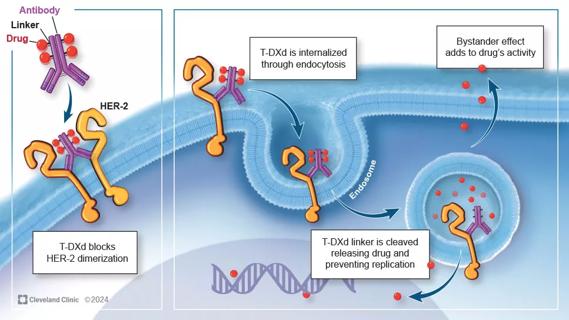
Key learnings from DESTINY trials

Overall survival in patients treated since 2008 is nearly 20% higher than in earlier patients
 Search