Locations:





A closer look at other T-cell subsets
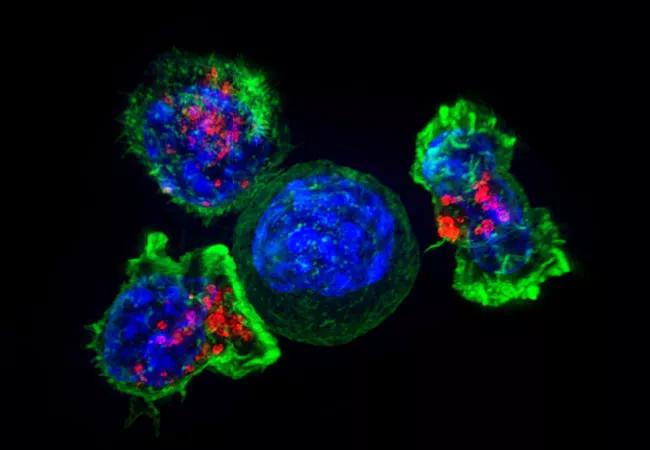
Image content: This image is available to view online.
View image online (https://assets.clevelandclinic.org/transform/881a5986-fbea-460a-a40d-5c20d4c89e44/nci-vol-11852_650x450_jpg)
nci-vol-11852_650x450
Many studies of allogeneic hematopoietic cell transplantation (AHCT) have focused on the optimal total nucleated cell dose and CD34+ cell dose for the best patient outcomes. Those outcomes include engraftment, hospital recovery and discharge and post-transplant complications such as graft-versus-host disease (GvHD).
Advertisement
Cleveland Clinic is a non-profit academic medical center. Advertising on our site helps support our mission. We do not endorse non-Cleveland Clinic products or services. Policy
Previous studies, however, rarely looked at subsets of other T cells, such as CD3+, CD4+ and CD8+ T cells that are also part of the mix of cells that make up a graft. Recently, scientists conducted a retrospective analysis looking at the association of donor cell subsets with outcomes in recipients of myeloablative AHCT.
“We hypothesized that graft components beyond what we typically consider for allogeneic transplant may be associated with outcomes. We looked at some of these individual components — things like CD3+, CD4+, CD8+ cells — and investigated how they influence important transplant outcomes such as GvHD and risk of infections, as well as longer-term outcomes including survival and relapses,” says Sagar S. Patel, MD, Fellow, Blood and Marrow Transplant/Experimental Hematology, Cleveland Clinic.
Dr. Patel was first author on the study, which was published in Bone Marrow Transplantation.
The study cohort contained 359 patients — making it the largest to date to look at T-cell subsets in AHCT patients. The patients had to be 18 years or older and have received a first myeloablative AHCT using a bone marrow graft from a related or unrelated donor at Cleveland Clinic between 2002 and 2014.
The records showed that the median recipient age was 47 years, and 52 percent of patients were male. Furthermore, 75 percent of patients had acute leukemia or myelodysplastic syndrome, and 58 percent had a HLA-matched sibling donor. The most common conditioning regimens included busulfan/cyclophosphamide (63 percent) and total-body irradiation/etoposide (19 percent). Most patients received GvHD prophylaxis with cyclosporine/mycophenolate mofetil (CSA/MMF) and calcineurin inhibitor/methotrexate (CNI/MTX). Median follow up was 67 months.
Advertisement
Dr. Patel and his colleagues found that patients who received higher CD34+ cell doses had faster platelet engraftment and lymphocyte recovery.
They also found, in subset analysis, that the MMF cohort had faster platelet engraftment and lymphocyte recovery with a higher CD34+ cell dose as well as a trend towards faster neutrophil engraftment. This subset also had faster lymphocyte recovery with higher CD8+ cell doses.
In addition they discovered that the MTX group had a lower risk of chronic GvHD with higher CD3+ cell doses and trended toward faster platelet engraftment with a higher TNC dose. They also observed trends indicating a possible association of high CD4+ to CD8+ ratio with any infection within the first 100 days after HCT.
There was no association of donor cell subsets with donor chimerism, relapse or overall survival.
“Typically, when we do a transplant, we’re not looking at some of these more minute players because it requires extra analysis,” says Dr. Patel. “But this study opens the door and suggests that in the future maybe we should be looking at some of these others features and not just the CD34+ cell count as we typically do.”
He adds that managing GvHD is challenging given the lack of good treatments, especially if it is severe and steroid refractory. “Maybe we need to think of ways to prevent it in the first place,” he says. “If we can give patients a more perfect graft that has been tuned a little bit to dial in the appropriate amount of engraftment but also minimize GvHD — that would be ideal. That’s a lofty goal, but part of achieving it is knowing what goes into these grafts. This study lays the groundwork for that goal.”
Advertisement
Dr Navneet Majhail, MD, MS, Director of Cleveland Clinic’s Blood and Marrow Transplant Program and senior author on the study, adds, “Keeping in mind the limitations of a retrospective study, this analysis adds to the growing information on optimizing graft source for allogeneic transplant recipients. At the end of the day, these incremental improvements will keep on positively impacting patient outcomes after transplantation.”
Image: Super resolution image of a group of killer T cells (green and red) surrounding a cancer cell (blue, center). Source: National Institutes of Health, NCI Visuals Online
Advertisement
Advertisement
First-of-its-kind research investigates the viability of standard screening to reduce the burden of late-stage cancer diagnoses

Global R&D efforts expanding first-line and relapse therapy options for patients

Study demonstrates ability to reduce patients’ reliance on phlebotomies to stabilize hematocrit levels
A case study on the value of access to novel therapies through clinical trials

Findings highlight an association between obesity and an increased incidence of moderate-severe disease

Cleveland Clinic Cancer Institute takes multi-faceted approach to increasing clinical trial access 23456
Key learnings from DESTINY trials

Overall survival in patients treated since 2008 is nearly 20% higher than in earlier patients
 Search