Locations:





Higher isodose safe and efficient for 6 to 10 lesions
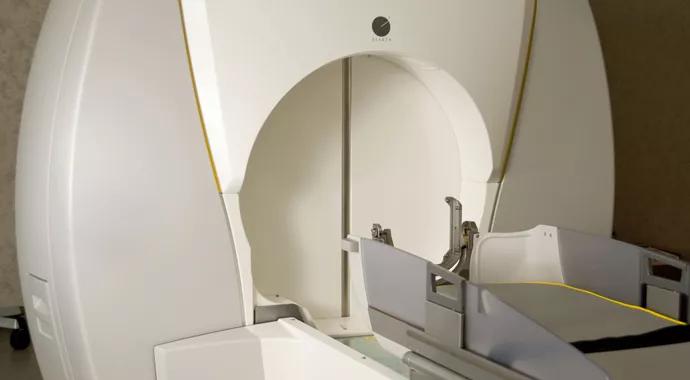
Image content: This image is available to view online.
View image online (https://assets.clevelandclinic.org/transform/4f3e4ed0-113a-48ff-8db8-994e73df1aba/gamma-knife_690x380_jpg)
gamma-knife_690x380
As Gamma Knife® technology gained simplicity and automation, radiation oncologists and neurosurgeons gained the opportunity to treat more brain metastases, but it came at the cost of patient comfort during lengthier sessions. Now, Cleveland Clinic physicians have verified the safety of a faster treatment method, opening Gamma Knife as an option for patients with up to 10 or more brain metastases.
Advertisement
Cleveland Clinic is a non-profit academic medical center. Advertising on our site helps support our mission. We do not endorse non-Cleveland Clinic products or services. Policy
In 2007, Cleveland Clinic acquired the Gamma Knife® Perfexion system, which is the most updated version of the system, allowing for the treatment of multiple lesions in one setup. This led to a paradigm shift in how we treat the brain, explains Samuel Chao, MD, radiation oncologist at Cleveland Clinic Taussig Cancer Institute. Gamma Knife® used to be applied traditionally for one to three brain metastases.
“With the newer Perfexion system, we could treat more brain metastases, and more efficiently than in the past,” says Dr. Chao. The one drawback is that when treating more lesions the patient has to remain on the treatment table for three to four hour (for six to 10 lesions), which can be extremely uncomfortable, especially for a patient with various discomfort and limitations from the disease’s effects, or other disorders, says Dr. Chao.
Faster Treatment
He verified a solution, though, in a recently published Neurosurgery study. Radiation oncologists and neurosurgeons typically used a 50 to 60 percent isodose line prior to this study. However, a 70 or more percent isodose line achieves the same results in less time. Using the higher isodose line has been applied for many years in linear accelerators to safely and effectively treat other parts of the body including the brain, but had not been verified as safe with Gamma Knife® to treat the brain. Dr. Chao wanted to explore this possibility, for effectiveness and safety, including any side effects.
“We had hypothesized that we could use the higher isodose line without compromising control or causing side effects, especially given its successful use with linear accelerators. This study confirms it,” says Dr. Chao.
Advertisement
Patient Advantages
Six to 10 lesions can be treated in two to three hours with the higher isodose line. The Perfexion system positioning is all automated and aligns perfectly, which enhances safety compared to prior systems with manual alignment. This provides additional safety insurance with the higher isodose line. Patients are more comfortable, have less time invested in the appointment, and most importantly, have a new treatment option to consider.
Previously, many patients would have instead opted for whole brain radiation. This is still an appropriate course for some patients, but for many this study opens a more targeted option to try prior to whole brain radiation without as high a risk of side effects such as memory loss. Other patients may have already received their lifetime maximum exposure to whole brain radiation and would previously have had no effective course of treatment. This offers a new treatment course and hope for these individuals, which Dr. Chao is already seeing applied in practice.
In addition to Gamma Knife®, Cleveland Clinic recently added an EDGE™ radiosurgery suite, building out a comprehensive line of aggressive radiation therapy options, especially for sites outside of the brain such as spine, lung, liver, kidney, and prostate.
Advertisement
Advertisement

First-of-its-kind research investigates the viability of standard screening to reduce the burden of late-stage cancer diagnoses

Global R&D efforts expanding first-line and relapse therapy options for patients

Study demonstrates ability to reduce patients’ reliance on phlebotomies to stabilize hematocrit levels

A case study on the value of access to novel therapies through clinical trials

Findings highlight an association between obesity and an increased incidence of moderate-severe disease

Cleveland Clinic Cancer Institute takes multi-faceted approach to increasing clinical trial access 23456
Key learnings from DESTINY trials

Overall survival in patients treated since 2008 is nearly 20% higher than in earlier patients
 Search