Locations:





Many genetic alterations were related to other malignancies
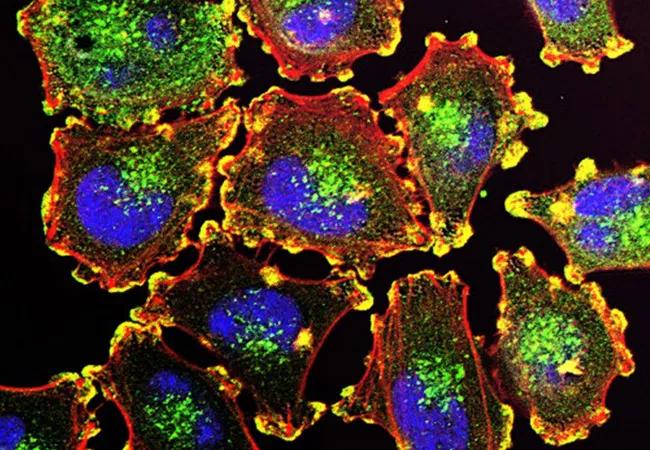
Image content: This image is available to view online.
View image online (https://assets.clevelandclinic.org/transform/a6e31f9f-01ab-41dc-a35e-c001e5f3ecc9/nci-vol-9872-72_650x450_jpg)
Metastatic melanoma cells. Image source: National Cancer Institute
People with a higher incidence of cancer — multiple melanomas, melanoma and additional cancers or a family history of melanomas and other malignancies — can carry a higher risk for breast, prostate, brain and other cancers.
Advertisement
Cleveland Clinic is a non-profit academic medical center. Advertising on our site helps support our mission. We do not endorse non-Cleveland Clinic products or services. Policy
Nearly 1 in 5 of 81 patients evaluated, 18.5 percent, had a germline mutation on multiplex genetic testing. In addition, almost half of these mutations were associated with other tumor types.
“These familial traits are not only melanoma. It’s important for patients and their families to know which other cancers they may be at risk for,” says Pauline Funchain, MD, a hematologist and medical oncologist at Cleveland Clinic Cancer Center and lead author of the study.
For clinicians treating familial melanoma, these findings reinforce the importance of sending patients to genetic counseling, says Dr. Funchain, who presented these findings at the 2018 American Society of Clinical Oncology annual meeting in Chicago.
Dr. Funchain and colleagues assessed patients from Cleveland Clinic’s Melanoma Program. In previous research, they found approximately 75 percent of these patients had some family history of cancer.
“Then we drilled down to find out how many have more than three people in their family with cancer — because that’s a lot,” she says. “And that was almost 30 percent.”
In the meantime, a Nordic twin study looking at concordance revealed that melanoma and prostate cancers had the highest heritability.
“We started getting the sense that melanoma is more genetic than not,” Dr. Funchain says. “We knew we were on to something — now we actually had to show it.”
Using patients enrolled in the Gross Family Melanoma Registry, Dr. Funchain and colleagues focused on people with a personal or family history of multiple melanomas and/or other cancer diagnoses.
Advertisement
They tested participants with a multiplex genetic panel for 12 genetic alterations associated with melanoma and 69 associated with other cancers (Invitae Corp., San Francisco). “And lo and behold, not only did we get a decently high rate of people with positive germline mutations… but half of them were found in genes not even believed to be associated with melanoma.”
“There may be a lot about melanoma inheritance that we don’t know because we never really looked,” said Dr. Funchain.
Mutations were observed across melanoma subtypes, including 12 cutaneous, two uveal and one mucosal melanoma. “Uveal melanoma is definitely a different beast than cutaneous melanoma. But we also had a mucosal melanoma that was positive, and that hasn’t been associated with any genes.”
“I think we have enough data to say — regardless of what type of melanoma a patient has — that genetic testing should be considered.”
Going forward, Dr. Funchain would like to tease out the right criteria for which patients to send to genetic counseling, “and then start learning about these genes that have not been associated with melanoma in the past.”
Image: Metastatic melanoma cells. Image source: National Cancer Institute
Advertisement
Advertisement

First-of-its-kind research investigates the viability of standard screening to reduce the burden of late-stage cancer diagnoses

Global R&D efforts expanding first-line and relapse therapy options for patients

Study demonstrates ability to reduce patients’ reliance on phlebotomies to stabilize hematocrit levels

A case study on the value of access to novel therapies through clinical trials

Findings highlight an association between obesity and an increased incidence of moderate-severe disease

Cleveland Clinic Cancer Institute takes multi-faceted approach to increasing clinical trial access 23456
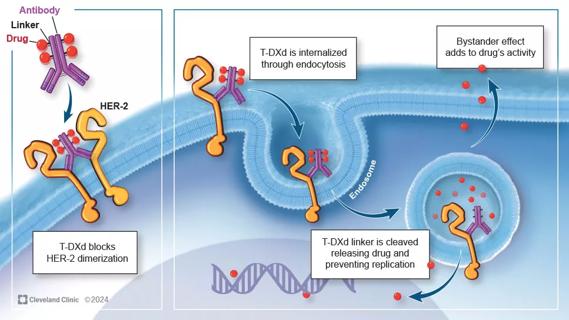
Key learnings from DESTINY trials

Overall survival in patients treated since 2008 is nearly 20% higher than in earlier patients
 Search