Locations:





Lean construction concept leads with respect for others
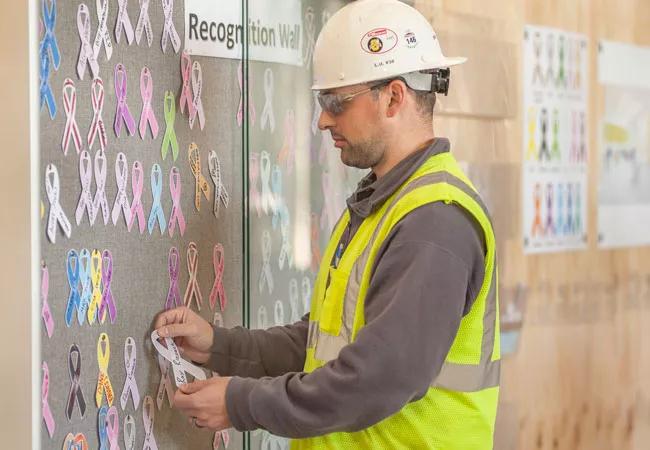
Image content: This image is available to view online.
View image online (https://assets.clevelandclinic.org/transform/44a611da-23ae-463c-b85d-9fac91156bac/ribbon_650x450_jpg)
ribbon_650x450
On the surface, lean construction management is a practical approach to reducing project costs and complexities involving everything from building materials to labor. Look deeper, however, and you will find a spirit of collaboration that drives exceptional results.
Advertisement
Cleveland Clinic is a non-profit academic medical center. Advertising on our site helps support our mission. We do not endorse non-Cleveland Clinic products or services. Policy
Opening in March 2017, Cleveland Clinic Cancer Center’s new 377,000-square-foot outpatient care tower reflects lean management principles and operational efficiency. The building also exemplifies the critical role that relationships play in bringing the very best possible care to every patient.
“One of the foundations of lean methodology is respect for others,” says David Doren, Owner’s Representative in Cleveland Clinic’s Buildings and Properties Department. “When we started the cancer building project in 2014, our cancer leadership team discussed, ‘How can we engage and roll this philosophy out to the construction teams?’ We didn’t want to go in just dictating, ‘Here’s what you’re going to do.’”
Instead, the project team brought workers together in small groups to hear firsthand from project leaders about the impact that each individual could make on the new building, which will provide coordinated clinical care and support services in a single, highly accessible location.
“We really wanted to emphasize that this is a cancer facility, and cancer touches everybody, whether it’s friends or family,” Doren says. “Cancer has touched many of us many times over, so we asked them to think about that each day, and to put care into doing things right the first time.” During construction, workers were encouraged to honor friends and family affected by cancer by placing ribbons on a Recognition Wall in the building. While the wall will be removed, each ribbon will be incorporated into artwork displayed in the new building. “The heartbeat of the building, the lifeline of the building has already begun with the workers,” adds Doren. “It started with the men and women and the passion they have for this building.”
Advertisement
From the beginning, construction teams and contractors were briefed on lean practices and encouraged to speak up when they saw opportunities to achieve those goals. At the same time, leadership was eager to learn workers’ ideas for improvement.
“We wanted to bring everyone in and hear what they had to say,” says Doren. “Since breaking ground, we have incorporated a lot of practices — not only at the project and management level, but also from the field side because that is where you find a lot of good ideas.”
Keeping work flowing so crews stay productive is a priority for lean project delivery. By listening to participants, the project’s leaders identified and implemented critical steps for getting things done quickly at all stages of construction, including:
“It’s about building trust within the team,” Doren says. “When everybody works together and trusts each other, you will have ownership of the things that come up, and that creates efficiency.”
As one example, Doren says that in the past the material submittal and shop drawing process could take four to six weeks. But during construction of the new cancer building, teams have been able to get materials and products approved much faster through live interactive “Bluebeam Studio” work sessions.
Advertisement
“We’re able to get approvals in only a week or two by working together,” he says. “Construction and design has spent a lot less time chasing paperwork and more time focusing on what’s actually happening at the site.”
Lean management also seeks to reduce inventory and waste, as evidenced by the high degree of prefabrication work that has gone into the new building.
For instance, prebuilt corridor racks housing ductwork, medical piping and electrical components have streamlined activities significantly. While steel framework went up, the racks were assembled offsite in 20-foot sections, then shipped by flatbed truck to the building for fast installation.
Empowering participants to take action has also made the project safer and more productive, Doren says. Simple improvements have included placing toolboxes on all floors (and putting wheels on them for easy mobility), hanging hooks from ceilings to keep cords off the ground (preventing trip-and-fall accidents), and providing workers access to special on-site computers housing the 3-D building information model (BIM) that contain detailed layers of the building structure, mechanical and electrical components. This computer BIM box proved effective, resulting in the purchase of a second one to allow additional access on the building’s other floors.
Having successfully adopted the lean approach, Doren and other team leaders of the cancer building project were recently chosen to present at the 18th annual Lean Construction Institute (LCI) Congress in Chicago. Founded in 1997, the LCI operates as a catalyst to transform the construction industry through lean project delivery.
Advertisement
“At Cleveland Clinic, we have been implementing what we call the Owner-Controlled Team Project Delivery method, or OCTPD, into projects,” says Doren. “We’re always looking to be at the forefront of construction and to continuously improve and evolve our processes, and lean is now a big part of that. The trades want to be engaged with us; they want to learn, because you have to build the culture before you build the structure.”
Advertisement
Advertisement

First-of-its-kind research investigates the viability of standard screening to reduce the burden of late-stage cancer diagnoses

Global R&D efforts expanding first-line and relapse therapy options for patients

Study demonstrates ability to reduce patients’ reliance on phlebotomies to stabilize hematocrit levels

A case study on the value of access to novel therapies through clinical trials

Findings highlight an association between obesity and an increased incidence of moderate-severe disease

Cleveland Clinic Cancer Institute takes multi-faceted approach to increasing clinical trial access 23456
Key learnings from DESTINY trials

Overall survival in patients treated since 2008 is nearly 20% higher than in earlier patients
 Search