Locations:





Cael-101 + CyBorD dosing and outcomes
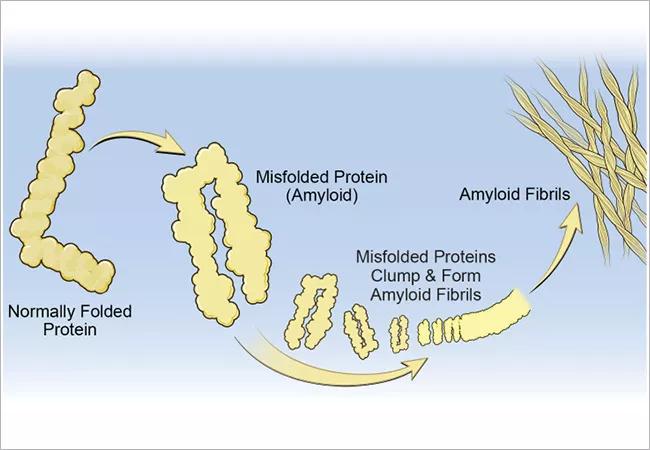
Image content: This image is available to view online.
View image online (https://assets.clevelandclinic.org/transform/826637f2-ec49-4145-a74c-826049f10801/Amyloid-fib_650x450_jpg)
Amyloid-fib_650x450
Early results from a phase 2 trial of Cael-101 in combination with bortezomib, cyclophosphamide and dexamethasone (CyBorD) for immunoglobulin light chain (AL) amyloidosis demonstrate the regimen’s safety and early efficacy and pinpoint an appropriate dosage to use for upcoming phase 3 trials. Cleveland Clinic researchers presented multiple analyses of the data at the American Society of Hematology 2020 Annual Meeting.
Advertisement
Cleveland Clinic is a non-profit academic medical center. Advertising on our site helps support our mission. We do not endorse non-Cleveland Clinic products or services. Policy
AL amyloidosis is a rare disease that produces a buildup of amyloid protein in major organs including the heart, liver and kidneys, impairing their function and causing organ failure in severe cases. Front-line therapy has been CyBorD, but most patients don’t achieve a complete response, and relapses are common.
“The data is preliminary, but promising,” says Jason Valent, MD, Co-director of Cleveland Clinic Cancer Center’s Amyloidosis Center and senior author of the studies. “We have no approved treatments for the deposits associated with organ dysfunction from AL amyloidosis, so this is a big step in the right direction.”
Thirteen patients with AL amyloidosis (seven heart, three kidney, four both) in Mayo Stage I, II and IIa were enrolled in 3 + 3 dose escalation and safety studies. Most patients were male (80%) and white (84.6%). The average age was 64 years.
Patients received weekly Cael-101 infusions for four weeks with a starting dose of 500 mg/m2 and were followed for dose-limiting toxicities (DLTs). The first cohort (N = 4) was observed for 14 days following the first infusion, and subsequent cohorts were followed through 27 days. Patients were not enrolled into a higher-dose cohort until all previous cohort members had completed the DLT observation period. Six patients made it to the highest dosed (1000 mg/m2) cohort.
“All of the patients tolerated Cael-101 well,” says Dr. Valent. “About a third experienced nausea and diarrhea, and those are easily addressed. Though this is a small cohort, we are encouraged by this outcome.”
Advertisement
Eight of 13 patients evaluable for organ response have met criteria, including all of the patients with kidney involvement and one with cardiac involvement. Organ responses have been seen even without ongoing partial hematological responses. Data will be updated as ongoing monitoring continues.
Cael-101 is a first-in-class AL amyloid fibril reactive monoclonal antibody designed to target amyloid deposits in the organs of patients with AL amyloidosis. The chimeric IgG1 kappa isotype reacts with light chain fibrils in a way that facilitates the removal of amyloid fibrils through immune system stimulation. Phase 1 trials of monotherapy were promising, and the results of these phase 2 trials identify a safe and efficacious dose (1000 mg) for phase 3 trials, which are now enrolling. The Caelum CARES phase 3 program has been initiated and will evaluate overall survival in newly diagnosed, treatment-naïve patients with Mayo stage IIIa and IIIb disease.
“The recent addition of daratumumab to the standard of care for our patients was a game changer,” says hematologist/oncologist Jack Khouri, MD, lead author of the tolerability study. “But we still had an unmet need for those who already had significant amyloid deposits damaging their organs. If the phase 3 studies show favorable results, the combination of these two developments will have a significant impact on the overall prognosis for these patients.”
Cleveland Clinic Amyloidosis Center provides leading-edge management and treatment options for patients with amyloidosis. The center focuses on a collaborative approach with specialist practitioners from hematology/oncology, cardiology, stem cell transplantation, nephrology, neurology, palliative medicine and social work all working together to help patients navigate through their treatment course and survivorship.
Advertisement
“Amyloidosis often goes undiagnosed because its symptoms are common to many other conditions. In many cases, by the time people with amyloidosis are diagnosed appropriately, they are at end stage of the disease, when not much can be done,” says Dr. Valent. “But the collaborations and studies we’re working on now are providing better treatment options and hope for earlier diagnoses.”
Advertisement
Advertisement
First-of-its-kind research investigates the viability of standard screening to reduce the burden of late-stage cancer diagnoses
Global R&D efforts expanding first-line and relapse therapy options for patients
Study demonstrates ability to reduce patients’ reliance on phlebotomies to stabilize hematocrit levels
A case study on the value of access to novel therapies through clinical trials
Findings highlight an association between obesity and an increased incidence of moderate-severe disease
Cleveland Clinic Cancer Institute takes multi-faceted approach to increasing clinical trial access 23456
Key learnings from DESTINY trials

Overall survival in patients treated since 2008 is nearly 20% higher than in earlier patients
 Search