Locations:





Study identifies high-risk groups
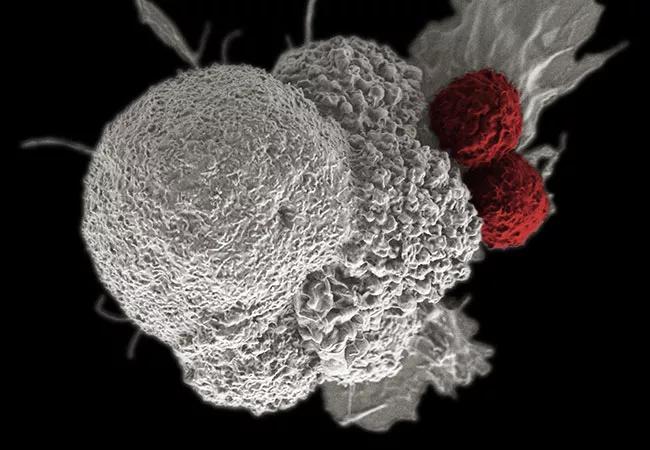
Image content: This image is available to view online.
View image online (https://assets.clevelandclinic.org/transform/7f2d30ef-75d9-4570-9792-d93b2b256299/650x450-Oral-Cancer_jpg)
650×450-Oral-Cancer
Routine surveillance imaging for distant failure after definitive treatment of head and neck squamous cell carcinoma (SCC) is an area of controversy. A new study by Cleveland Clinic researchers sheds light on this topic by identifying specific cohorts at increased risk of distant failure who may benefit most from surveillance imaging.
Advertisement
Cleveland Clinic is a non-profit academic medical center. Advertising on our site helps support our mission. We do not endorse non-Cleveland Clinic products or services. Policy
Presented at ASCO 2020, data from the analysis revealed two distinct populations of patients with a > 20% risk of developing distant failure within three years after definitive treatment for head and neck SCC. One group of high-risk patients included those with oropharynx SCC with larger tumors or those with multiple involved lymph nodes (i.e., ≥ T3 or N2b) who actively smoked at time of diagnosis. The other included patients with oral cavity SCC who were treated with surgery and postoperative (chemo)radiation who had multiple involved lymph nodes at the time of surgery.
“Our results show that head and neck cancer is not one size fits all,” says Shlomo Koyfman, MD, Director of Head, Neck and Skin Cancer Radiation at Cleveland Clinic Cancer Center. “Patients can be stratified for the need for surveillance imaging based on their risk of developing metastatic disease. Finding distant metastases earlier in the disease process, especially if it is a limited number of lesions, may allow for more aggressive treatment and may improve outcomes.”
Striking a note of caution, Dr. Koyfman underscores that the study is single-center and retrospective. It does, however, reflect 25 years of experience at Cleveland Clinic. Data from 863 patients with SCC (676 with oropharynx and 187 with oral cavity disease) treated between 1994 and 2019 were analyzed. Median follow-up was 77.5 months and the majority (60.4%) of patients were male.
Disease stage was T1-2 in 67.9%, T3-4 in 32.1%, and 70.1% had N0-2a disease, while 11.5% had nodal stage N2b-3 disease.
Advertisement
The patients with oral cavity cancer were treated with surgery and postoperative RT (≥ 60 Gray). Thirty-four percent had concurrent systemic therapy. Among the patients with oropharynx disease who were primarily treated non-operatively, 52.2% received concurrent cisplatin, 10.6% received cetuximab and 24.5% received other systemic therapies.
Distant failure occurred in 11.7% of the patients overall, and in 77% of those cases, it was in the lung. Within the cohort with oral cavity disease, N2b or higher disease was associated with a three-year risk of distant failure of 34% versus 10% (hazard ratio 3.26, P < 0.001).
“Multivariate analysis showed that in patients with oral cavity disease, bulkier nodal burden was associated with a much higher risk of distant failure,” says Dr. Koyfman. “That was the only factor that was significant in those patients. In the patients with oropharynx disease, it was a little more complicated.”
Within the cohort with oropharynx disease, the authors identified a high-risk group of 87 patients (12.9%) with a three-year incidence of distant failure of 22%, compared with ≤ 10% in the lower-risk cohorts.
“Basically, in patients who were actively smoking at diagnosis, the risk went up to 22%,” says Dr. Koyfman. “One-fifth to one-quarter of patients with oropharynx disease — the active smokers and the ones with a tumor > 4 cm or bulkier nodal disease — they should probably get surveillance imaging.”
In terms of intervals for screening in the high-risk groups, Dr. Koyfman notes that the results are not proscriptive: “This study doesn’t tell clinicians what to do. It provides guidance on how to think smarter and be more rational about choosing who gets computed tomography scans of the chest and who doesn’t.”
Advertisement
The proof of whether the data have informed clinical decisions, he says, will come in the coming years. He hopes it will mean less surveillance imaging being done on low-risk patients and more frequent surveillance on high-risk patients.
In the meantime, research in this area is continuing at Cleveland Clinic. “One of the crucial unanswered questions is whether finding and treating oligometastatic SCC makes a difference,” says Dr. Koyfman. “We’ve begun using stereotactic body radiation therapy in patients in that population who are found to have one to two distant lesions. In a few years, we should be able to determine whether it has actually made a difference and changed the overall outcome of these patients.”
Image: Electron micrograph showing cytotoxic T-cells attacking an oral squamous cancer cell. Image courtesy of National Cancer Institute/Rita Elena Serda.
Advertisement
Advertisement
First-of-its-kind research investigates the viability of standard screening to reduce the burden of late-stage cancer diagnoses
Global R&D efforts expanding first-line and relapse therapy options for patients
Study demonstrates ability to reduce patients’ reliance on phlebotomies to stabilize hematocrit levels

A case study on the value of access to novel therapies through clinical trials

Findings highlight an association between obesity and an increased incidence of moderate-severe disease

Cleveland Clinic Cancer Institute takes multi-faceted approach to increasing clinical trial access 23456
Key learnings from DESTINY trials

Overall survival in patients treated since 2008 is nearly 20% higher than in earlier patients
 Search