Locations:





New director describes treatment advances, future directions
Image content: This image is available to view online.
View image online (https://assets.clevelandclinic.org/transform/39eb5e08-04d4-4006-8e28-52305d0e6a51/melanoma_690x380_jpg)
melanoma cancer program
The recently appointed director of the Melanoma Program at Cleveland Clinic’s Taussig Cancer Institute says the program’s strong research capabilities and leading-edge diagnostic and therapeutic approaches strategically positions it to improve outcomes for melanoma patients.
Advertisement
Cleveland Clinic is a non-profit academic medical center. Advertising on our site helps support our mission. We do not endorse non-Cleveland Clinic products or services. Policy
“The opportunity to lead an outstanding team of colleagues in our work to advance the health of patients with melanoma is a privilege and honor,” says Marc Ernstoff, MD, who assumed leadership of the program in mid-2014. “We have entered an exciting era where technology and knowledge have converged to provide unprecedented benefit to patients with melanoma. These exciting scientific developments, along with Taussig Cancer Institute’s success at assembling a multidisciplinary group of scientists and physicians, provide a strong foundation for us to contribute to improving melanoma diagnosis, refining risk assessment and prognosis and advancing new therapies.”
The Melanoma Program utilizes a two-step, bi-directional model of translational research as the underpinning for cancer care (see Figure 1).The first step moves basic science and biological concepts developed in the laboratory through pre-clinical testing and into clinical care. This aspect of the plan provides melanoma patients access to advanced diagnostic and therapeutic approaches through participation in proof-of-principle and first-in-human research protocols.
Conversely, observations made in patients participating in early-phase clinical trials allow laboratory scientists to enhance the relevance of their research on human disease. In this second step of translational research, positive results from early clinical trials are expanded in phase II and III studies to confirm the finding and determine if the observation should result in practice changes.
Advertisement
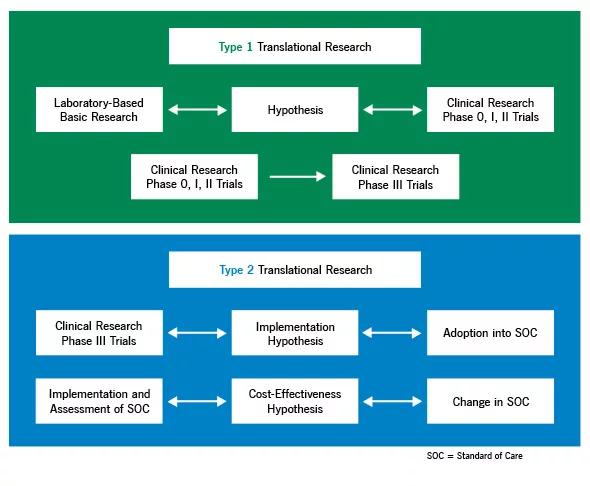
Image content: This image is available to view online.
View image online (https://assets.clevelandclinic.org/transform/b1f7a49a-537b-47d7-a408-1e2430509ae8/inset-image_jpg)
Figure 1.. Melanoma Program model of translational research.
“The geometric growth of our understanding of oncogenesis has led to rapid changes in the therapeutic landscape, with an explosion of new agents with a high likelihood of success,” Dr. Ernstoff says. “Our greater understanding of the molecular basis of melanoma carcinogenesis, tumor progression and metastasis — and the increasing knowledge of immune networks and regulation — has provided us with new targeted tools to interrogate melanoma biology and improve therapy.”
Since 2011, five new agents have received FDA approval for metastatic melanoma, including three targeted agents (vemurafenib, dabrafenib, trametinib) and two new immune therapies (ipilimumab, pembrolizumab). Many more targeted agents and immune therapies are poised for addition to clinical care in the next few years.
“My vision for the Taussig Cancer Institute’s Melanoma Program is to have an integrated system-wide management approach to melanoma patients based on hypothesis-driven and evidence-based care,” says Dr. Ernstoff. “This team approach will permit the free interchange of ideas among laboratory and clinical scientists. It will also provide a mechanism to advance the discoveries from our clinical trials into the broader Cleveland Clinic network and beyond in a cost-effective and compassionate manner, raising the health outcomes of the melanoma population and those at risk for getting this cancer.”
During the past 30 years, Dr. Ernstoff has focused his clinical research on expanding understanding of the immunobiology of human cancer and the development of new immune therapies for renal cell carcinoma, melanoma and glioblastoma multiforme. He has participated in National Cancer Institute-funded clinical trials with a goal of minimizing regulatory and suppressive pathways and enhancing existent tumor-specific immune function.
Advertisement
Dr. Ernstoff has published more than 200 original research manuscripts in the areas of renal cell cancer, melanoma and immune therapy strategies, including cytokine therapies, dendritic cell vaccines, immune checkpoint inhibition, targeted therapies and ex vivo expanded effector cells for adoptive transfer.
Dr. Ernstoff helped establish the first medical oncology program at Pittsburgh Cancer Institute (PCI), where he served as Medical Director of the Genitourinary Tumors Study Group and Director of the Hematology-Oncology Fellowship Program from 1986 to 1991.
Prior to accepting his position at Cleveland Clinic, Dr. Ernstoff spent 23 years on the faculty at Geisel School of Medicine at Dartmouth College and held leadership roles at Dartmouth-Hitchcock Medical Center and the NCI-designated Norris Cotton Cancer Center. He served as Associate Director, Clinical Research, and Director of the Melanoma Program at the cancer center, and as Section Chief of Hematology/Oncology at Dartmouth-Hitchcock. Most recently he held the O. Ross McIntyre Chair of Medicine Professorship.
Dr. Ernstoff received his medical degree from the New York University School of Medicine. He completed an internal medicine residency at Bronx Municipal Medical Center and The Hospital of The Albert Einstein College of Medicine, and a medical oncology fellowship at Yale University School of Medicine. He is a member of the American Association for Cancer Research, the American Society of Clinical Oncology and the American Society of Clinical Oncology Program Committee.
Advertisement
Advertisement
First-of-its-kind research investigates the viability of standard screening to reduce the burden of late-stage cancer diagnoses

Global R&D efforts expanding first-line and relapse therapy options for patients

Study demonstrates ability to reduce patients’ reliance on phlebotomies to stabilize hematocrit levels
A case study on the value of access to novel therapies through clinical trials

Findings highlight an association between obesity and an increased incidence of moderate-severe disease

Cleveland Clinic Cancer Institute takes multi-faceted approach to increasing clinical trial access 23456
Key learnings from DESTINY trials

Overall survival in patients treated since 2008 is nearly 20% higher than in earlier patients
 Search