Locations:





Latest radiation therapies for treating breast cancer may minimize exposure to the heart
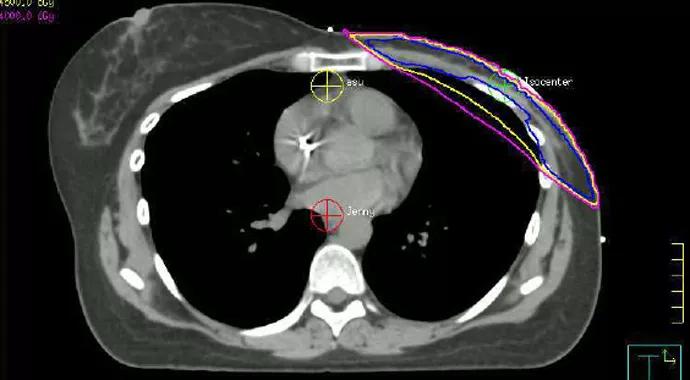
Image content: This image is available to view online.
View image online (https://assets.clevelandclinic.org/transform/2df8b1b4-18db-42b4-9a5b-9fa4e0e34009/ABC-690-x-380_jpg)
ABC-690-x-380
One in 8 women will develop breast cancer—it is the most common solid tumor diagnosis in women. The good news is, many more patients today are “survivors” because of advanced chemotherapy and radiation therapy techniques.
Advertisement
Cleveland Clinic is a non-profit academic medical center. Advertising on our site helps support our mission. We do not endorse non-Cleveland Clinic products or services. Policy
But these therapies may come with some small risk of developing heart complications down the road. “We have known for years that radiation directed at the heart can cause late side effects, such as coronary artery disease and even heart attacks,” says Rahul Tendulkar, MD, a radiation oncologist at Cleveland Clinic. “We want to do everything possible to minimize these late toxicities as more patients are being cured and we have a greater number of long-term survivors of breast cancer.”
The potential cardiac toll of cancer treatment has been making waves in the media, especially after a study published this spring by New England Journal of Medicine aimed to quantify the relationship between radiation for breast cancer and late cardiac events. The problem with that study, Dr. Tendulkar points out, is that the radiation techniques used were outdated. “With the latest advances in breast cancer therapy, we can take that 1-percent risk [of heart complications] down closer to zero,” he says.
Cleveland Clinic offers breast cancer patients cardiac-sparing radiation therapy options that reduce the exposure of the heart to treatment. Here are some of them:
CT scans for radiation planning ensure that radiation beams are aimed directly at the affected breast tissue. “You can see how much of the heart is being included in the [radiation beam] field,” Dr. Tendulkar says. Today, the shape and size of the radiation field is designed to minimize exposure to the heart. Through conformal treatment planning, portions of the heart are blocked out of the treatment path.
Advertisement
Taking advantage of gravity can reduce radiation exposure to the heart when treating breast cancer patients in the prone position (lying on the belly). This position allows breast tissue to fall away from the chest wall so radiation can be aimed from underneath the breast. “There are studies that show this is an effective way of reducing the heart dose of radiation for select patients,” Dr. Tendulkar says.
Filling the lungs with air separates the heart from the rib cage, and that physical gap minimizes the dose of radiation that reaches the heart. Active Breathing Control (ABC) involves attaching a breathing device to the patient’s mouth. Radiation therapists instruct the patient to inhale deeply and hold her breath for a few seconds while the radiation treatment is being delivered. This technique is more challenging for patients and more time consuming, but it does reduce the radiation dose that reaches the heart, Dr. Tendulkar says.
“With the advent of these technologies, from conformal treatment planning to ABC, the radiation doses the heart receives are a faction of what they were 10 to 15 years ago,” Dr. Tendulkar says, adding that every radiation treatment plan is customized for each patient. “We now have multiple cardiac-sparing breast cancer therapies to offer patients and that’s important because treatment is never one-size-fits-all.”
Advertisement
Advertisement

First-of-its-kind research investigates the viability of standard screening to reduce the burden of late-stage cancer diagnoses

Global R&D efforts expanding first-line and relapse therapy options for patients

Study demonstrates ability to reduce patients’ reliance on phlebotomies to stabilize hematocrit levels

A case study on the value of access to novel therapies through clinical trials

Findings highlight an association between obesity and an increased incidence of moderate-severe disease

Cleveland Clinic Cancer Institute takes multi-faceted approach to increasing clinical trial access 23456
Key learnings from DESTINY trials

Overall survival in patients treated since 2008 is nearly 20% higher than in earlier patients
 Search