Locations:





Preliminary trial reports positive patient response
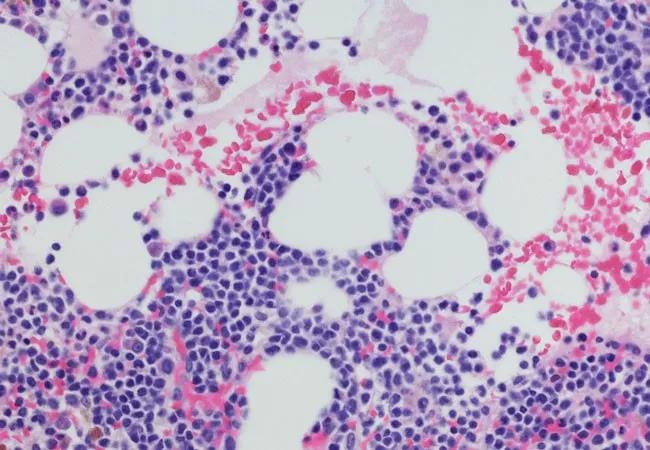
Image content: This image is available to view online.
View image online (https://assets.clevelandclinic.org/transform/80817bfb-1968-439b-ad50-4e12b1c77bf3/multiple-myeloma_jpg)
multiple myeloma
Preliminary data from a phase 1 trial of allogeneic chimeric antigen receptor (CAR) T-cell therapy shows therapeutic responses in relapsed/refractory multiple myeloma (RRMM) patients. The data was presented at the annual meeting of the American Society of Hematology.
Advertisement
Cleveland Clinic is a non-profit academic medical center. Advertising on our site helps support our mission. We do not endorse non-Cleveland Clinic products or services. Policy
Approved to treat some hematologic and solid cancers, CAR T-cell therapy is a type of immunotherapy in which T cells are reengineered with new cell receptors that target cell-surface proteins expressed by cancer cells, in this case B-cell maturation antigen (BCMA). “The immune cells become cancer destroying cells,” says Faiz Anwer, MD, staff in the the Department of Hematology and Medical Oncology at Cleveland Clinic Cancer Center.
Allogeneic CAR T-cell therapy, which uses cells from healthy donors, has distinct advantages over autologous therapy which uses patient cells. Sick patients are spared having leukapheresis, and donor cells are healthier and can be frozen for on-demand treatment with a shorter waiting time. “Allogeneic CAR T-cell therapy saves time and has a higher chance of successful treatment using cells from donors with stronger immune systems,” says Dr. Anwer.
In the UNIVERSAL trial, a multicenter study which includes Cleveland Clinic, patients are first treated with a lymphodepleting regimen of cyclophosphamide, fludarabine and ALLO-647, an anti-CD52 monoclonal antibody. Following ALLO-647, they are treated with the CAR T-cell therapy, ALLO-715, which targets BCMA. BCMA is highly expressed on plasma and multiple myeloma cells.
The trial is testing ALLO-715 as a single infusion across four doses: 40, 160, 320, or 480 x 106 CARs. Lymphodepletion regimens consist of fludarabine (F; 30 mg/m2/day) plus cyclophosphamide (C; 300 mg/m2/day) given on three days with ALLO-647 (A; 13-30 mg x 3 days; FCA) or cyclophosphamide plus ALLO-647 (CA).
Advertisement
As of July 2020, the study had enrolled 19 patients with a median age of 65 with advanced disease who have had a median of five prior lines of therapy, including an immunomodulatory drug, a proteasome inhibitor and an anti-CD38 agent, and are refractory to their last treatment. Fifteen patients were treated with ALLO-715 at three dose levels (DL): three patients at DL1 (3 FCA and 0 CA); seven patients at DL2 (4 FCA and 3 CA); and five patients at DL3 (3 FCA and 2 CA).
The therapy generated the strongest response in patients who received ALLO-647 at 320 x106. For this cohort, the overall response rate (ORR) was 60% among 10 patients, including three of six who received CARs with low–ALLO-647 FCA and three of four who had the therapy with high–ALLO-647 FCA. Overall, six patients had a very good partial-plus response (VGPR+), a complete response or a very good partial response (VGPR). This included one patient at 160, four patients at 320, and one at 480 10 x 106 CARs. Of the VGPR+ patients, five were negative for measurable residual disease.
Additionally, six of nine patients treated at the 320 or 480 x 106 dose levels remain in response. Cleveland Clinic has one patient in the trial who has had a good response so far; patients in the trial need careful monitoring and follow up at this point.
“These results are promising. We currently don’t have good therapies for patients who have been treated with three or more prior therapies. CAR T-cell therapy could be a good option for relapsed patients who don’t have the option of waiting,” says Dr. Anwer.
Advertisement
The most common grade 3 or higher adverse events were anemia and neutropenia. Four patients had cytokine release syndrome which resolved without intervention. Overall, the regimen has a manageable safety profile.
The investigators are continuing to evaluate dosing levels for ALLO-715 and the trial is enrolling patients for the 480 x 106 cohort. It is possible that FDA approval for the first anti-myeloma CAR T-cells could come this spring. “We hope that CAR T-cell therapy will achieve quick disease control which will last for a long duration. It could become a first-line treatment someday,” says Dr. Anwer.
Advertisement
Advertisement
First-of-its-kind research investigates the viability of standard screening to reduce the burden of late-stage cancer diagnoses
Global R&D efforts expanding first-line and relapse therapy options for patients
Study demonstrates ability to reduce patients’ reliance on phlebotomies to stabilize hematocrit levels
A case study on the value of access to novel therapies through clinical trials

Findings highlight an association between obesity and an increased incidence of moderate-severe disease
Cleveland Clinic Cancer Institute takes multi-faceted approach to increasing clinical trial access 23456
Key learnings from DESTINY trials

Overall survival in patients treated since 2008 is nearly 20% higher than in earlier patients
 Search