Locations:
Search IconSearch

Cancer Programming and Clinical Alignment

One clinical standard of care across all regions and disciplines
tumor-board_650x450

By Brian Bolwell, MD, FACP

Advertisement

Cleveland Clinic is a non-profit academic medical center. Advertising on our site helps support our mission. We do not endorse non-Cleveland Clinic products or services. Policy

As a large cancer center, one of our challenges is clinical alignment with our numerous locations. We have many regional clinics and hospitals that deliver cancer care — how do we promote one clinical standard of care?

Two words: cancer programming.

Each cancer program is a disease-based team comprised of physicians from different specialties as well as nurses and other support staff. Team-based care for each cancer diagnosis is critical. Programming allows us to prioritize and structure different aspects of team-based care, including multidisciplinary clinics, tumor boards, care paths and reduction in time to treat. These elements are tracked on scorecards, and each program is accountable to an executive committee for its results. We devote resources such as program managers and patient navigators to each program.

Three elements are especially key to the success of cancer programming:

  1. Care paths. Care paths are evidence-based algorithms that define the most effective and efficient treatment in a specific clinical situation, and are especially complex in our field given the highly individualized nature of the disease. There are three main criteria we consider when developing care paths: efficacy, toxicity and cost. When we develop care paths for a given situation, we involve physicians from our main academic campus and from our regional locations. Care paths are available to purchase from outside vendors, but we believe that internal development of care paths promotes teamwork and a sense of ownership, leading to better participation and regional integration.
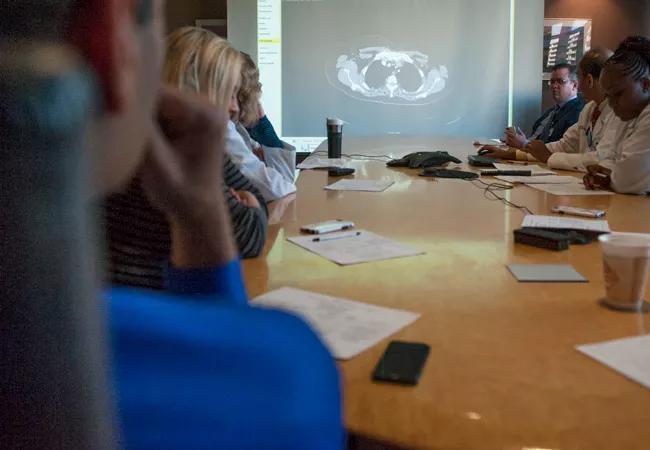
  2. Tumor boards. Tumor boards allow experts to review a complex case and work together to develop and refine therapeutic strategy. In each case, we discuss any applicable care paths as a part of the overall process to elevate the standard of care. We ensure that our tumor boards are accessible to physicians at all locations and that physicians outside of main campus have opportunities to present their cases at both regional and overall program tumor boards. We make tumor board participation a criteria for “membership” in our cancer center, so the meetings also function as an alignment tool for our community surgeons.
  3. Access is of profound importance to cancer patients. Every patient upon initial diagnosis is filled with fear and anxiety. The sooner we see and develop a treatment plan for a patient, the better it is for everyone. Our cancer programs have made reducing time to treat (TTT) — days between diagnosis of cancer and first treatment — a priority. Our study of 3.7 million patient records shows that prolonged TTT is highest among academic cancer centers and appears to be worsening annually. Our overall TTT initially was similar to that of other major cancer centers, but we have reduced it from 39 days to 29 days, with our largest cancer programs (breast, colorectal and lung) showing the greatest reduction. We want to keep going and reduce TTT to less than 20 days. Our work on reducing TTT promotes access, multidisciplinary care development and regional alignment; lowers patient fear and anxiety; and elevates our culture.

Advertisement

Clinical integration of regional assets is important and requires significant effort. We believe that developing disease-based programs and working on shared initiatives such as the development of care paths, robust regional tumor board participation and reducing time to treatment, has allowed us to achieve successful clinical integration of our diverse repertoire of assets.

Dr. Bolwell is Chair of Physician Leadership and Development and former Chair of Taussig Cancer Institute. On Twitter: @BrianBolwellMD

Advertisement

Related Articles

Doctors working on MGUS screening study
March 18, 2024/Cancer/Research
Pilot Study Aims for Early Identification of Multiple Myeloma Precursor Among Black Patients

First-of-its-kind research investigates the viability of standard screening to reduce the burden of late-stage cancer diagnoses

Hematologist at Cleveland Clinic
March 14, 2024/Cancer/Blood Cancers
Advances in Mantle Cell Lymphoma Treatment (Podcast)

Global R&D efforts expanding first-line and relapse therapy options for patients
Physician with patient
March 6, 2024/Cancer/Research
Targeting Uncontrolled Erythrocytosis in Polycythemia Vera with Rusfertide

Study demonstrates ability to reduce patients’ reliance on phlebotomies to stabilize hematocrit levels
Dr. Jagadeesh at Cleveland Clinic
February 28, 2024/Cancer/Blood Cancers
Treating Patient with Systemic T-Cell Lymphoma and Graft-Versus-Host Disease

A case study on the value of access to novel therapies through clinical trials

Doctor measuring patient's waist size
February 26, 2024/Cancer/Research
Impact of Obesity on GVHD & Transplant Outcomes in Hematologic Malignancies

Findings highlight an association between obesity and an increased incidence of moderate-severe disease
Physician with patient
February 21, 2024/Cancer/Research
Strategies for Improving Clinical Trial Equity

Cleveland Clinic Cancer Institute takes multi-faceted approach to increasing clinical trial access 23456
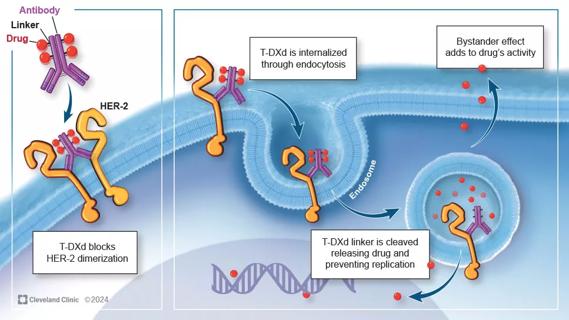
How antibody drug conjugates work
February 13, 2024/Cancer/Research
Real-World Use of Trastuzumab Deruxtecan

Key learnings from DESTINY trials

CQD-4445459-rotz-650×450
February 7, 2024/Cancer
Advances in Bone Marrow Transplant Have Improved Outcomes in Fanconi Anemia

Overall survival in patients treated since 2008 is nearly 20% higher than in earlier patients

Ad