Locations:





Cleveland Clinic's approach to the therapy
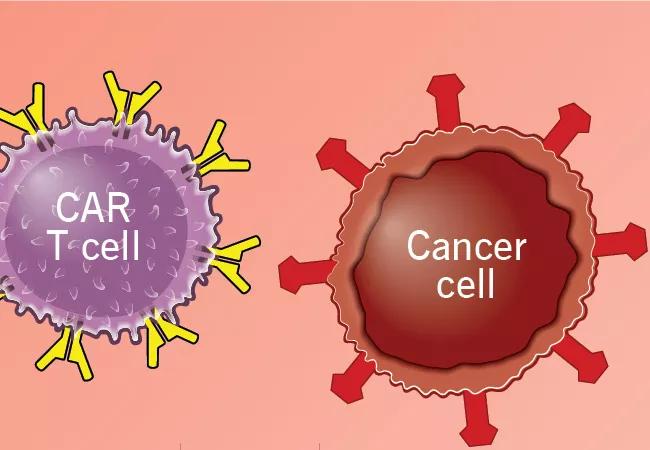
Image content: This image is available to view online.
View image online (https://assets.clevelandclinic.org/transform/0f472da6-8aea-4fab-a651-c3540e7d1149/CAR-T-cell_650x450_jpg)
CAR-T cell_650x450
Cleveland Clinic Cancer Center is now accepting patients for the FDA-approved chimeric antigen receptor (CAR) T-cell therapy, Yescarta™ (axicabtagene ciloleucel).
Advertisement
Cleveland Clinic is a non-profit academic medical center. Advertising on our site helps support our mission. We do not endorse non-Cleveland Clinic products or services. Policy
Yescarta is a CD19-directed CAR T-cell therapy indicated for the treatment of adult patients with relapsed or refractory large B-cell lymphoma after two or more lines of systemic therapy (including autologous stem cell transplantation). This includes diffuse large B-cell lymphoma(DLBCL), primary mediastinal B-cell lymphoma, high grade B-cell lymphoma and DLBCL arising from follicular lymphoma.
Cleveland Clinic participated in the pivotal phase 2 trial that reported outcomes on 111 patients with relapsed or refractory large B-cell lymphomas. Yescarta was administered to 101 patients (91 percent) with an objective response rate of 82 percent and a complete response rate of 54 percent. At 18 months post-treatment, the overall survival rate was 52 percent.
Severe side effects have been noted, prompting the FDA to require any centers that dispense Yescarta to be specially certified. These serious potential side effects include cytokine release syndrome and neurologic toxicities, both of which can be life-threatening. Building on experience obtained from participation on Yescarta clinical trials, Cleveland Clinic has established a multidisciplinary expert team with training and familiarity in administering this therapy and managing its toxicities.
Patients with relapsed or refractory large B-cell lymphoma should be referred for a consultation preferably prior to initiating second-line therapy. Earlier referral allows us to expedite eligibility evaluation for Yescarta in case the patient does not respond to salvage therapy. Patients with more advanced disease should be referred as soon as possible, including patients whose lymphoma has relapsed or not responded after autologous or allogeneic stem cell transplantation.
Advertisement
For questions about our approach to this therapy, please contact Brian Hill, MD, PhD, Director of the Lymphoma Program at hillb2@ccf.org or 216.445.9451, or Navneet Majhail, MD, MS, Director of the Blood and Marrow Transplant Program at majhain@ccf.org or 216.444.2199.
Advertisement
Advertisement
First-of-its-kind research investigates the viability of standard screening to reduce the burden of late-stage cancer diagnoses

Global R&D efforts expanding first-line and relapse therapy options for patients
Study demonstrates ability to reduce patients’ reliance on phlebotomies to stabilize hematocrit levels
A case study on the value of access to novel therapies through clinical trials

Findings highlight an association between obesity and an increased incidence of moderate-severe disease

Cleveland Clinic Cancer Institute takes multi-faceted approach to increasing clinical trial access 23456
Key learnings from DESTINY trials

Overall survival in patients treated since 2008 is nearly 20% higher than in earlier patients
 Search