Locations:





State of the Science Summit on May 18
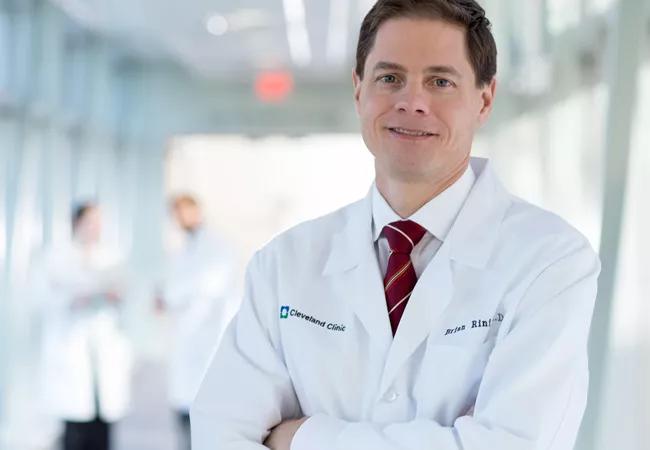
Image content: This image is available to view online.
View image online (https://assets.clevelandclinic.org/transform/88bdc2d3-f8d9-4abd-9a47-89bfa3abdb67/Dr_-Rini_650x450_jpg)
Dr.-Rini_650x450
On May 18, Brian Rini, MD, Director of Cleveland Clinic Cancer Center’s Genitourinary Cancer Program, will chair one of five OncLive State of the Science Summits being held this year in cities across the U.S. His talk at the high-level session focused on genitourinary cancers is entitled “The Evolving Landscape of Adjuvant Therapy in Resected Localized Renal Cell Carcinoma” (RCC), and will cover important advances in the treatment of localized renal cell cancers. The Summits help community oncologists in diverse specialties stay current on the latest evidence-based treatment strategies for their patients.
Advertisement
Cleveland Clinic is a non-profit academic medical center. Advertising on our site helps support our mission. We do not endorse non-Cleveland Clinic products or services. Policy
Dr. Rini will discuss several large, ongoing randomized trials of targeted agents. He is staff in the Department of Solid Tumor Oncology and Professor of Medicine at Cleveland Clinic’s Lerner College of Medicine and an expert in antiangiogenic therapy and immunotherapy for RCC and prostate cancer. “This session will help participants make sense of what’s been learned so far, to inform their own calculation of the risk/benefit ratio involved with giving therapy in the adjuvant RCC setting,” says Dr. Rini. Each of the State of the Science Summits brings together academic and community-based physicians and healthcare professionals across key disciplines from medical and surgical oncology.
Other presenters will discuss:
Other Cleveland Clinic participants include Jorge Garcia, MD, of the Department of Hematology and Medical Oncology, Moshe Ornstein, MD, a Taussig Cancer Institute fellow, and Andrew Stephenson, MD, Director for the Center of Urologic Oncology at Cleveland Clinic’s Glickman Urological and Kidney Institute. The meeting will take place on Thursday, May 18, from 5:30-9 pm at the InterContinental Hotel in Cleveland.
Advertisement
Advertisement
First-of-its-kind research investigates the viability of standard screening to reduce the burden of late-stage cancer diagnoses
Global R&D efforts expanding first-line and relapse therapy options for patients
Study demonstrates ability to reduce patients’ reliance on phlebotomies to stabilize hematocrit levels
A case study on the value of access to novel therapies through clinical trials

Findings highlight an association between obesity and an increased incidence of moderate-severe disease
Cleveland Clinic Cancer Institute takes multi-faceted approach to increasing clinical trial access 23456
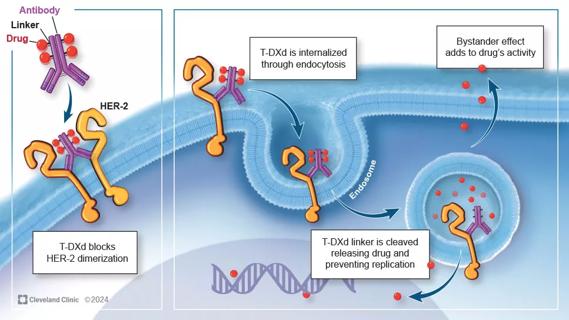
Key learnings from DESTINY trials

Overall survival in patients treated since 2008 is nearly 20% higher than in earlier patients
 Search