Locations:





Lower toxicity than conventional chemo
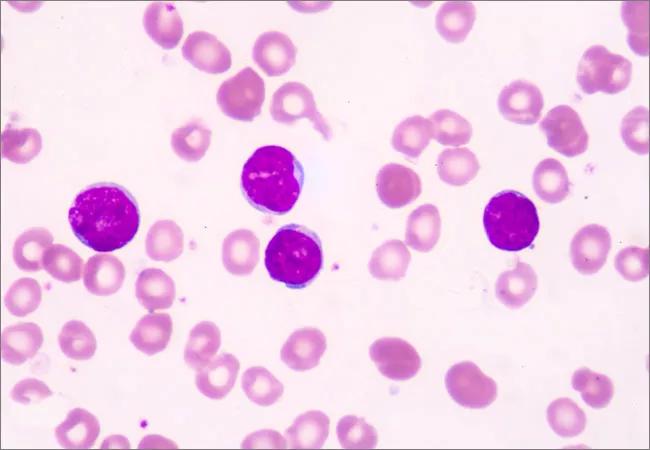
Image content: This image is available to view online.
View image online (https://assets.clevelandclinic.org/transform/8c82738c-fad2-4dac-99f9-a62e18e4807b/ALL_650x450_jpg)
ALL_650x450
Remission rates of elderly patients with acute lymphoblastic leukemia (ALL) on a novel immunotherapy regimen appear to at least equal those observed with conventional chemotherapy — with less toxicity.
Advertisement
Cleveland Clinic is a non-profit academic medical center. Advertising on our site helps support our mission. We do not endorse non-Cleveland Clinic products or services. Policy
Results of the phase 2 trial of bispecific anti-CD19 antibody blinatumomab as induction and post-remission therapy were presented at the 2018 American Society of Hematology meeting in San Diego.
“Follow-up on the trial is still early, but the one-year estimated event-free and overall survival rates are encouraging,” says Anjali Advani, MD, Director of the Inpatient Leukemia Program at Cleveland Clinic Cancer Center. Dr. Advani was lead author of the study.
Immunotherapy-based regimens like this are likely to become the future standard of care for the elderly ALL population, which currently has a poor prognosis, she says.
The antigen CD19 is expressed on most precursor B-cell ALLs. Previous studies have shown that the anti-CD19 antibody blinatumomab has been effective in relapsed/refractory ALL as well as minimal residual disease (MRD) ALL. That’s why Dr. Advani and a multicenter team through the National Clinical Trial Network evaluated the use of blinatumomab in patients (median age 75) with newly diagnosed Philadelphia chromosome negative B-lineage ALL.
Patients received blinatumomab for one to two cycles, until they attained a complete response (less than 5 percent marrow blasts with no evidence of extramedullary disease) with or without complete count recovery (absolute neutrophil count > 1000/uL, platelets > 100,000/uL). Once in remission, patients received three additional cycles of blinatumomab, followed by POMP (prednisone, vincristine, 6-mercaptopurine, methotrexate) therapy for 18 months.
Advertisement
Of the 29 patients treated, 19 (66 percent) had a complete response with or without complete count recovery. All but one of the 19 responded after only one cycle of blinatumomab. Of the 13 responders who had post-treatment MRD data, 12 (92 percent) achieved MRD negativity.
Kaplan Meier analysis estimates overall survival at six months to be 79 percent — 65 percent at one year. Disease-free survival at six months is estimated to be 68 percent — 56 percent at one year.
Hyperglycemia was the most common toxicity related to treatment, affecting four patients (14 percent). Toxicities affecting three patients (10 percent) were dyspnea, febrile neutropenia and hypertension. Two patients (7 percent) had lung infection.
There were no deaths in the first 28 days of the study treatment.
“Novel therapeutic approaches are clearly needed for elderly patients with newly diagnosed ALL,” says Dr. Advani. “The outcomes of this treatment regimen appear promising.”
Longer follow-up is needed to determine duration of disease-free and overall survival.
Next steps will include investigating other treatments in combination with blinatumomab in the same population, notes Dr. Advani. One trial already in progress is studying the use of inotuzumab with blinatumomab.
Advertisement
Advertisement

First-of-its-kind research investigates the viability of standard screening to reduce the burden of late-stage cancer diagnoses

Global R&D efforts expanding first-line and relapse therapy options for patients

Study demonstrates ability to reduce patients’ reliance on phlebotomies to stabilize hematocrit levels

A case study on the value of access to novel therapies through clinical trials

Findings highlight an association between obesity and an increased incidence of moderate-severe disease

Cleveland Clinic Cancer Institute takes multi-faceted approach to increasing clinical trial access 23456
Key learnings from DESTINY trials

Overall survival in patients treated since 2008 is nearly 20% higher than in earlier patients
 Search