Locations:





Psychosocial and downstream effects
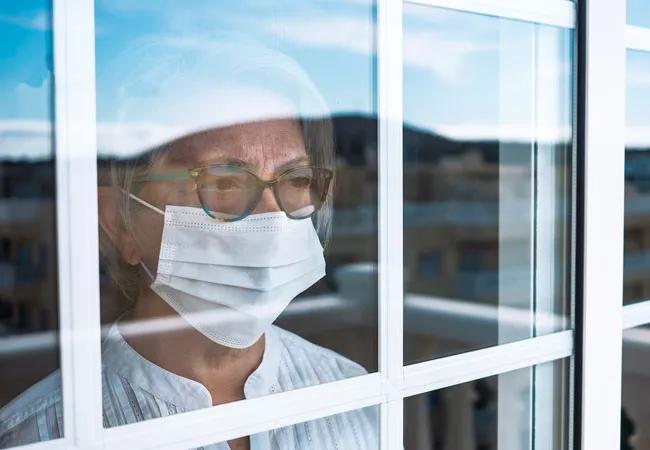
Image content: This image is available to view online.
View image online (https://assets.clevelandclinic.org/transform/371d822a-4acc-4063-a341-783303cbd1d5/20-GER-1881817_CQD_650x450_1218158665-1_jpg)
20-GER-1881817_CQD_650x450_1218158665 (1)
Cancer care is not exempt from the truism that COVID-19 has changed our world in unprecedented ways. Beyond the sheer logistics of keeping a cancer center safe for patients during a global pandemic lie the downstream effects of necessary safety measures, from the acceleration of telemedicine adoption to increased fear and anxiety. Matt Kalaycio, MD, Vice Chairman of Cleveland Clinic’s Taussig Cancer Institute, discusses several ways that COVID-19 has changed the present and future of cancer care.
Advertisement
Cleveland Clinic is a non-profit academic medical center. Advertising on our site helps support our mission. We do not endorse non-Cleveland Clinic products or services. Policy
“One of the things I think will eventually be seen as a net positive is the way the pandemic has hastened the arrival of virtual medicine in both urban and rural locations. It has made us get comfortable with this technology quickly,” says Dr. Kalaycio. “There is no substitute for the physical exam in medicine, but when reality demands that the risk of physical contact is too high, what’s the best way to use these technologies? How can we expand our reach beyond our historically limited sense of geography?”
Cleveland Clinic patients without active cancer have the option to access routine follow-up care via telemedicine, or to delay in-person visits until a safer time. “We have even converted some visits for patients with active disease to telehealth,” he notes. “They’ll still need to come in for testing, infusions and the like, but we are reducing traffic in ways that don’t negatively impact a patient’s care.”
Patients also need reassurance that seeking in-person care is safe. Cleveland Clinic is taking a comprehensive approach to ensure that cancer patients receive necessary care in the safest way possible, including adapting spaces for social distancing, using appropriate personal protective equipment (PPE), mandating masks in the building and screening for all caregivers. “We have to reassure our patients that it’s safe for them to come and get treatment here, and that staying at home can create a bigger problem.”
Fear of contracting COVID-19 may lead to a potential surge of cancer cases diagnosed at later stages when there may be fewer treatment options, or of patients under surveillance who missed follow up and thus may miss signs of recurrence.
Advertisement
“So many people have postponed seeing their doctors or getting routine screening done. They’re ignoring symptoms that would have caused them to visit the doctor in our prepandemic world. Eventually, we’re going to see all these patients,” says Dr. Kalaycio. “Diagnosing cancer as early as possible is important in almost every type of cancer; so many people will have fewer treatment options and will be diagnosed later because of COVID-19.” Experts fear a sharp increase in overall diagnoses, advanced diagnoses and cancer deaths in the coming months and years.
Delays in screening and treatment combined with economic consequences of the pandemic will widen existing disparities in cancer care. “This is my biggest concern. Even if we get a vaccine quickly, the economic effects will be sustained. Our most vulnerable populations will have financial insecurity and cause patients to delay or decline treatment,” notes Dr. Kalaycio.
Cleveland Clinic’s efforts to address disparities in healthcare delivery have accelerated during the pandemic. A collaboration with local religious organizations and the Cleveland Fairfax community’s Langston Hughes Center has brought cancer screening to patients who might face barriers at a larger facility. “This has been especially important during the pandemic,” says Dr. Kalaycio. “Many of these patients who are at greater risk of COVID-19 can avoid the higher traffic hospital facilities and still get world class cancer screening.”
Cancer patients already experience a high level of fear of the unknown. Add to the normal cancer worries the possibility of catching COVID-19, and fear and anxiety heightens even further. “Patients aren’t just scared of their cancer. They’re scared to leave the house and catch something that might kill them,” says Dr. Kalaycio. “And the many resources Cleveland Clinic has in place to mitigate this fear and anxiety, they’re not accessing because they’re not visiting the clinic in person, and it takes time to make our social support programs virtual.”
Advertisement
A common coping method for patients with cancer is the support of loved ones and family. Social distancing has made accessing that support even tougher. “I recommend patients call or video chat with friends and family regularly,” he says, “but there’s no question that this time has been tough on our patients.”
Another way to mitigate fear of the unknown is planning. Determining alternate caregivers, food sources and transportation may allow patients a degree of certainty if their current plans fall through. “I encourage my colleagues to sit with patients and show them you are thinking ahead in terms of their care,” he says. “The message should be: This is what we are going to do in each scenario, and we remain available and here to treat and manage your cancer no matter what.”
Advertisement
Advertisement

First-of-its-kind research investigates the viability of standard screening to reduce the burden of late-stage cancer diagnoses

Global R&D efforts expanding first-line and relapse therapy options for patients
Study demonstrates ability to reduce patients’ reliance on phlebotomies to stabilize hematocrit levels
A case study on the value of access to novel therapies through clinical trials

Findings highlight an association between obesity and an increased incidence of moderate-severe disease
Cleveland Clinic Cancer Institute takes multi-faceted approach to increasing clinical trial access 23456
Key learnings from DESTINY trials

Overall survival in patients treated since 2008 is nearly 20% higher than in earlier patients
 Search