Locations:





Fat necrosis is a benign but real concern
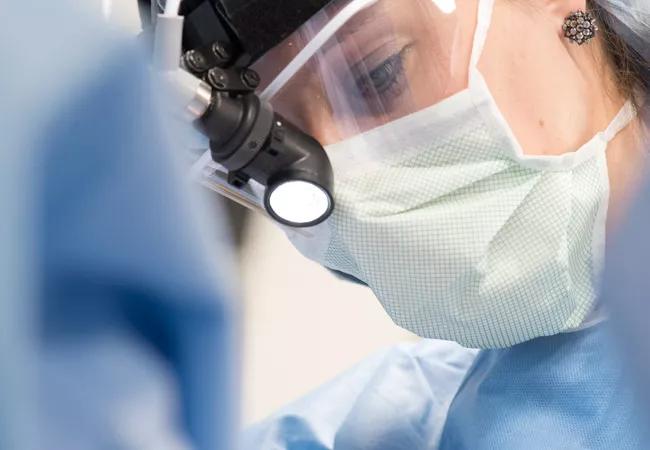
Image content: This image is available to view online.
View image online (https://assets.clevelandclinic.org/transform/f0551e1b-40d3-49c8-b177-e9c3230c737c/breast-surgery_650x450_jpg)
breast-surgery_650x450
Breast reconstruction after mastectomy is often followed by autologous breast fat grafting (AFG). AFG is an elective procedure in which fat is harvested via liposuction, usually from the abdomen or thighs, and then injected into one or both breasts to improve cosmesis.
Advertisement
Cleveland Clinic is a non-profit academic medical center. Advertising on our site helps support our mission. We do not endorse non-Cleveland Clinic products or services. Policy
The literature is scarce, however, regarding the incidence of common complications of AFG, in particular fat necrosis (FN), a benign, inflammatory process of the breast adipose tissue that results in the formation of scar tissue at the site where the transferred fat was injected.
With this in mind, Cleveland Clinic surgeons undertook a retrospective study of patients who underwent mastectomy, breast reconstruction and AFG to determine how often FN occurs and what factors contribute to its occurrence.
“Autologous fat grafting after breast reconstruction for mastectomy is done to help improve contour deformities and works really well,” says Stephanie Valente, DO, breast surgeon and director of Cleveland Clinic’s Breast Surgical Oncology Fellowship Program. Dr. Valente was senior author on the study, which was published in the Annals of Surgical Oncology.
“The downside is that not all the fat that gets injected lives,” she says. “The dead fat then turns into scar tissue that we call fat necrosis. Fat necrosis doesn’t harm the patient physically, but it can feel like a firm nodule or a lump in the breast, so it can scare breast cancer patients because it feels like a breast cancer recurrence.”
Dr. Valente and her colleagues looked at the medical records of 171 breast cancer patients who received breast reconstruction and AFG between 2011 and 2016. Seven reconstructive surgeons performed the AFG using similar methods, and the researchers looked at patient demographics, incidence of cancer recurrence, operative details, complications and receipt of radiation.
Advertisement
The patients received an average of 1.18 AFG treatments with an average follow-up time of 26 months. Eighteen patients (10.5 percent) developed FN an average of 3.4 months after the AFG procedure. Subsequent imaging revealed pathognomonic features of FN in 11 patients. Imaging identified a lesion that appeared concerning in seven patients, requiring needle core biopsy. Of those seven, two required excision for discordant imaging due to suspicion. All seven ultimately had FN confirmed as a cause of the lump; none had a cancer recurrence.
“Our results indicated that there’s no risk of cancer recurrence due to the AFG procedure, but there’s about a 10 percent chance that a patient will develop a lump that might need additional imagining,” says Dr. Valente. “Of that 10 percent, only a small percent will need a biopsy.”
The risks are acceptable, she says, but it’s important to let patients decide. ”Some people might want the contouring, but then when they hear that a lump might form, they’ll say, ‘Forget it. I’m an anxious person,’ while other people might say, ‘Okay, I understand the risks. I still want to have this done.’”
Dr. Valente and her colleagues did not find any differences in patient demographics that lead to the development of FN. They did find, however, that patients who had a greater volume of fat injected during the initial AFG session were significantly more likely to develop FN.
Dr. Valente says that studies have shown that surgeons get better results if AFG is performed over several sessions using smaller volumes of fat. The goal of this study was to confirm that AFG is safe and to provide information about the details, benefits and risks of this procedure so that physicians can guide patients as to whether this procedure is it is right for them.
Advertisement
Advertisement

First-of-its-kind research investigates the viability of standard screening to reduce the burden of late-stage cancer diagnoses

Global R&D efforts expanding first-line and relapse therapy options for patients

Study demonstrates ability to reduce patients’ reliance on phlebotomies to stabilize hematocrit levels
A case study on the value of access to novel therapies through clinical trials

Findings highlight an association between obesity and an increased incidence of moderate-severe disease

Cleveland Clinic Cancer Institute takes multi-faceted approach to increasing clinical trial access 23456
Key learnings from DESTINY trials

Overall survival in patients treated since 2008 is nearly 20% higher than in earlier patients
 Search