Locations:





Consult program a valuable tool that benefits both patients and clinicians
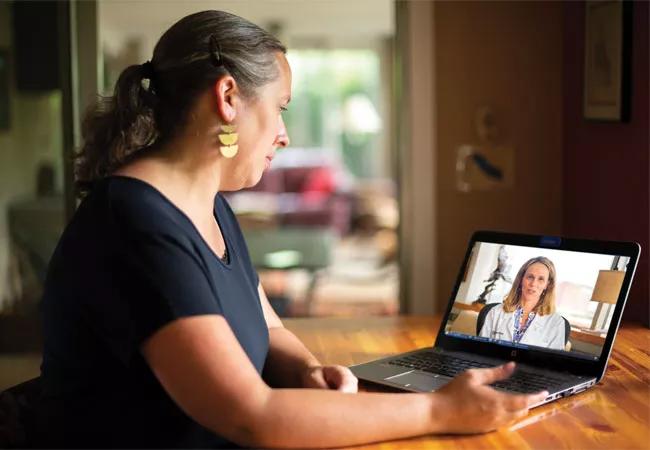
Image content: This image is available to view online.
View image online (https://assets.clevelandclinic.org/transform/2e86a5bf-dfa4-4e2d-9bdb-54840ed0da8d/23-CNR-4361061-CQD-Hero-650x450-virtual-anemia-clinic_jpg)
virtual anemia clinic
An increasing volume of classical hematology referrals, coupled with provider shortages, poses a number of challenges, especially as it relates to access to care. To address this gap, Cleveland Clinic Cancer Institute developed a centralized virtual anemia consult clinic (VACC), which facilitates care through a team of trained classical hematology advanced practice providers (APPs).
Advertisement
Cleveland Clinic is a non-profit academic medical center. Advertising on our site helps support our mission. We do not endorse non-Cleveland Clinic products or services. Policy
During the 65th American Society of Hematology (ASH) Annual Meeting and Exposition, Mailey Wilks, CNP, a classical hematology advanced practice provider manager at Cleveland Clinic, shared the positive impact the program has had since its inception.
“The goal of our institute is for every new hematology patient to be seen within seven days of their scheduling request,” notes Wilks. “However, in the summer of 2022, we determined that the average wait time for a hematology consult was more than three weeks. Of those, more than two-thirds were related to an anemia diagnosis. Our APP team and institute leadership developed the VACC to improve staff consult availability and patient access.”
Launched in September 2022, the virtual anemia consult clinic is led by hematology APPs who offer support to patients with an anemia diagnosis. This involves a number of services including triage, assessment, diagnosis and treatment.
The VACC is staffed Monday through Friday, and initially offered five 40-minute consults per day. Consults have since increased to seven per day, according to Wilks. The most common patients seen by the team of APPs include those with iron deficiency and nutritional anemias. Once a week, the APPs collaborate with a staff hematologist to ensure complex cases receive the appropriate evaluation and care.
Between September 2022 and May 2023, Wilks and colleagues saw a total of 610 in-state virtual consults. The median wait time was four days, according to Wilks, who also notes that the team was able to see patients in 31 Ohio counties, further mitigating barriers to care, such as transportation and scheduling conflicts.
Advertisement
Among the patients seen through the clinic, 82% were female, 17.9% male and 0.1% non-binary. Racial demographics included 29.8% Black, 1.7% Asian, 0.7% American Indian, 4.4% multiracial and 60.7% white patients.
“A referral to hematology oncology, even for a diagnosis of nutritional anemia, can be very overwhelming and scary for patients. And having to wait over 20 days for an appointment only exacerbates those feelings,” says Wilks, while noting that not every patient at the VACC has benign anemia.
“We have actually diagnosed cases of leukemia, myelodysplastic syndrome and multiple myeloma, and thanks to this clinic, delays in care are avoided,” she adds. “We have been able to significantly decrease wait time, and, in some cases, provide same- or next-day consults.”
Development of the VACC also benefited the institution. During this time, virtual anemia consult clinic slot utilization averaged 91%.
“Overall, we observed that classical hematology access for physicians and advanced practice providers improved from its peak of 20 days just before the VACC was initiated, to eight days in May 2023,” Wilks says. “Additionally, 73% of patients who were seen for initial consultation were incorporated into the APP practice for follow-up and further treatments. This improved care for our patients while also increasing slot utilization and productivity for the hematology APP practice.”
In addition to increasing patient access, the VACC fosters collaboration between physicians and APPs. Weekly huddles are an opportunity for team-building and mentorship, which leads to professional growth and, in turn, ensures hematology patients receive comprehensive care.
Advertisement
“There is so much value in collaboration,” emphasizes Wilks. “Together, we can have a profound impact on our patients. This program also empowers advanced practice providers and showcases the unique skills they bring to the table in the treatment of hematologic diseases.”
“Moving forward, we plan to continue to focus on patient outcomes while identifying and addressing other barriers to care that affect this patient population,” she notes. “We also hope to increase the number of consults as well as consider other diagnoses seen in the hematology virtual consult clinical to further improve timely access to care.”
Advertisement
Advertisement
First-of-its-kind research investigates the viability of standard screening to reduce the burden of late-stage cancer diagnoses

Global R&D efforts expanding first-line and relapse therapy options for patients

Study demonstrates ability to reduce patients’ reliance on phlebotomies to stabilize hematocrit levels
A case study on the value of access to novel therapies through clinical trials

Findings highlight an association between obesity and an increased incidence of moderate-severe disease
Cleveland Clinic Cancer Institute takes multi-faceted approach to increasing clinical trial access 23456
Key learnings from DESTINY trials

Overall survival in patients treated since 2008 is nearly 20% higher than in earlier patients
 Search