Locations:





Period of silence honors life, caregivers' efforts
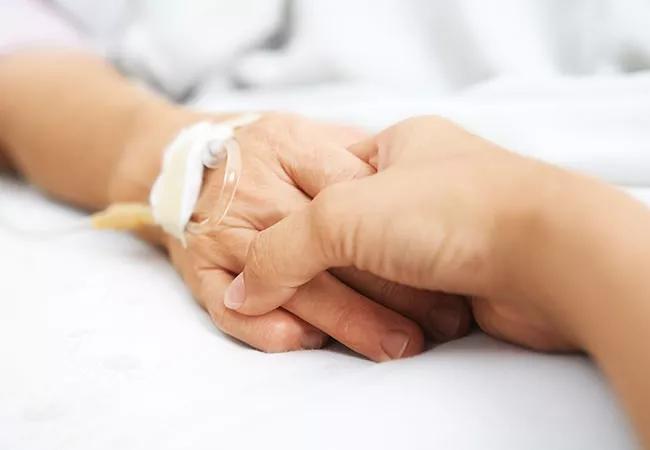
Image content: This image is available to view online.
View image online (https://assets.clevelandclinic.org/transform/c9668f40-e28f-4e5a-b95f-8f7b860ffb5a/GettyImages-151531118_jpg)
GettyImages-151531118
Advertisement
Cleveland Clinic is a non-profit academic medical center. Advertising on our site helps support our mission. We do not endorse non-Cleveland Clinic products or services. Policy
As part of Cleveland Clinic’s Office of Patient Experience, the Center for End of Life Care was established to standardize the care of patients at the end of life. The center has the following objectives: respecting patients’ preferences, improving family experience and fostering healthcare team resilience.
One of the activities implemented to foster caregivers’ resilience in caring for dying patients is “The Pause.” “The Pause” is a 15- to 30-second period of silence at the time of a patient’s death shared by the team at the bedside. The purpose is to honor the human life and the efforts of the team. “The Pause” is initiated by the physician or any other team member and participation is voluntary. It is a time to honor and reset.
This is a suggested script to use as a guide to conduct “The Pause”:
| “Let us take a moment to pause and honor (patient’s name or this person). He/she was someone who loved and was loved; was someone’s family member and friend. In our own way and in silence let us take a moment to honor (patient’s name). Let us also honor and recognize the care provided by our team.” 15-30 seconds of silence “Thank you everyone” |
|---|
| “Let us take a moment to pause and honor (patient’s name or this person). He/she was someone who loved and was loved; was someone’s family member and friend. In our own way and in silence let us take a moment to honor (patient’s name). Let us also honor and recognize the care provided by our team.” 15-30 seconds of silence “Thank you everyone” |
Caregivers express that “The Pause” is helpful and provides closure to the established relationship with the patient. They also appreciate it as a “time to decompress and focus on the soul.” When families are present, it is a way to “express our compassion and empathy for the family,” that “we treat patients as a valuable human, not just another patient.”
Advertisement
Advertisement

Pulmonologist-scientist is awarded a $2 million grant from the NIH

Cardiologists offer professionals guidance for better sleep

Reduce stress by adopting mindfulness as a way of life

Our Chief Experience Officer explains

A Q&A with sports medicine physician Dominic King, DO
Reflections on providing all patient care with the same respect

It doesn't have to be the "new normal"

3 Women's Professional Staff Association members field this question
 Search