Locations:





The short answer from Meagan Adley, PsyD
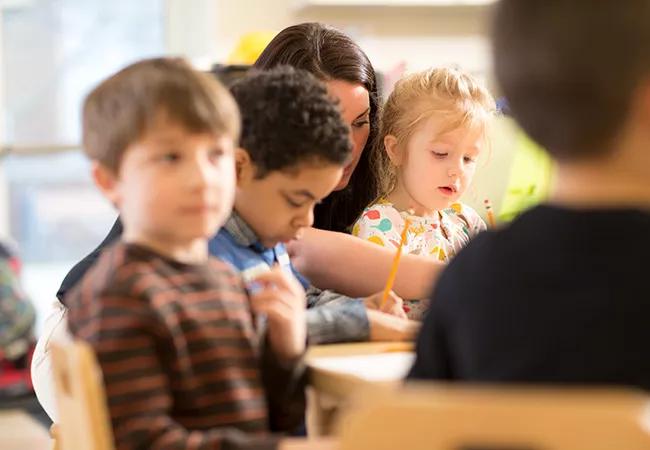
Image content: This image is available to view online.
View image online (https://assets.clevelandclinic.org/transform/a1ae0a51-f357-4aac-9c43-8966a0a86afd/650x450-Autism-Social-Skills_jpg)
650×450-Autism-Social-Skills
Q: Why is it important for patients with autism spectrum disorder to receive social skills training?
Advertisement
Cleveland Clinic is a non-profit academic medical center. Advertising on our site helps support our mission. We do not endorse non-Cleveland Clinic products or services. Policy
A: Kids with autism spectrum disorder have a hard time picking up on those unwritten social rules that typically developing kids learn naturally, so they need a more hands-on, clear set of instructions. They need to actually be taught those rules in a structured setting so that they can learn to use those social thinking pieces. The deficits in eye contact, facial expression and body orientation — and struggles with maintaining conversation, initiating conversations appropriately or asking about others — all go right into the diagnostic picture that impact these kids’ ability to interact socially.
Research has shown that social skills groups can be effective for higher functioning children with adequate language skills and average IQ scores. These are two requirements for participation in our Social Spies program, which we run for higher functioning kids with autism spectrum disorder between the ages of 5-12.
Two of the biggest pieces that go into supporting a social skills group and making it effective are generalization and maintenance. One of the big criticisms of social skills training is that it’s not generalizing to the naturalistic setting, so we’ve made sure to build that into our social program. Social Spies runs for 18 weeks with a 90-minute session for the kids, and a session for the parents as well. We don’t want the kids to only be practicing and using those social skills strategies while they’re here with us for the 90 minutes every week — we want them to be using them in other settings too.
Advertisement
That’s why we’re teaching the parents the same skills so they can use them at home. We also send parents home with teacher tips that can be integrated into the classroom and conduct teacher training sessions.
At the end of 18 weeks of learning social skills, we have our Social Spies kids go into area summer camps, following up with that generalization piece even further. They then practice the skills they learned in that naturalistic setting of being at a summer camp with the support of some of our behavioral therapists or “coaches.”
To add in the maintenance piece, which is about keeping those skills active, we have what we call “booster sessions,” which is where the kids that did our program last year come back periodically throughout the school year to do skill refreshers. The parents return to keep skills fresh and make sure they’re still practicing them. The kids can also come back to camp until they age out of the process.
We measure outcomes with two types of data: We do a quality of life questionnaire, which measures items like how the family is doing and how much the child’s symptoms are impacting the family’s quality of life. We also do a screening of how often the child’s behaviors occur, such as frequency of eye contact or how well they can regulate themselves when they get frustrated. We take this data at three different points during the program so we can compare.
We also take individual data for each child. Part of the process is doing a reinforcement system during each class. The behavioral therapist gives a check mark for every expected behavior such as looking at the speaker or asking somebody else a question about themselves. Each child is also rated on inappropriate behaviors, which helps with their self-monitoring and being aware of those expected vs. unexpected behaviors. They can then “buy” prizes from the prize store (such as Pokémon cards or candy) with their earned checkmarks.
Advertisement
Our program is adapted from Michelle Garcia Winner’s social thinking program. There’s a large body of research about how these social skills can be taught and though there are a few research-validated programs, not all of them have the support that we want with the generalization and the maintenance pieces. Several studies have shown good progress with the Winner program, which is why we chose to adapt it. We wanted to make sure we were using an evidence-based practice when we teach these skills.
— Meagan Adley, PsyD
Director, Social Spies Program
Pediatric Psychologist | Center for Autism
Advertisement
Advertisement

Try these moves to relieve butt pain and numbness
Systemic change needed to improve health outcomes for parents and children, say researchers

Rare genetic variant protected siblings against seizures and severe hypoglycemia
Movie has more positive impact than expected, says Head of Adolescent Medicine
Genetic changes are similar between some vascular anomalies and cancers
Expert panel advises a two-tier structure for surgical centers
Our new head of pediatric general and thoracic surgery shares his passion and vision
Basic understanding of condition and treatment is lacking
 Search