Locations:





Rare genetic variant protected siblings against seizures and severe hypoglycemia
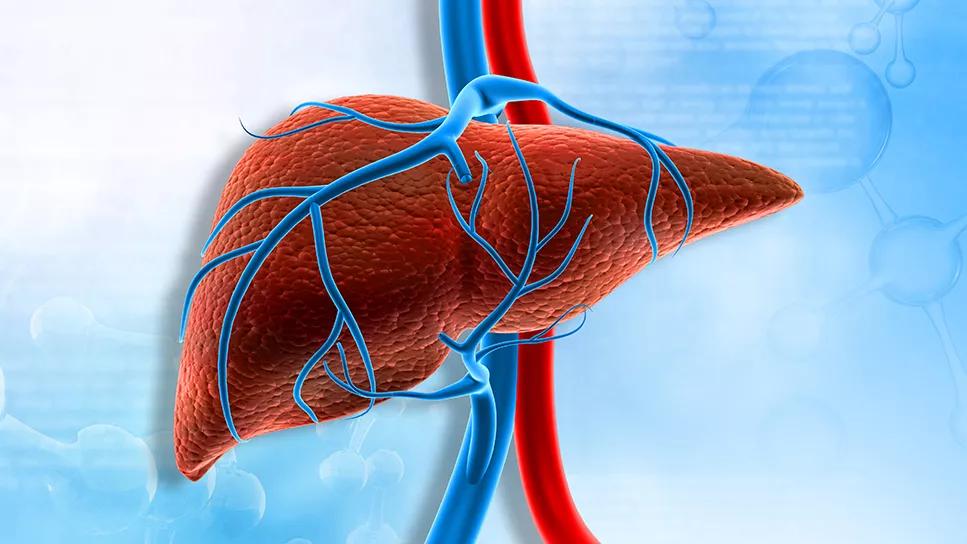
Image content: This image is available to view online.
View image online (https://assets.clevelandclinic.org/transform/c1f0f5e1-642b-467b-8479-18cdaf3f4d2c/liver-1805549712)
Illustration of a liver
A 4-year-old male presented at Cleveland Clinic Children’s with a history of significant hepatomegaly and transaminitis as well as a liver biopsy indicating liver fibrosis. Although the patient’s development was appropriate, his growth was delayed, and his face was abnormally round and plump.
Advertisement
Cleveland Clinic is a non-profit academic medical center. Advertising on our site helps support our mission. We do not endorse non-Cleveland Clinic products or services. Policy
The referring hepatologist was concerned about possible diagnoses such as biliary disease, alpha-1 antitrypsin deficiency and primary sclerosing cholangitis.
“She noted that metabolic liver disease, like glycogen storage disease, was less likely, but definitely something to consider,” says Elizabeth Robinson, CNP, of the Department of Pediatric Gastroenterology, Hepatology, and Nutrition at Cleveland Clinic Children’s.
The hepatologist recommended re-evaluating the patient’s original liver biopsy and doing additional lab work to check liver enzymes.
“A second look at the biopsy found less fibrosis and more glycogen in the liver, indicating glycogen storage disease,” Robinson says.
At that point, the patient was sent for genetic testing, which revealed a genetic mutation that causes glycogen storage disease (GSD) type Ia. By this time, the patient’s younger sister had been born and also had hepatomegaly. Genetic testing revealed that she had the same genetic mutation.
“This is a pretty rare situation because the siblings have a slightly different genetic variation that is more common in the Amish population, though they’re not Amish,” says Robinson.
Typically, children are diagnosed with GSD at around 6 months old, when they stop eating during the night, which leads to hypoglycemia and seizures. They do not have the ability to sustain ketone production when they fast. Ketones help provide energy to the brain and heart when sugar levels drop.
“The genetic variant in our patients is mildly protective against seizure activity and hypoglycemia, and that’s why the first patient wasn’t diagnosed until age 4,” Robinson says. “Instead of experiencing the characteristic seizures, these patients ate all the time.”
Advertisement
“In any infant that has hypoglycemia, it’s important to thoroughly assess the liver to make sure they don’t have hepatomegaly, especially if the hypoglycemia is unexplainable and it’s reported that the child eats constantly,” says Kadakkal Radhakrishnan, MD, a pediatric gastroenterologist and hepatologist at Cleveland Clinic.
As with all patients with GSD, management of the siblings’ disease is highly customized. To keep their blood sugar stable, they must consume uncooked cornstarch every three to four hours, either by mouth (mixed with a cold beverage) or feeding tube.
“For convenience, the family has chosen to use gastrostomy tubes,” says Robinson. “Because the patients have that mildly protective genetic variant, they do have slightly more wiggle room with consuming cornstarch. The regimen isn’t quite as strict as for other patients with GSD because these patients won’t have seizures.”
The siblings also have an extremely restricted diet, allowing no more than 5 grams of simple sugars for each meal and 2.5 grams for each snack.
“Simple sugars not only include sweets and desserts, but foods like fruit, milk and some vegetables, which also must be limited,” says Kristina Colling, MS, RD, a metabolic dietitian at Cleveland Clinic Children’s.
Any excess glucose than what is needed to maintain basic metabolic function and energy levels is stored in the liver as glycogen and cannot be released during periods of fasting. Therefore, carbohydrates, even complex carbohydrates, are often limited to prevent excess accumulation in the liver.
Advertisement
Despite the protective variant, the siblings are still at risk of hypoglycemia and severely elevated lipids due to gluconeogenesis. This hyperlipidemia can cause all the same complications as in adults, with the added complexity of potentially beginning at a young age.
The siblings’ restricted diet will be more challenging as they get older, when it’s difficult to regulate what they eat away from home.
“You can see it in the varying lipid levels,” says Dr. Radhakrishnan. “When you get an older child that’s out on their own and doing more by themselves, it’s harder to ensure that they limit simple sugars.”
Adds Colling, “It is challenging to find that ‘sweet spot’ of meeting the patient’s needs to prevent hypoglycemia while also preventing excessive weight gain and storage of glycogen. A lot of these patients are faced with challenges of being overweight or obese due to consuming a lot of their calories from cornstarch to maintain adequate blood sugar levels.”
Additionally, the diet can create psychosocial difficulties.
“Patients with GSD feel different from everyone else,” explains Robinson. “Once their diet is under control, they don’t look like they have an illness, so their peers don’t understand why they have dietary restrictions.”
In this case, both children see a behavioral therapist to help them cope with the effects of chronic illness.
Another issue is general medical management, including the loss of sleep due to diet supplementation during the night. The siblings both have ports due to difficulty with IV access in urgent situations. The combination of ports and gastrostomy tubes limits the siblings’ activities, such as contact sports.
Advertisement
Today, the siblings are in good health and their condition is “under control as well as it can be with a 9- and 12-year-old who are in charge of their own diet sometimes,” Robinson reports.
These patients will need treatment and follow-up for the rest of their lives, although the frequency of their cornstarch supplementation may change.
“There are phase 3 clinical trials that are testing gene therapy with the hope of reducing the amount of cornstarch that patients need to consume,” says Robinson.
Advertisement
Advertisement

Try these moves to relieve butt pain and numbness

Systemic change needed to improve health outcomes for parents and children, say researchers

Movie has more positive impact than expected, says Head of Adolescent Medicine

Genetic changes are similar between some vascular anomalies and cancers
Expert panel advises a two-tier structure for surgical centers
Our new head of pediatric general and thoracic surgery shares his passion and vision

Basic understanding of condition and treatment is lacking

How to combat the rise in mortality when patients become adults
 Search