Locations:





Get to know Dr. Rabi Hanna
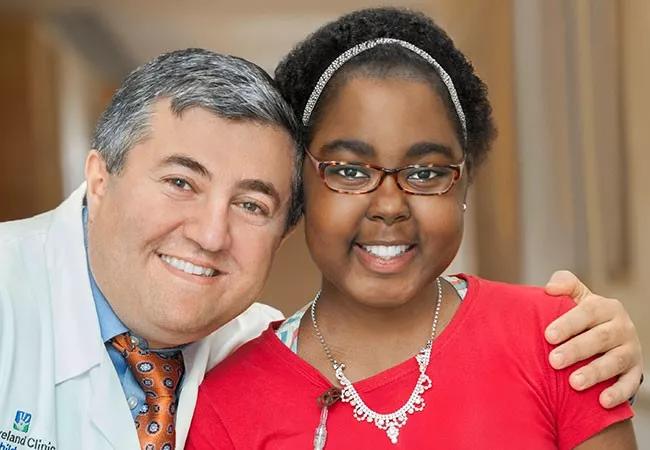
Image content: This image is available to view online.
View image online (https://assets.clevelandclinic.org/transform/1f89f62a-c2cc-4fb2-af37-d6a387ce0d6d/hanna_jpg)
hanna
Childhood cancer is the leading cause of death by disease in pediatric patients in the United States. It’s estimated that 1 in 285 kids will have cancer by the age of 20, and approximately 45 are diagnosed with cancer daily.
Advertisement
Cleveland Clinic is a non-profit academic medical center. Advertising on our site helps support our mission. We do not endorse non-Cleveland Clinic products or services. Policy
The disease doesn’t spare any ethnic group, socioeconomic class or geographic region. The incidence of cancer among adolescents and young adults is increasing at a greater rate than any other age group except those over age 65.
“We’ve made great improvements due to research and collaborative efforts in treating different types of childhood cancers,” says Rabi Hanna, MD, Chairman of the Department of Hematology-Oncology and Bone Marrow Transplant at Cleveland Clinic Children’s. “But despite that, two out of three of childhood cancer survivors will have long-lasting chronic conditions as side effects from cancer therapies. More work still needs to be done.”
We sat down with Dr. Hanna to find out why he has dedicated his career to helping these young cancer patients.
A: At age five, I was diagnosed with Legg-Calvé-Perthes disease, and I was able to witness firsthand how medical care was able to change my life. The experience inspired me to help people when they are sick and vulnerable by healing and helping them. I always say to my patients: Cure sometimes, treat often, care always.
A: My aunt was diagnosed with high-risk acute myelogenous leukemia (AML) in 1996 in Syria. She had to seek treatment abroad because therapy for this kind of cancer is not available there. moved from Syria to the U.S. to pursue further specialized advanced training. In Syria, this type of care, like oncology, was limited to very big cities. There is also a much greater availability of resources here, and I love the American approach to healthcare. It’s a team approach. Everyone is a healthcare provider — not just the physician. Medicine is the ultimate team sport where everyone plays a critical role.
Advertisement
A: I’m so pleased that at least two of my patients, who are now cancer survivors, are both in medical school to become pediatric oncologists. It is the ultimate reward when you’ve inspired someone to become a physician who could save lives of the future generation.
A: Family is my priority, so I always try to do something fun with my four kids on the weekends. I also love sports, especially Duke University basketball. If I could do anything, I’d learn to play piano. I love music, but I don’t know how to play.
Advertisement
Advertisement

Try these moves to relieve butt pain and numbness

Systemic change needed to improve health outcomes for parents and children, say researchers
Rare genetic variant protected siblings against seizures and severe hypoglycemia

Movie has more positive impact than expected, says Head of Adolescent Medicine

Genetic changes are similar between some vascular anomalies and cancers
Expert panel advises a two-tier structure for surgical centers
Our new head of pediatric general and thoracic surgery shares his passion and vision
Basic understanding of condition and treatment is lacking
 Search