Locations:





A conversation with a sleep disorders specialist
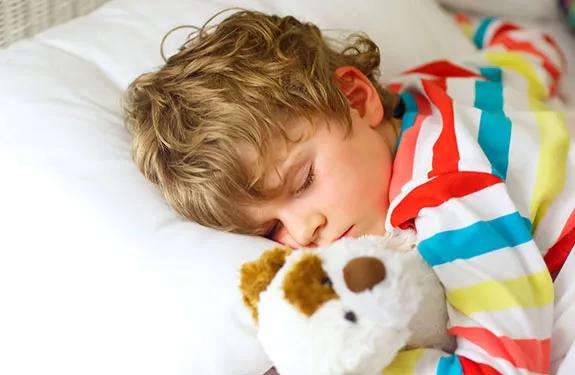
Image content: This image is available to view online.
View image online (https://assets.clevelandclinic.org/transform/000ed9e3-b412-4d3c-9308-40df0c82ee17/650x450-Sleeping-Child-Apnea-626175076_jpg)
650×450-Sleeping-Child-Apnea-626175076
Many children resist going to sleep, but sleep soundly through the night once they finally get to bed. But for the 30 to 40 percent of children with sleep disorders, sleep time is more stressful than restful.
Advertisement
Cleveland Clinic is a non-profit academic medical center. Advertising on our site helps support our mission. We do not endorse non-Cleveland Clinic products or services. Policy
To accommodate a growing number of pediatric patients needing care, Cleveland Clinic’s Sleep Disorders Center recently welcomed Vaisal Shah, MBBS, MPH, who completed his pediatric training and a sleep medicine fellowship at Cleveland Clinic. He joins pediatric pulmonologist Fred Royce, Jr., MD and sleep medicine expert Sally Ibrahim, MD.
Consult QD spoke with Dr. Shah about the pediatric sleep disorders program and sleep disorders in children.
Q: What sleep disorders are most common in the pediatric population?
A: Obstructive sleep apnea (OSA), parasomnias (sleepwalking, night terrors) and insomnia are what we see most often in children and teens.
Q: What are some risk factors for sleep disorders?
A: Typically, large adenoids and tonsils are the most common reason for obstructive sleep apnea in children. However, we are seeing more patients with OSA due to the increase in childhood obesity. Insomnia is commonly associated with behavioral problems and poor sleep habits. Smart phone use before bedtime is a major problem among teenagers who go to sleep later but still have to get up early so they get too little sleep.
Q: What are some negative consequences of insufficient sleep in children?
A: Insufficient sleep can lead to irritability, hyperactivity and difficulty focusing during school, which impairs academic performance. Younger children may have behavioral problems, become overly aggressive and hyperactive, and are easily distracted. Teenagers may fall asleep while driving and are at higher risk of accidents.
Advertisement
Q: What treatments are effective for pediatric sleep disorders?
A: For sleep apnea, the most effective treatment is adeno-tonsillectomy and, if needed, continuous positive airway pressure (CPAP). We may also refer patients to our pediatric obesity management clinic or for other treatments.
For insomnia, cognitive-behavioral therapy is the standard treatment. We use medications only in severe cases. Our pediatric psychologists, who have training in sleep issues, teach patients cognitive-behavioral therapy and address any underlying problems. They also help patients having difficulty using CPAP.
Many patients with parasomnias can grow out of them. A few patients with severe problems may need a sleep study to identify triggers such as obstructive sleep apnea and/or medications.
Q: What guidance can you provide to pediatricians regarding sleep disorders?
A: Sleep disorders in children are underdiagnosed, so it would be helpful for pediatricians to conduct a brief sleep screening at well-child visits, asking a simple question such as “Do you have trouble falling asleep or staying asleep?” Or use the BEARS questionnaire in clinic to screen for sleep problems.
Q: When should pediatricians refer patients to a sleep specialist?
A: If the patient has sleep issues that can’t be differentiated by screening and focused evaluation, if they don’t feel comfortable conducting an initial evaluation or prescribing treatment for sleep problems, or if the treatment isn’t working, referral is beneficial.
Advertisement
Our Sleep Disorders Center has the expertise and technologies to address the full range of pediatric sleep disturbances. We conduct a thorough medical and sleep history and physical exam to detect any medical conditions. If a sleep study is indicated, we have sleep laboratories equipped to evaluate patients of all ages.
Q: Regarding research, what studies of pediatric sleep disorders are currently underway?
A: I am investigating the metabolic aspects of sleep apnea to find out if obstructive sleep apnea is related to metabolic problems and if treating OSA improves metabolic conditions in the pediatric population. Research in adults has shown a relationship between insufficient sleep/OSA and metabolic issues.
My colleague, Dr. Ibrahim, has studied sleep therapies for autistic children, who often have difficulty sleeping, along with Thomas Frazier, PhD, of Cleveland Clinic’s Center for Autism. Dr. Ibrahim is also involved with national efforts to study narcolepsy in children, as an investigator for the Early Onset Narcolepsy study group.
Advertisement
Advertisement

Try these moves to relieve butt pain and numbness

Systemic change needed to improve health outcomes for parents and children, say researchers
Rare genetic variant protected siblings against seizures and severe hypoglycemia

Movie has more positive impact than expected, says Head of Adolescent Medicine
Genetic changes are similar between some vascular anomalies and cancers
Expert panel advises a two-tier structure for surgical centers
Our new head of pediatric general and thoracic surgery shares his passion and vision
Basic understanding of condition and treatment is lacking
 Search